LATEST ADDITIONS

Mytheater's Acoustic Panels
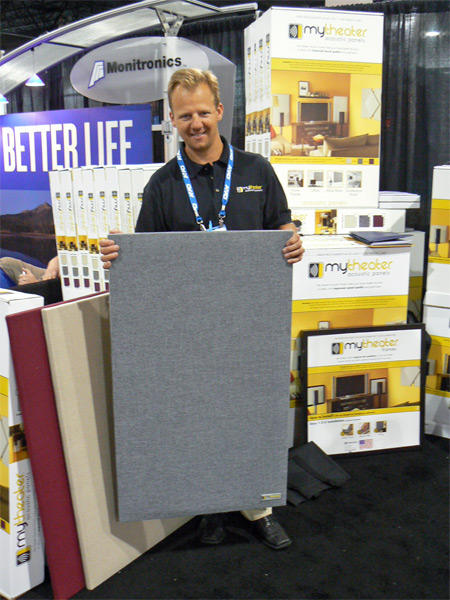
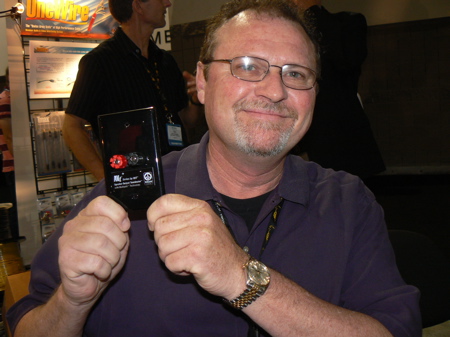
All of us have excuses for why we cannot acoustically treat our rooms but a lot of the underlying reason is that many are not convinced that they should make the physical or financial effort. I’ve discovered what I think of as training wheels for room acoustics. Tom Gorzelski of mytheater acoustic panel showed me his simple and inexpensive kits; these are enough to get anyone started. The panels are only 1" thick and, with their polyester filling, light enough to hang with a single nail. Don't expect them to work into the bass, therefore, but Tom acknowledges that they are most effective at 1–2kHz. Also, they come in packages of four 24x40 panels ($120) or two 24x24 panels ($45) because you cannot expect just one to make a difference. Still, hanging a 4pack of the bigger panels should reduce reflections if placed at ear level and, especially, at the first reflection points on the side-walls. It's likely you'll like it enough, perhaps, to do even more.
Continue Reading »

Furman Reference

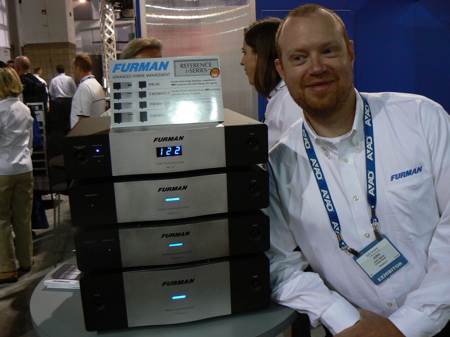
Furman's Reference line of power conditioners are handsomely packaged and feature packed. The $1499 20A SPR-20i Stable Power Regulator has linear filtering technology, multi-stage power surge suppression, extreme voltage shutdown, a detachable module for telco surge suppression, as well as three pairs of HD ready cable/satellite TVSS isolated F-connectors.

Continue Reading »

Linn's New Reference

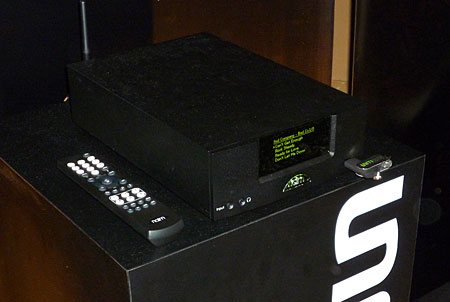
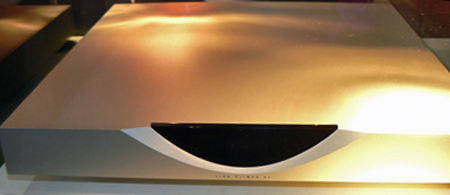
Linn was showing its new reference standard digital player, the Klimax DS, which it is dubbing "the first authentic hi-fi product to stream digital music over a standard home network." Not impressed? How about this: it is capable of utilizing Linn's 24/96 downloads and, according to Rikke Ravnborg, director of marketing, is sonically superior to Linn's long-term digital reference, the CD-12.

Continue Reading »

MIT Gets Small

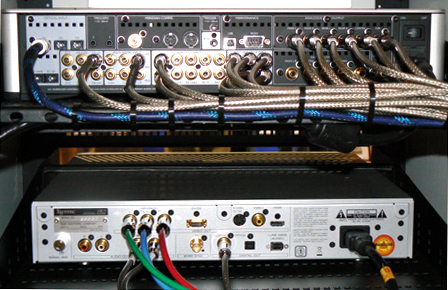
MIT's Bruce Brisson was determined to shrink his Multipole technology so that his patented networks did not requite bulky boxes near their cables' termination. Naturally, he thought surface-mount components were the way to go. That was until he began measuring them and discovered that SM components were variable and many didn't measure well.

Continue Reading »

Parasound Model 2100

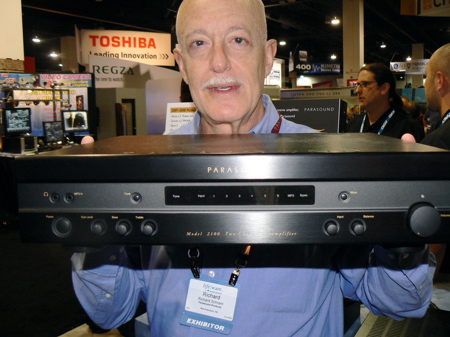
Parasound's Richard Schram was delighted to show off the San Francisco company's Model 2100 preamplifier. This $600 preamp is designed for the guy who has a multichannel system—possibly even an expensive one—who feels let down when he listens to his two-channel music.

Continue Reading »

Canton Chrono Loudspeakers

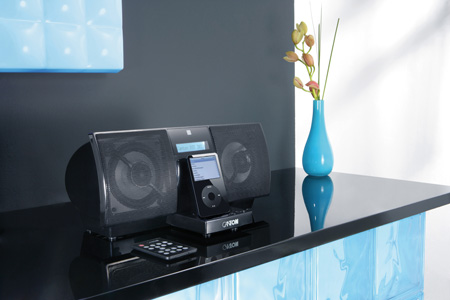
Canton's Frank Göbl is a busy little beaver. He wondered what it would be like to put the components of Canton's successful Ergo line into new specially designed cabinets that could bring the prices down by 30%. "Cost efficiencies have enabled us to do this without sacrificing sound quality or beauty," said Canto USA president Paul Madsen.

Continue Reading »

Hersch & Moran

A quick, final word on Fred Hersch’s week of piano duets at the Jazz Standard. His early set last night with Jason Moran was one of the most enthralling concerts I’ve seen in a long time. At its peak moments (and there were several of them), the two settled into such a head-spinning groove, they sounded like one pianist playing magically with four hands. Moran, as I’ve noted in an earlier <A HREF= "http://blog.stereophile.com/fredkaplan/071607jazz/">entry</A&gt;, may be <I>the</I> jazz pianist of our times, the supreme post-modernist who appropriates everything around him—musical traditions from Schumann and Jelly Roll Morton to Afrika Bambaata and Jaki Byard, as well as random sounds from movies, streets, and Chinese stock-market reports. Hersch matched his intervals, leap for leap. It’s been well over a decade since Hersch could be tagged a merely “lyrical” pianist in, say, the vein of Bill Evans, but even so, it was a jolt to see him tackle a frantic tune like Mingus’ “Jump Monk” (a natural Moran pick) with such finely disciplined abandon. It was an equal delight to watch Moran delve into the rhythmic crevices of an old-hat standard like “If I Had You” with such swaying jigsaw strokes.

Continue Reading »
Advertisement
Advertisement
Advertisement