People, Places, Music, & Gear
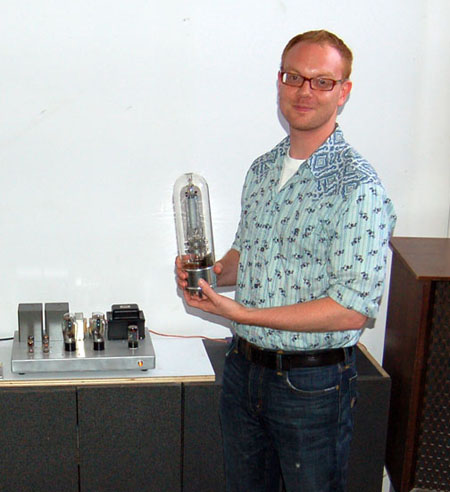
<i>Me, holding a very big tube, at Nori Komuro's place in Brooklyn. To my right, Komuro's prototype VT-52 sits quietly. Photo by Michael Lavorgna.</i>


<i>Me, holding a very big tube, at Nori Komuro's place in Brooklyn. To my right, Komuro's prototype VT-52 sits quietly. Photo by Michael Lavorgna.</i>
There are an increasing number of articles on the Web regarding cables/speaker wire and their sonic properties. Combine this with some "blind" listening sessions (like the one substituting a coat hanger) and any sensible person has reason to pause. Do you find yourself more dubious about manufacturers' performance claims? Has this affected your spending habits?
As I write, it is garage-sale season here again in Santa Fe, and a recent sign near my home advertised "Over 3000 LPs, good condition, low prices." To my surprise, the seller wasn't a yuppie enamored of his new CD player but a true collector discarding the duplicates and dogs from his collection. 30 minutes later, many LPs heavier—including a mint Flanders & Swan <I>At the Drop of a Hat</I> (footnote 1)—and not too many dollars lighter, I returned to a great night's listening courtesy of the black vinyl disc.
When I visited The Louis Armstrong Archives a few years ago to visit archivist Michael Cogswell, Cogswell escorted me back into the stacks to show me Armstrong's collection of 650 open-reel tapes, almost all of which sported collages assembled by the great trumpeter. More than touching his trumpet, I felt a direct connection to Armstrong viewing (and hearing) his mix tapes—Satchmo was one of us!
On June 11, <I>Recording Industry vs the People</I>, Ray Beckerman's popular blogspot site covering the recording industry's ongoing series of litigations, revealed that the Recording Industry Association of America (RIAA) had voluntarily and "without prejudice" filed a motion on May 27 to dismiss its ongoing complaint, <I>Warner v Cassin</I>, which maintained that posting files to a peer-to-peer network was distribution of those files, whether or not actual distribution occurred. This is known in copyright law as "making available."
It has been an action packed week on the judicial copyright battlefield. One June 11, a <A HREF="http://www.eff.org/files/filenode/umg_v_augusto/LA07CV03106SJO-O.pdf">f… district court upheld</A> the <A HREF="http://www.eff.org/deeplinks/2007/08/first-sale-why-it-matters-why-were… sale doctrine</A> , ruling in <I>UMG v Troy Augusto</I> that sales of promotional CDs did not constitute a copyright violation.
Even the Onion is reporting on the vinyl revival. CDs are really in trouble now.
Stuff is happening faster than I can responsibly blog. So fast and far and wide, in fact, it makes me wonder if it's actually happening at all. You know how it is when you learn a new word and you suddenly begin hearing that word <i>everywhere</i>?
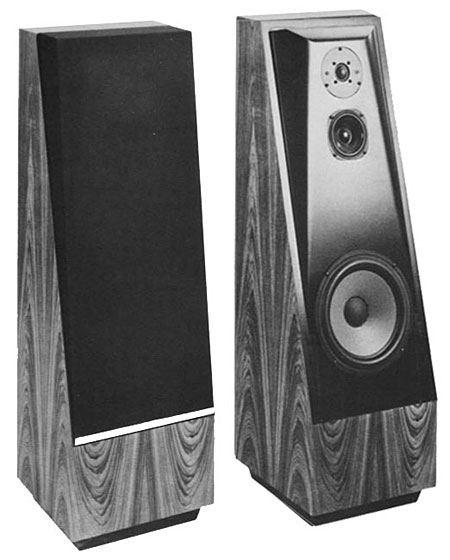
Thiel is one of those loudspeaker manufacturers, like Spica and Dahiquist, among others, that pay close attention to detail.
As the May issue was being put to bed, the Internet was all aflutter over a proposal by digital strategy consultant Jim Griffin to have Internet Service Providers (ISPs) levy a $5 surcharge—a "network licensing model"—on all broadband users. Under this model, Griffin proposes that ISPs collect the fee, which would then be paid into a pool to "compensate music-copyright holders." Griffin says that consumers who do not download digital music files would not be forced to pay the surcharge, but that he anticipates "70–80% would pay" for all the content they could download.