

The 5th Element #26
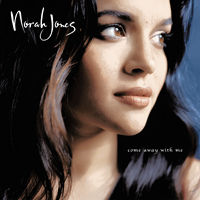
Perhaps I first should have consulted my horoscope in the local newspaper. But I can't imagine what it could have said that might have warned me off. So, in blissful ignorance, I went to the local big-box consumer-electronics chain retailer and laid down my lettuce. I thought I was buying the SACD version of Norah Jones' Come Away With Me (Blue Note 5 41472 8), but, by the end of the affair, I felt I'd gotten The Royal Scam (footnote 1).
The 5th Element #27
What has happened will happen again, and what has been done will be done again, and there is nothing new under the sun.—Ecclesiastes 1:9
The Fifth Element #1
From the days of Les Paul's chum Mary Ford, through Amanda McBroom and Jennifer Warnes, right up to Patricia Barber, audiophiles have been fascinated, and sometimes obsessed, with female vocals. I nominate to membership in that select sorority another Patricia, in this case O'Callaghan, whose third CD has just been released worldwide by her new label, Teldec.
The Fifth Element #10
The fundamental object of the invention is to provide...the listener a realistic impression that the intelligence is being communicated to him over two acoustic paths in the same manner as he experiences in listening to everyday acoustic intercourse....—Blumlein, et al, British Patent #394,325, issued June 14, 1933
The Fifth Element #12
The subject was horses' fannies.
The Fifth Element #13
Aristotle, what a guy.
The Fifth Element #14
The custom of giving presents at Christmastime recalls the Magi, or wise men, of the Nativity story (Matthew 2:1-16), who were most likely not "kings" but astrologers. Paintings usually depict three wise men presenting gifts to a newborn in a stable. However, a persnickety reading of Matthew's text reveals that the precise number of Magi, although it must have been at least two, is not stated. The text specifically mentions a house rather than a stable, and implies that Jesus was a toddler. So much for the great Renaissance painters doing their research, or even reading carefully. The text, however, does specify three gifts, and it is that inventory—of gold, frankincense, and myrrh—which has given rise to the common (but not necessarily commonsense) inference that the number of wise men was three.
The Fifth Element #15
The word chancellor derives, believe it or not, from the Italian word for wooden latticework, cancelli. In the church architecture of sixth-century Rome, a latticework screen demarcated an area near the altar where deacons or priests would stand, waiting to assist the principal celebrant as needed. In English, this area became known as the chancel. In consequence, a trusted assistant came to be known as a chancellor. In the High Middle Ages, that title was given to the cleric who would correspond on behalf of and maintain the archives for an important churchman, such as a bishop.
The Fifth Element #16
The lease said about my and my fathers trip from the Bureau of Manhattan to our new home the soonest mended. In some way ether I or he got balled up on the grand concorpse and next thing you know we was thretning to swoop down on Pittsfield.
The Fifth Element #17
Poetry, painting, and sculpture must lie, but they should lie with grandeur, charm, and splendor.—Napoléon I