The DIY Chronicles, Part One

The DIY Chronicles, Part One

E<I>ditor's Note: There is a large contingent of </I>Stereophile<I> readers who design and build their own equipment&mdash;the DIY (do it yourself) crowd. Herv&#233; Del&#233;traz from Switzerland has been e-mailing us photos and stories over the last year about his own ambitious DIY amplifier design, so we asked him if he'd be willing to share a chronicle of his progress, starting from the beginning. This is the first in a six-part series written by Mr. Del&#233;traz.</I>

Added to the Archives This Week

Added to the Archives This Week

Back in 1997, DVD-Audio was still miles away&mdash;and it may still be! But, as John Atkinson writes, "After a decade of stability, with slow but steady improvement in the quality of 16-bit/44.1kHz audio, the cry among audio engineers is now '24/96!'&mdash;meaning 24-bit data sampled at 96kHz. Not coincidentally, DVD offers audiophiles a medium with the potential for playing back music encoded at this new mastering standard." The <A HREF="http://www.stereophile.com//digitalsourcereviews/259/">dCS Elgar D/A processor</A> was one of the first consumer units able to decode 24/96, and still stands as a benchmark product. JA gives the details.

What audio ads have been especially effective or memorable for you?

Category

One of the most enduring advertisments for an audio product is Maxell's image of the seated listener with his hair blowing back in the wind created by the tape's alleged sound quality. Have any other marketing campaigns stuck with you?
Audio Shop till you Drop

Audio Shop till you Drop

E-wisdom holds that one of the big advantages about retailing on the Internet is that, once a comany is online, the entire world of consumers is only a few mouse clicks away. This concept holds up much better in theory than in practice. Language barriers, shipping costs, and import/export red tape (such as agreements controlling which countries a retailer can even sell a product line to) have all made the reality less than ideal for e-merchants.

Added to the Archives This Week

Added to the Archives This Week

Audiophiles aren't taking to the streets just yet, but John Atkinson is more than a little riled about the proposed watermarking of SACD and DVD-Audio recordings. In this month's "As We See It," "<A HREF="http://www.stereophile.com//asweseeit/257/">Watermarking: the Devil's Work!</A>," JA exhorts the audiophile masses to rise up in protest.

University Expansion in Chicago Sparks Protest by Bluesman

University Expansion in Chicago Sparks Protest by Bluesman

Chicago's Maxwell Street district is considered by many to be the birthplace of Chicago blues. But the old neighborhood is in danger of permanently losing some of its historic buildings, thanks to expansion plans by the <A HREF="http://www.uic.edu/">University of Illinois at Chicago</A>. The potential loss of the neighborhood has sparked protests by a coalition of blues musicians, including a hunger strike by 69-year-old <A HREF="http://www.acousticsounds.com/">APO Records</A> artist Jimmie Lee Robinson.

Subscriptions or Charge by the Track?

Subscriptions or Charge by the Track?

In an effort to move their businesses into cyberspace, record labels and audio content distributors are still experimenting with their online formulas. Key to the new economic models for selling music over the Net is this question: Would you rather pay a monthly subscription fee to download music, or pay for music track by track? According to market researcher <A HREF="http://gartner11.gartnerweb.com/public/static/home/home.html">Gartner Group</A>, sites that plan to sell music via the subscription model should seriously reconsider.

Challenges to Watermarking Continue in Wake of London Tests

Challenges to Watermarking Continue in Wake of London Tests

The <A HREF="http://www.sdmi.org/">Secure Digital Music Initiative</A> (SDMI) will soon move into Phase II of its evaluation of digital audio watermarking, following listening tests conducted in early July at Sony's Whitfield Street Studios in London and administered by Sony VP of engineering Malcolm Davidson. A soon-to-be-published report from Paul Jessop of the <A HREF="http://www.ifpi.org/">International Federation of Phonograph Industries</A> reveals that the participants in the tests&mdash;almost all of them audio-industry professionals or journalists&mdash;averaged just slightly better than 50% in their abilities to detect the watermarks.

Rockport Technologies System III Sirius turntable and tonearm Associated Equipment

Rockport Technologies System III Sirius turntable and tonearm Associated Equipment

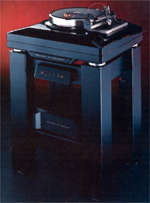
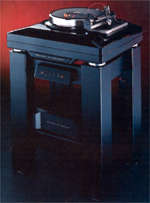
Andy Payor hurls a briefcase full of engineering and scientific mumbo-jumbo at in an attempt to justify the $73,750 price of the latest and greatest edition of his Rockport Technologies turntable, but really&mdash;isn't this all-air-driven design a case of analog overkill? After all, defining a turntable's job seems rather easy: rotate the record at an exact and constant speed, and, for a linear tracker, put the stylus in play across the record surface so that it maintains precise tangency to a radius described across the groove surface. By definition, a pivoted arm can't do that, so the goal there is to minimize the deviation. That's basically it. Right?

Rockport Technologies
229 Mill Street
Rockport, ME 04856
(207) 596-7151

Rockport Technologies System III Sirius turntable and tonearm Specifications

Rockport Technologies System III Sirius turntable and tonearm Specifications

Andy Payor hurls a briefcase full of engineering and scientific mumbo-jumbo at in an attempt to justify the $73,750 price of the latest and greatest edition of his Rockport Technologies turntable, but really&mdash;isn't this all-air-driven design a case of analog overkill? After all, defining a turntable's job seems rather easy: rotate the record at an exact and constant speed, and, for a linear tracker, put the stylus in play across the record surface so that it maintains precise tangency to a radius described across the groove surface. By definition, a pivoted arm can't do that, so the goal there is to minimize the deviation. That's basically it. Right?

Rockport Technologies
229 Mill Street
Rockport, ME 04856
(207) 596-7151
Advertisement
Advertisement
Advertisement
