The first thing you notice about Walter Sear's <A HREF="http://www.searsound.com">legendary Manhattan studio</A> is that it feels so darn comfortable. Sear Sound doesn't have a wall of gold records, gleaming million-dollar consoles, or the latest high-resolution digital workstations, but a quick stroll around the three studios reveals a treasure trove of tube and analog professional gear: a pair of <I>Sgt. Pepper</I>–era Studer recorders plucked from EMI's Abbey Road studios; an early Modular Moog synthesizer Sear built with Bob Moog; and a collection of 250 new and classic microphones.
The first thing you notice about Walter Sear's <A HREF="http://www.searsound.com">legendary Manhattan studio</A> is that it feels so darn comfortable. Sear Sound doesn't have a wall of gold records, gleaming million-dollar consoles, or the latest high-resolution digital workstations, but a quick stroll around the three studios reveals a treasure trove of tube and analog professional gear: a pair of <I>Sgt. Pepper</I>–era Studer recorders plucked from EMI's Abbey Road studios; an early Modular Moog synthesizer Sear built with Bob Moog; and a collection of 250 new and classic microphones.
When I was a young amateur photographer, I subscribed to all the major photo magazines and avidly read all the articles. However, I was bugged when I realized there was a cycle of repetition—that I was reading about the basics of Ansel Adams' Zone System for the third time.
When I was a young amateur photographer, I subscribed to all the major photo magazines and avidly read all the articles. However, I was bugged when I realized there was a cycle of repetition—that I was reading about the basics of Ansel Adams' Zone System for the third time.
When I was a young amateur photographer, I subscribed to all the major photo magazines and avidly read all the articles. However, I was bugged when I realized there was a cycle of repetition—that I was reading about the basics of Ansel Adams' Zone System for the third time.
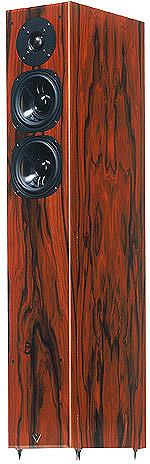
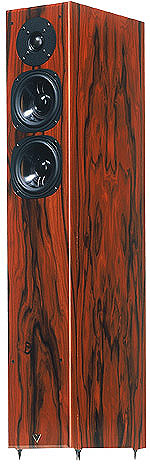
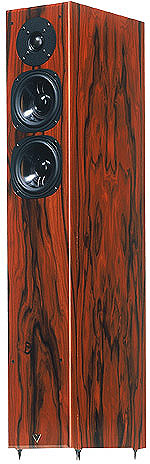
Vienna is a beautiful city known for many things, but the design and manufacturing of audio equipment is not one of them. Waltzes and strudel, yes; loudspeakers, no. One exception is Vienna Acoustics, a company that has introduced a line of loudspeakers named after composers: Mozart, Bach, Beethoven, and Haydn. At the 1996 Las Vegas WCES, Sumiko, US distributor of Vienna Acoustics products (footnote 1), demonstrated the second-from-the-top Mozart, and Stereophile reviewers as diverse in their approaches as Jonathan Scull, Tom Norton, and Sam Tellig (as well as yours truly) were unanimous in our admiration of the sound.
Vienna is a beautiful city known for many things, but the design and manufacturing of audio equipment is not one of them. Waltzes and strudel, yes; loudspeakers, no. One exception is Vienna Acoustics, a company that has introduced a line of loudspeakers named after composers: Mozart, Bach, Beethoven, and Haydn. At the 1996 Las Vegas WCES, Sumiko, US distributor of Vienna Acoustics products (footnote 1), demonstrated the second-from-the-top Mozart, and <I>Stereophile</I> reviewers as diverse in their approaches as Jonathan Scull, Tom Norton, and Sam Tellig (as well as yours truly) were unanimous in our admiration of the sound.
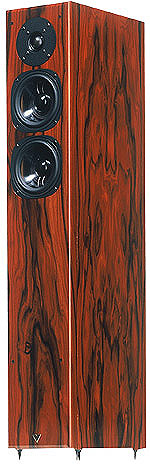
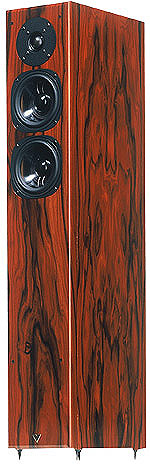
Vienna Acoustics Mozart loudspeaker Big 'Uns & Little 'Uns
Vienna is a beautiful city known for many things, but the design and manufacturing of audio equipment is not one of them. Waltzes and strudel, yes; loudspeakers, no. One exception is Vienna Acoustics, a company that has introduced a line of loudspeakers named after composers: Mozart, Bach, Beethoven, and Haydn. At the 1996 Las Vegas WCES, Sumiko, US distributor of Vienna Acoustics products (footnote 1), demonstrated the second-from-the-top Mozart, and <I>Stereophile</I> reviewers as diverse in their approaches as Jonathan Scull, Tom Norton, and Sam Tellig (as well as yours truly) were unanimous in our admiration of the sound.
Vienna is a beautiful city known for many things, but the design and manufacturing of audio equipment is not one of them. Waltzes and strudel, yes; loudspeakers, no. One exception is Vienna Acoustics, a company that has introduced a line of loudspeakers named after composers: Mozart, Bach, Beethoven, and Haydn. At the 1996 Las Vegas WCES, Sumiko, US distributor of Vienna Acoustics products (footnote 1), demonstrated the second-from-the-top Mozart, and <I>Stereophile</I> reviewers as diverse in their approaches as Jonathan Scull, Tom Norton, and Sam Tellig (as well as yours truly) were unanimous in our admiration of the sound.
Vienna is a beautiful city known for many things, but the design and manufacturing of audio equipment is not one of them. Waltzes and strudel, yes; loudspeakers, no. One exception is Vienna Acoustics, a company that has introduced a line of loudspeakers named after composers: Mozart, Bach, Beethoven, and Haydn. At the 1996 Las Vegas WCES, Sumiko, US distributor of Vienna Acoustics products (footnote 1), demonstrated the second-from-the-top Mozart, and <I>Stereophile</I> reviewers as diverse in their approaches as Jonathan Scull, Tom Norton, and Sam Tellig (as well as yours truly) were unanimous in our admiration of the sound.