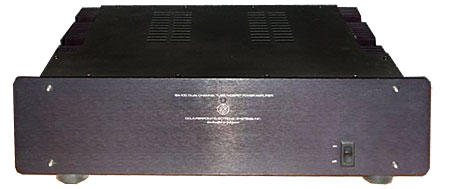
Counterpoint SA-100 power amplifier Specifications
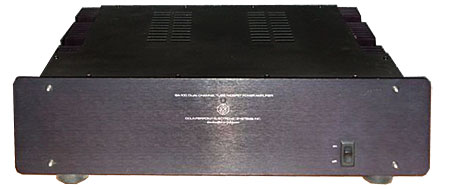
The $1200 Counterpoint SA-100 amplifier came up to bat fourth in my listening sessions, behind (in order of appearance) the <A HREF="http://www.stereophile.com/solidpoweramps/678">Adcom GFA-555 II</A> (not reviewed here, but sent along by JA for comparison purposes), the <A HREF="http://www.stereophile.com/tubepoweramps/491vtl">VTL Tiny Triode</A> monoblocks, and the <A HREF="http://www.stereophile.com/solidpoweramps/491muse">Muse Model One Hundred</A>. Thus, my progression went from bipolar solid-state to tube to MOSFET, with a wide spread of sonic characteristics between them: stygian bass from the Adcom; uncanny spatial presentation and vocal reproduction from the VTLs; and an overall superior sound from the Muse. I was therefore eager to see where the tube/MOSFET hybrid Counterpoint would fall in this group of very different-sounding amplifiers.
The $1200 Counterpoint SA-100 amplifier came up to bat fourth in my listening sessions, behind (in order of appearance) the <A HREF="http://www.stereophile.com/solidpoweramps/678">Adcom GFA-555 II</A> (not reviewed here, but sent along by JA for comparison purposes), the <A HREF="http://www.stereophile.com/tubepoweramps/491vtl">VTL Tiny Triode</A> monoblocks, and the <A HREF="http://www.stereophile.com/solidpoweramps/491muse">Muse Model One Hundred</A>. Thus, my progression went from bipolar solid-state to tube to MOSFET, with a wide spread of sonic characteristics between them: stygian bass from the Adcom; uncanny spatial presentation and vocal reproduction from the VTLs; and an overall superior sound from the Muse. I was therefore eager to see where the tube/MOSFET hybrid Counterpoint would fall in this group of very different-sounding amplifiers.
The $1200 Counterpoint SA-100 amplifier came up to bat fourth in my listening sessions, behind (in order of appearance) the <A HREF="http://www.stereophile.com/solidpoweramps/678">Adcom GFA-555 II</A> (not reviewed here, but sent along by JA for comparison purposes), the <A HREF="http://www.stereophile.com/tubepoweramps/491vtl">VTL Tiny Triode</A> monoblocks, and the <A HREF="http://www.stereophile.com/solidpoweramps/491muse">Muse Model One Hundred</A>. Thus, my progression went from bipolar solid-state to tube to MOSFET, with a wide spread of sonic characteristics between them: stygian bass from the Adcom; uncanny spatial presentation and vocal reproduction from the VTLs; and an overall superior sound from the Muse. I was therefore eager to see where the tube/MOSFET hybrid Counterpoint would fall in this group of very different-sounding amplifiers.
Counterpoint SA-100 power amplifier Postscript: A New Sample
The $1200 Counterpoint SA-100 amplifier came up to bat fourth in my listening sessions, behind (in order of appearance) the <A HREF="http://www.stereophile.com/solidpoweramps/678">Adcom GFA-555 II</A> (not reviewed here, but sent along by JA for comparison purposes), the <A HREF="http://www.stereophile.com/tubepoweramps/491vtl">VTL Tiny Triode</A> monoblocks, and the <A HREF="http://www.stereophile.com/solidpoweramps/491muse">Muse Model One Hundred</A>. Thus, my progression went from bipolar solid-state to tube to MOSFET, with a wide spread of sonic characteristics between them: stygian bass from the Adcom; uncanny spatial presentation and vocal reproduction from the VTLs; and an overall superior sound from the Muse. I was therefore eager to see where the tube/MOSFET hybrid Counterpoint would fall in this group of very different-sounding amplifiers.
The $1200 Counterpoint SA-100 amplifier came up to bat fourth in my listening sessions, behind (in order of appearance) the <A HREF="http://www.stereophile.com/solidpoweramps/678">Adcom GFA-555 II</A> (not reviewed here, but sent along by JA for comparison purposes), the <A HREF="http://www.stereophile.com/tubepoweramps/491vtl">VTL Tiny Triode</A> monoblocks, and the <A HREF="http://www.stereophile.com/solidpoweramps/491muse">Muse Model One Hundred</A>. Thus, my progression went from bipolar solid-state to tube to MOSFET, with a wide spread of sonic characteristics between them: stygian bass from the Adcom; uncanny spatial presentation and vocal reproduction from the VTLs; and an overall superior sound from the Muse. I was therefore eager to see where the tube/MOSFET hybrid Counterpoint would fall in this group of very different-sounding amplifiers.
What's in a name? Quite a bit, when you stop and think about it. Would you rather have prostate surgery by Dr. Steadyhand or Dr. Whoops? Names imply a lot, even if we don't consciously make the connection; that's why your Polo shirt was made by Ralph Lauren instead of Ralph Lipshitz.
What's in a name? Quite a bit, when you stop and think about it. Would you rather have prostate surgery by Dr. Steadyhand or Dr. Whoops? Names imply a lot, even if we don't consciously make the connection; that's why your Polo shirt was made by Ralph Lauren instead of Ralph Lipshitz.
Sumo Polaris II power amplifier Postscript: Turning the Other Cheek
What's in a name? Quite a bit, when you stop and think about it. Would you rather have prostate surgery by Dr. Steadyhand or Dr. Whoops? Names imply a lot, even if we don't consciously make the connection; that's why your Polo shirt was made by Ralph Lauren instead of Ralph Lipshitz.
What's in a name? Quite a bit, when you stop and think about it. Would you rather have prostate surgery by Dr. Steadyhand or Dr. Whoops? Names imply a lot, even if we don't consciously make the connection; that's why your Polo shirt was made by Ralph Lauren instead of Ralph Lipshitz.
What's in a name? Quite a bit, when you stop and think about it. Would you rather have prostate surgery by Dr. Steadyhand or Dr. Whoops? Names imply a lot, even if we don't consciously make the connection; that's why your Polo shirt was made by Ralph Lauren instead of Ralph Lipshitz.