The Science of Subwoofing Page 5

The Science of Subwoofing Page 5

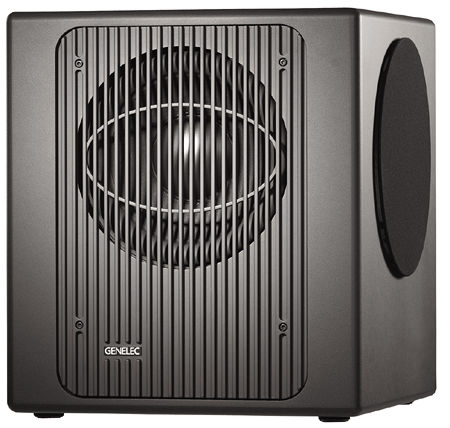
There was a time, as recently as 40 years ago, when frequencies below 100Hz were considered extreme lows, and reproduction below 50Hz was about as common as the unicorn. From our present technological perch, it's too easy to smirk condescendingly at such primitive conditions. But just so you're able to sympathize with the plight of these disadvantaged audiophiles, I should tell you that there were two perfectly good reasons for this parlous state of affairs. First of all, program material at that time was devoid of deep bass; not because it was removed during disc mastering but simply because there wasn't any to begin with. The professional tape recorders of the day featured a frequency response of 50–15kHz, ±2dB—just about on a par with the frequency performance capability of a cheap 1988 cassette tape deck.

The Science of Subwoofing Page 4

The Science of Subwoofing Page 4

There was a time, as recently as 40 years ago, when frequencies below 100Hz were considered extreme lows, and reproduction below 50Hz was about as common as the unicorn. From our present technological perch, it's too easy to smirk condescendingly at such primitive conditions. But just so you're able to sympathize with the plight of these disadvantaged audiophiles, I should tell you that there were two perfectly good reasons for this parlous state of affairs. First of all, program material at that time was devoid of deep bass; not because it was removed during disc mastering but simply because there wasn't any to begin with. The professional tape recorders of the day featured a frequency response of 50–15kHz, ±2dB—just about on a par with the frequency performance capability of a cheap 1988 cassette tape deck.

The Science of Subwoofing Page 3

The Science of Subwoofing Page 3

There was a time, as recently as 40 years ago, when frequencies below 100Hz were considered extreme lows, and reproduction below 50Hz was about as common as the unicorn. From our present technological perch, it's too easy to smirk condescendingly at such primitive conditions. But just so you're able to sympathize with the plight of these disadvantaged audiophiles, I should tell you that there were two perfectly good reasons for this parlous state of affairs. First of all, program material at that time was devoid of deep bass; not because it was removed during disc mastering but simply because there wasn't any to begin with. The professional tape recorders of the day featured a frequency response of 50–15kHz, ±2dB—just about on a par with the frequency performance capability of a cheap 1988 cassette tape deck.

The Science of Subwoofing Page 2

The Science of Subwoofing Page 2

There was a time, as recently as 40 years ago, when frequencies below 100Hz were considered extreme lows, and reproduction below 50Hz was about as common as the unicorn. From our present technological perch, it's too easy to smirk condescendingly at such primitive conditions. But just so you're able to sympathize with the plight of these disadvantaged audiophiles, I should tell you that there were two perfectly good reasons for this parlous state of affairs. First of all, program material at that time was devoid of deep bass; not because it was removed during disc mastering but simply because there wasn't any to begin with. The professional tape recorders of the day featured a frequency response of 50–15kHz, ±2dB—just about on a par with the frequency performance capability of a cheap 1988 cassette tape deck.

The Science of Subwoofing

The Science of Subwoofing

There was a time, as recently as 40 years ago, when frequencies below 100Hz were considered extreme lows, and reproduction below 50Hz was about as common as the unicorn. From our present technological perch, it's too easy to smirk condescendingly at such primitive conditions. But just so you're able to sympathize with the plight of these disadvantaged audiophiles, I should tell you that there were two perfectly good reasons for this parlous state of affairs. First of all, program material at that time was devoid of deep bass; not because it was removed during disc mastering but simply because there wasn't any to begin with. The professional tape recorders of the day featured a frequency response of 50–15kHz, ±2dB—just about on a par with the frequency performance capability of a cheap 1988 cassette tape deck.

Buy Cheap Speakers—Have Fun!

Buy Cheap Speakers—Have Fun!

"Be like my friend Frank. He imagines that he's purchased certain products—right now he's imagining that he bought a pair of hard-to-get English speakers which he has read a review of but hasn't heard. This is ideal, since the speakers can sound better and better as Frank imagines more and more. When he tires of these speakers and gets excited about something else, he doesn't have to trade them in. He only needs to start imagining the next product." That was Sam Tellig's friend Frank, back in March of this year. No one could have said it better, but I have a followup.

Zappa Returns!

Kudos on the excellent Frank Zappa article in the November Stereophile. I hope this piece quickly makes its way to the website so I can send it to a few fellow Zappaphiles. Stephen, John, anyone listening?

Would you re-cartridge or re-tip this?

I am thinking about re-activating my old turntable (belt drive Tannoy Micro TM33) to add it to my second system. It has a Stanton 681EEE phono cartridge (MM) on it - good for the 1970's but I don't know where it stands now. I will replace the stylus (I replaced it maybe 10 times in its previous career). New stylus about $70. Would you go that way, or look for an entirely new cartridge in that price range?

(edited from a post in another section, please excuse)
La Rumba Buena

La Rumba Buena

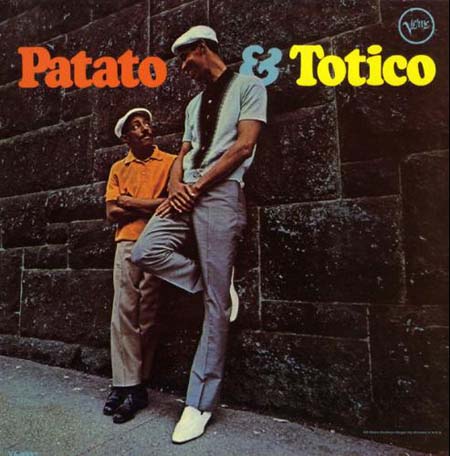
I found out about <i>Patato & Totico</i> all on my own, and completely by accident. It happened during the height of my salsa fixation, just after I completed <a href="http://blog.stereophile.com/stephenmejias/101807mix/">my first <i>Salsa Means Soul</i> compilation</a>. Searching the compact disc shelves at the Virgin Megastore for an album called <i>Cuban Pearls</i>, and specifically for a <i>song</i> called "Oriente" by Cheo Marquetti, I instead stumbled upon the Verve reissue of this 1967 work by famed congero Carlos "Patato" Valdes and vocalist Eugenio "Totico" Arango.

Advertisement
Advertisement
Advertisement