Recording of December 1995: Keith Jarrett at the Blue Note
Dec 23, 1995
<B>KEITH JARRETT: <I>At the Blue Note: The Complete Recordings</I></B><BR> Keith Jarrett, piano; Gary Peacock, bass; Jack DeJohnette, drums<BR> ECM 1575-80 (78118-21575-2, 6 CDs only). Manfred Eicher, prod.; Jan Erik Kongshaug, eng. DDD. TT: 7:03:37
There's No Business Like the Hi-Fi Business Page 5
You're a typical audiophile. You read this magazine and others like it cover to cover, month after month, keeping up with industry trends and insider gossip. You've ingratiated yourself with every hi-fi dealer in your area, all of whom will let you take equipment home for extended auditions, give you generous trade-in allowances, and sell to you at a small percentage above their cost. <I>Never pay retail</I>, you chuckle to yourself, checking the newspaper's classifieds for audio bargains.
There's No Business Like the Hi-Fi Business Page 4
You're a typical audiophile. You read this magazine and others like it cover to cover, month after month, keeping up with industry trends and insider gossip. You've ingratiated yourself with every hi-fi dealer in your area, all of whom will let you take equipment home for extended auditions, give you generous trade-in allowances, and sell to you at a small percentage above their cost. <I>Never pay retail</I>, you chuckle to yourself, checking the newspaper's classifieds for audio bargains.
There's No Business Like the Hi-Fi Business Page 3
You're a typical audiophile. You read this magazine and others like it cover to cover, month after month, keeping up with industry trends and insider gossip. You've ingratiated yourself with every hi-fi dealer in your area, all of whom will let you take equipment home for extended auditions, give you generous trade-in allowances, and sell to you at a small percentage above their cost. <I>Never pay retail</I>, you chuckle to yourself, checking the newspaper's classifieds for audio bargains.
There's No Business Like the Hi-Fi Business Page 2
You're a typical audiophile. You read this magazine and others like it cover to cover, month after month, keeping up with industry trends and insider gossip. You've ingratiated yourself with every hi-fi dealer in your area, all of whom will let you take equipment home for extended auditions, give you generous trade-in allowances, and sell to you at a small percentage above their cost. <I>Never pay retail</I>, you chuckle to yourself, checking the newspaper's classifieds for audio bargains.
You're a typical audiophile. You read this magazine and others like it cover to cover, month after month, keeping up with industry trends and insider gossip. You've ingratiated yourself with every hi-fi dealer in your area, all of whom will let you take equipment home for extended auditions, give you generous trade-in allowances, and sell to you at a small percentage above their cost. <I>Never pay retail</I>, you chuckle to yourself, checking the newspaper's classifieds for audio bargains.
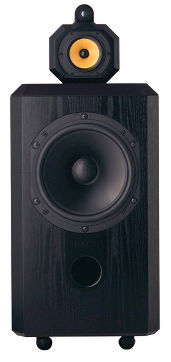
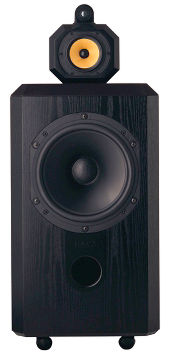
Since the introduction of the original B&W 801 monitor loudspeaker in 1980, it has been adopted as a reference by several recording studios around the world, Over the past five years, I have seen 801s present in just about every recording session with which I have been artistically involved. While the original 801 monitor had its strong points, I was never satisfied with the detached and muddy-sounding bass, discontinuous driver balance, and low sensitivity. Unless this speaker was driven by an enormous solid-state power amplifier, with an elevated high-frequency response, the tubby and slow bass response often obliterated any detail in the two bottom octaves of musical material.
Since the introduction of the original B&W 801 monitor loudspeaker in 1980, it has been adopted as a reference by several recording studios around the world, Over the past five years, I have seen 801s present in just about every recording session with which I have been artistically involved. While the original 801 monitor had its strong points, I was never satisfied with the detached and muddy-sounding bass, discontinuous driver balance, and low sensitivity. Unless this speaker was driven by an enormous solid-state power amplifier, with an elevated high-frequency response, the tubby and slow bass response often obliterated any detail in the two bottom octaves of musical material.