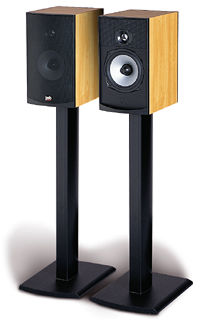
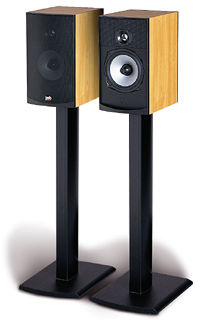
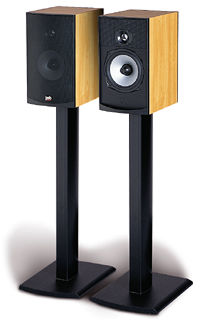
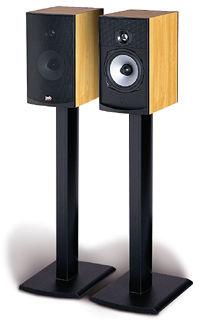
<A HREF="http://www.stereophile.com//interviews/231/">Paul Barton</A> is a legend in the speaker business. For 25 years this musician and engineer has dedicated his life to providing speaker purchasers with higher levels of sonic realism at lower prices. Barton is a frugal perfectionist, and his obsession with psychoacoustics is evident in all his designs. I was mightily impressed with his midpriced Image 4T (<I>Stereophile</I>, February 2001), which was, like all Barton designs, designed with the assistance of the facilities of Canada's National Research Council.
<A HREF="http://www.stereophile.com//interviews/231/">Paul Barton</A> is a legend in the speaker business. For 25 years this musician and engineer has dedicated his life to providing speaker purchasers with higher levels of sonic realism at lower prices. Barton is a frugal perfectionist, and his obsession with psychoacoustics is evident in all his designs. I was mightily impressed with his midpriced Image 4T (<I>Stereophile</I>, February 2001), which was, like all Barton designs, designed with the assistance of the facilities of Canada's National Research Council.
<A HREF="http://www.stereophile.com//interviews/231/">Paul Barton</A> is a legend in the speaker business. For 25 years this musician and engineer has dedicated his life to providing speaker purchasers with higher levels of sonic realism at lower prices. Barton is a frugal perfectionist, and his obsession with psychoacoustics is evident in all his designs. I was mightily impressed with his midpriced Image 4T (<I>Stereophile</I>, February 2001), which was, like all Barton designs, designed with the assistance of the facilities of Canada's National Research Council.
Paul Barton is a legend in the speaker business. For 25 years this musician and engineer has dedicated his life to providing speaker purchasers with higher levels of sonic realism at lower prices. Barton is a frugal perfectionist, and his obsession with psychoacoustics is evident in all his designs. I was mightily impressed with his midpriced Image 4T (Stereophile, February 2001), which was, like all Barton designs, designed with the assistance of the facilities of Canada's National Research Council.
Ah me. Victoria's Secret underwear (sorry; <I>lingerie</I>) model Rebecca Romijn-Stamos' publicist politely declined my request for an interview with her. An interview with the model, not the publicist. But you already knew that, and you are (best Claude Rains voice) shocked—<I>shocked!</I>
Ah me. Victoria's Secret underwear (sorry; <I>lingerie</I>) model Rebecca Romijn-Stamos' publicist politely declined my request for an interview with her. An interview with the model, not the publicist. But you already knew that, and you are (best Claude Rains voice) shocked—<I>shocked!</I>
Ah me. Victoria's Secret underwear (sorry; <I>lingerie</I>) model Rebecca Romijn-Stamos' publicist politely declined my request for an interview with her. An interview with the model, not the publicist. But you already knew that, and you are (best Claude Rains voice) shocked—<I>shocked!</I>
Quicksilver Audio Horn Mono monoblock power amplifier Measurements part 2
Single-ended triode (SET) amplifiers are typically paired with horn loudspeakers, for good reason: most SETs produce very low power, so to get acceptable loudness you need a highly sensitive speaker, which means horns. Similarly, horn owners are often advised that the best amplifier for their speakers is a SET. Certainly, the horn-SET combination can be magical, but, in my experience, SETs are not the only type of amplifier that can sound good with horns.
Quicksilver Audio Horn Mono monoblock power amplifier Measurements
Single-ended triode (SET) amplifiers are typically paired with horn loudspeakers, for good reason: most SETs produce very low power, so to get acceptable loudness you need a highly sensitive speaker, which means horns. Similarly, horn owners are often advised that the best amplifier for their speakers is a SET. Certainly, the horn-SET combination can be magical, but, in my experience, SETs are not the only type of amplifier that can sound good with horns.
Quicksilver Audio Horn Mono monoblock power amplifier Associated Equipment
Single-ended triode (SET) amplifiers are typically paired with horn loudspeakers, for good reason: most SETs produce very low power, so to get acceptable loudness you need a highly sensitive speaker, which means horns. Similarly, horn owners are often advised that the best amplifier for their speakers is a SET. Certainly, the horn-SET combination can be magical, but, in my experience, SETs are not the only type of amplifier that can sound good with horns.