What music lovers have suspected for months, and record labels vehemently deny, has apparently been confirmed by <A HREF="http://www.forrester.com">Forrester Research</A>: Piracy is not responsible for the 15% drop in music sales in the past two years. According to a new report from Forrester, "Labels can restore industry growth by making it easier for people to find, copy, and pay for music on their own terms."
Digital satellite radio is one of the most promising entertainment developments since the invention of the DVD. It's also a high-risk venture for investors.
Questionable accounting practices were at the heart of the collapse of energy conglomerate Enron and telecommunications giant WorldCom. Apparently, they are also rampant in the music industry—or at least pervasive enough to command the attention of California state legislators, who have scheduled a second hearing to examine the situation.
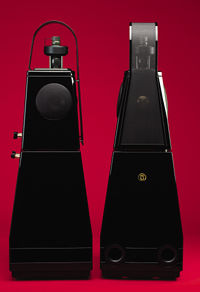
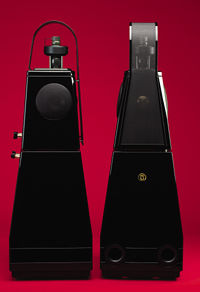
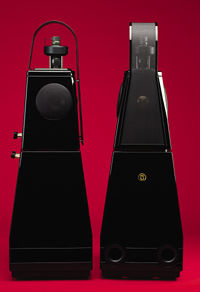
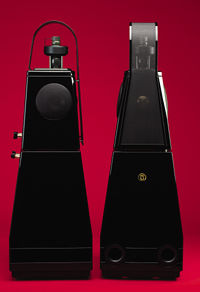
John Atkinson gets his hands on "the very strange-looking" <A HREF="http://www.stereophile.com//loudspeakerreviews/643/">MBL 111B loudspeaker</A> to determine how "upper-frequency drive-units resembling an array of orange segments" could possibly sound. As JA discovers, thinking different can sometimes be a plus.
The music industry's anti-piracy war took a new turn August 16, when a coalition of major record labels filed suit against several large Internet service providers in the hope of blocking access to an offshore free music site.
"The vinyl record should be commemorated, not forgotten, for its unique contribution to our society. Therefore the County of San Luis Obispo, in the state of California, proclaims a celebration of the memories of music. '<A HREF="http://www.vinylrecordday.com/">Vinyl Record Day</A>' will be celebrated to acknowledge vinyl records' influence on individuals and cultures worldwide. The date is August 12th, the date of the invention of the phonograph by Thomas Edison in 1877."
It was almost five years ago that I first spent some serious auditioning time with an omnidirectional two-piece speaker from German manufacturer MBL: the four-way MBL 111. When I reviewed the 111 in the April 1998 <I>Stereophile</I>, I had been extremely impressed with the speaker's stereo imaging, which was superbly stable and well-defined, with images that floated completely free of the speaker positions. The tonal balance was also excellent, with a rich midrange, superbly clean highs, and extended lows. "This <I>Radialstrahler</I> is one of the best tweeters I have experienced," I wrote. In fact, the 111 was let down only by bass frequencies that tended to lag behind the music slightly.
It was almost five years ago that I first spent some serious auditioning time with an omnidirectional two-piece speaker from German manufacturer MBL: the four-way MBL 111. When I reviewed the 111 in the April 1998 <I>Stereophile</I>, I had been extremely impressed with the speaker's stereo imaging, which was superbly stable and well-defined, with images that floated completely free of the speaker positions. The tonal balance was also excellent, with a rich midrange, superbly clean highs, and extended lows. "This <I>Radialstrahler</I> is one of the best tweeters I have experienced," I wrote. In fact, the 111 was let down only by bass frequencies that tended to lag behind the music slightly.
It was almost five years ago that I first spent some serious auditioning time with an omnidirectional two-piece speaker from German manufacturer MBL: the four-way MBL 111. When I reviewed the 111 in the April 1998 <I>Stereophile</I>, I had been extremely impressed with the speaker's stereo imaging, which was superbly stable and well-defined, with images that floated completely free of the speaker positions. The tonal balance was also excellent, with a rich midrange, superbly clean highs, and extended lows. "This <I>Radialstrahler</I> is one of the best tweeters I have experienced," I wrote. In fact, the 111 was let down only by bass frequencies that tended to lag behind the music slightly.
It was almost five years ago that I first spent some serious auditioning time with an omnidirectional two-piece speaker from German manufacturer MBL: the four-way MBL 111. When I reviewed the 111 in the April 1998 Stereophile, I had been extremely impressed with the speaker's stereo imaging, which was superbly stable and well-defined, with images that floated completely free of the speaker positions. The tonal balance was also excellent, with a rich midrange, superbly clean highs, and extended lows. "This Radialstrahler is one of the best tweeters I have experienced," I wrote. In fact, the 111 was let down only by bass frequencies that tended to lag behind the music slightly.