In January, <A HREF="http://www.npr.org/">National Public Radio</A> launched an ambitious series chronicling the history of the 20th century in sound. <I>Lost & Found Sound</I> began with the first half of a two-part piece on the father of audio technology, entitled "The Rise and Fall of Thomas Alva Edison." Part two, which examines Edison's competition, will be broadcast this week.
Until the end of January, the <A HREF="http://www.fcc.gov/">Federal Communications Commission</A> had <A HREF="http://www.stereophile.com/news/10244/">opposed</A> the proliferation of low-power FM radio stations. "Microradio," as it is sometimes called, has been an ongoing problem for the agency since inexpensive broadcasting gear became widely available several years ago. Primarily an urban phenomenon, microradio consists of individuals and small groups with a hodgepodge of equipment, who wedge themselves into unoccupied slots in the crowded FM band.
Musician, martial artist, and electronics whiz Ben Blish has loved audio since he was a little kid staring into the glowing tubes of his father's Scott hi-fi equipment. Thirty-four years after catching the bug, he still nurtures it daily.
MSB Technology Link D/A converter Measurements part 3
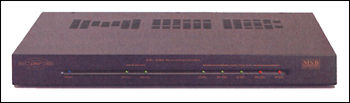
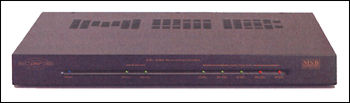
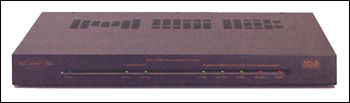
Recently, we've seen the digital "horsepower" race accelerate with the arrival of digital sources and devices with 24-bit and 96kHz sampling capability. Much of this has been spurred by the 24/96 labels emblazoned on the newer DVD players—and, within the purer confines of the audio community, by high-end DACs with this same ability. Indeed, it's possible that the dCS Elgar DAC, near and dear to John Atkinson's heart and a perennial Class A selection in <I>Stereophile</I>'s "Recommended Components," performs so well with standard 16-bit/44.1kHz sources because its wider digital bandwidth permits greater linearity within the more restricted range of regular CDs.
MSB Technology Link D/A converter Measurements part 2
Recently, we've seen the digital "horsepower" race accelerate with the arrival of digital sources and devices with 24-bit and 96kHz sampling capability. Much of this has been spurred by the 24/96 labels emblazoned on the newer DVD players—and, within the purer confines of the audio community, by high-end DACs with this same ability. Indeed, it's possible that the dCS Elgar DAC, near and dear to John Atkinson's heart and a perennial Class A selection in <I>Stereophile</I>'s "Recommended Components," performs so well with standard 16-bit/44.1kHz sources because its wider digital bandwidth permits greater linearity within the more restricted range of regular CDs.
Recently, we've seen the digital "horsepower" race accelerate with the arrival of digital sources and devices with 24-bit and 96kHz sampling capability. Much of this has been spurred by the 24/96 labels emblazoned on the newer DVD players—and, within the purer confines of the audio community, by high-end DACs with this same ability. Indeed, it's possible that the dCS Elgar DAC, near and dear to John Atkinson's heart and a perennial Class A selection in <I>Stereophile</I>'s "Recommended Components," performs so well with standard 16-bit/44.1kHz sources because its wider digital bandwidth permits greater linearity within the more restricted range of regular CDs.
MSB Technology Link D/A converter Associated Equipment
Recently, we've seen the digital "horsepower" race accelerate with the arrival of digital sources and devices with 24-bit and 96kHz sampling capability. Much of this has been spurred by the 24/96 labels emblazoned on the newer DVD players—and, within the purer confines of the audio community, by high-end DACs with this same ability. Indeed, it's possible that the dCS Elgar DAC, near and dear to John Atkinson's heart and a perennial Class A selection in <I>Stereophile</I>'s "Recommended Components," performs so well with standard 16-bit/44.1kHz sources because its wider digital bandwidth permits greater linearity within the more restricted range of regular CDs.
Recently, we've seen the digital "horsepower" race accelerate with the arrival of digital sources and devices with 24-bit and 96kHz sampling capability. Much of this has been spurred by the 24/96 labels emblazoned on the newer DVD players—and, within the purer confines of the audio community, by high-end DACs with this same ability. Indeed, it's possible that the dCS Elgar DAC, near and dear to John Atkinson's heart and a perennial Class A selection in <I>Stereophile</I>'s "Recommended Components," performs so well with standard 16-bit/44.1kHz sources because its wider digital bandwidth permits greater linearity within the more restricted range of regular CDs.
Recently, we've seen the digital "horsepower" race accelerate with the arrival of digital sources and devices with 24-bit and 96kHz sampling capability. Much of this has been spurred by the 24/96 labels emblazoned on the newer DVD players—and, within the purer confines of the audio community, by high-end DACs with this same ability. Indeed, it's possible that the dCS Elgar DAC, near and dear to John Atkinson's heart and a perennial Class A selection in <I>Stereophile</I>'s "Recommended Components," performs so well with standard 16-bit/44.1kHz sources because its wider digital bandwidth permits greater linearity within the more restricted range of regular CDs.
Recently, we've seen the digital "horsepower" race accelerate with the arrival of digital sources and devices with 24-bit and 96kHz sampling capability. Much of this has been spurred by the 24/96 labels emblazoned on the newer DVD players—and, within the purer confines of the audio community, by high-end DACs with this same ability. Indeed, it's possible that the dCS Elgar DAC, near and dear to John Atkinson's heart and a perennial Class A selection in <I>Stereophile</I>'s "Recommended Components," performs so well with standard 16-bit/44.1kHz sources because its wider digital bandwidth permits greater linearity within the more restricted range of regular CDs.