Can you set up and align your own cartridge?
As technology marches on, some of the old audiophile ways become lost arts. Do you still have the skills needed to set up and align a cartridge on a tonearm and turntable?


As technology marches on, some of the old audiophile ways become lost arts. Do you still have the skills needed to set up and align a cartridge on a tonearm and turntable?
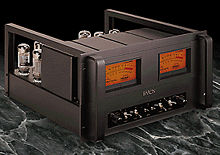
Some audiophiles tend to get a mite sniffy around those of us who have expensive tastes and limited budgets. I've always been willing to spend the price of a new car on a set of speakers, but I never had the cash or credit. The sonic virtues of hefty, high-powered Krells and wondrous, single-ended tube designs always enchanted me, but when you're raising a family you make do. Through my experiences in a high-end audio establishment I learned the metaphysics of mixing and matching as befits my lowly caste, and I gradually developed sophisticated reference points, so that as the years swept by I managed to inch my way up the aural food chain.
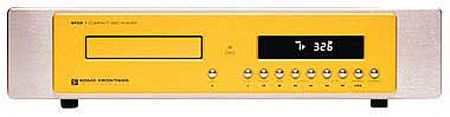
All the action in digital playback for the past seven years has taken place in separate transports and digital processors. Nearly all high-end manufacturers have focused their skills on perfecting the individual elements of the digital playback chain—transports and processors—rather than on designing integrated CD players.
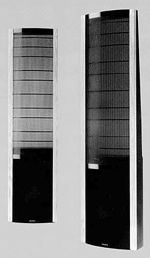
MartinLogan's <A HREF="http://stereophile.com/loudspeakerreviews/145/index7.html">Gayle Sanders</A> has almost single-handedly raised the electrostatic/dynamic hybrid loudspeaker to a position of prominence in the High End. First, there was the MartinLogan Monolith (reviewed in Vol.8 No.3 and Vol.9 No.3), followed by the much more affordable Sequel (reviewed in Vol.11 No.12, Vol.12 Nos.8, 9, and 12, and Vol.14 No.2). Then came the subject of this review, the Quest, and most recently the diminutive Aerius, <A HREF="http://www.stereophile.com/loudspeakerreviews/312">reviewed by JA</A> elsewhere in this issue.
Just look at the dates and you'll see a legacy that essentially spans the entire history of electrical music reproduction. That's fitting. In his career—or more properly, many careers—Irving M. ("Bud") Fried all but embodied that era.
If you're an audiophile—and let's face it, who else would be reading this—then you know what <I>any</I> hard-core audioweenie would do when visiting a strange city. Visit the hi-fi shops, of course.
The Home Entertainment 2005 Show is coming to New York City April 28 to May 1, at the New York Hilton hotel. A ticket to the Show not only gives attendees entrée to previews of the latest in home audio, home theater, and convergence products—it also includes free educational seminars on a variety of subjects, moderated by top industry editors.
When we <A HREF="http://stereophile.com/news/011705dorian/">last left them</A>, a troubled Dorian Group had filed for Chapter 11 bankruptcy protection. In mid-January, the company issued a statement indicating that it would liquidate its assets and begin requesting bids for the purchase of the company in a sealed bidding process authorized by the US Bankruptcy Court, Northern New York District.
When you download a music file from pay services, you get DRM or digital rights management that restricts how you use the file. Is this a problem for you?