Vinyl Record Day
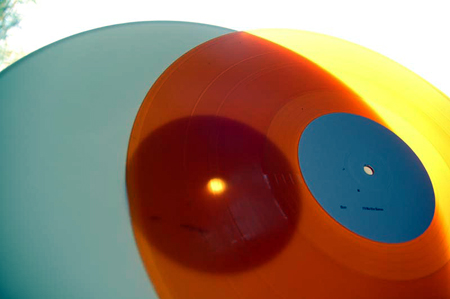
Today is/was/forever will be remembered as: <a href="http://www.stereophile.com/news/11713/index.html">Vinyl Record Day</a>. August 12th, the day Thomas Edison blessed us with the phonograph.


Today is/was/forever will be remembered as: <a href="http://www.stereophile.com/news/11713/index.html">Vinyl Record Day</a>. August 12th, the day Thomas Edison blessed us with the phonograph.

Which brings me to my latest recommendation: Xiu Xiu's <i>Women As Lovers</i> takes its alluring title from a novel by Austrian author Elfriede Jelinek. The album, Xiu Xiu's sixth full-length, was released much earlier this year, but I only got around to it this weekend, during a trip to <a href="http://www.vvinyl.com/">Vintage Vinyl</a> in good ol' Fords, NJ, along rich and wild Route 1.
AlexO's response to Leila's <i>Blood, Looms, and Blooms</i> made me chuckle. AlexO wrote:
Who would have guessed? As the CD falls, vinyl rises again. Online readers have probably noticed Stephen Mejias diving deep into the black art this year. What about you? Have you spent any money on your turntable rig (not including records) in the last 12 months?
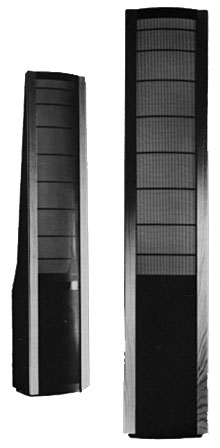
Loudspeaker designers are dreamers. Something takes hold of a man—the fact that loudspeaker designers are <I>all</I> men must be significant—and he wrestles with recalcitrant wood, arcane drive-units, and sundry coils, capacitors, and cables, to produce something which will be individual in its sound quality yet inherently more true to the original sound. An impossible task. Yet if there were to be an aristocratic subset of those dreamers, it would be those who have taken upon themselves the burden of producing <I>electrostatic</I> loudspeakers. For these farsighted engineers, there is no standing on the shoulders of others, there is no recourse to tried and tested combinations of other manufacturers' drive-units. Every aspect of the design, no matter how apparently insignificant, has to be created afresh from first principles. For a new electrostatic design to produce a sound at all represents a great triumph for its progenitor, let alone having it sound musical. And to produce an electrostatic loudspeaker that is also possessed of great visual beauty is indeed a bonus.

Tighten the laces on your Vans and jump on your skateboard, strap on your helmet and hop on your scooter, pump some air into the tires of your cruiser, do whatever you have to do, dudes; Dash, sprint, leap, fly like Olympians to your nearest record shop and lay down the $19.99 for the new Leila Arab album.
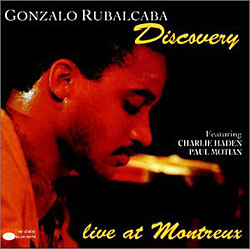
<B>GONZALO RUBALCABA: <I>Discovery</I></B><BR>
Gonzalo Rubalcaba, piano; Charlie Haden, bass; Paul Motian, drums<BR>
Blue Note CDP 7 95478 2 (CD only). Charlie Haden, prod.; David Richards, eng. DDD? TT: 54:06

A <A HREF="http://www.telegraph.co.uk:80/news/uknews/2505034/Culinary-secrets-of-D… cookbook</A> of 58 dishes, meticulously hand-written and illustrated by Corporal James Abraham Harrison will be auctioned next month. The gimmick to this cookbook? Harrison was one of Montgomery's Desert Rats and served as mess chef in the North African desert.
Chris Sommovigo sent out a message this morning: