Digital Processor Reviews

Sort By: Post DateTitle Publish Date

Fezz Equinox D/A processor
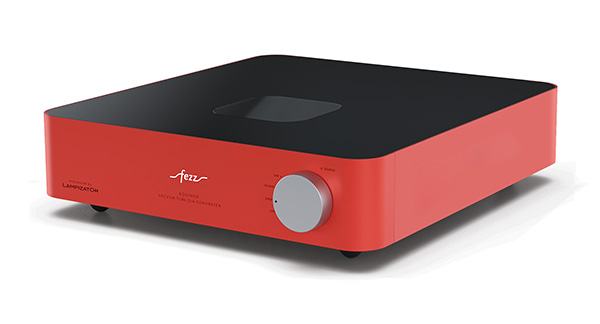
It wasn't long ago that bottom-shelf DACs had this dry, gray, punchy, grainy sound, emerging from a weird mechanical clarity. Their sound reminded me of cheap whisky. The ones that didn't sound like $1 shots replaced the dry grain with some blurry gel. No vitality. No subtle contrasts. No nuance. No air. No atmospherics, no reverberance, and nothing I would call transparency.


Digital's rapidly evolving technology made the next wave of DACs sound strikingly clear and quiet, with some touchy-feely hints of wetness to suggest a more natural transparency. Unfortunately, most of these newfangled wet DACs sounded like distilled water tastes.


For me, digital transparency didn't become truly wet, colorful, or naturalistic until I discovered NOS R-2R converters, which made midlevel four-figure DACs, like my Denafrips and HoloAudio, sound like bits bathed in luminosity. Very relaxed. Grainless. Ektachrome.
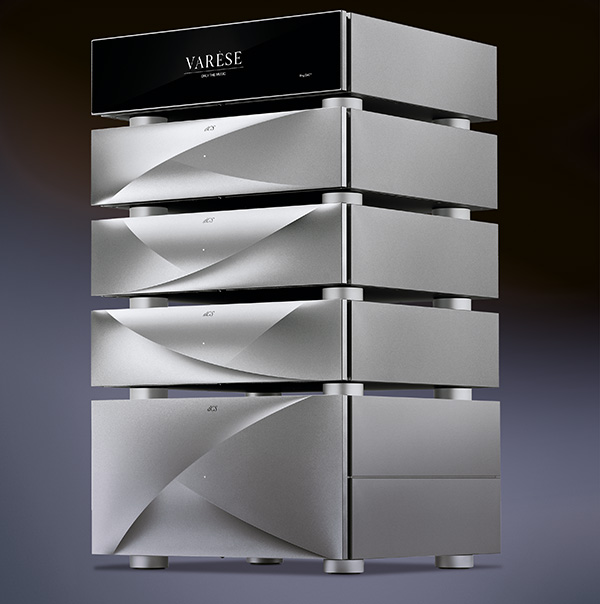
dCS Varèse Music System D/A Processor

Photo: Paul Miller


It was during a visit to my music room by five members of the small Off-Islanders Audio Society that the magic of the dCS Varèse Music System ($267,500 as reviewed; $305,000 with CD/SACD transport) became clear.


One member had requested the 24/192 version of "Splendido Sundance" from Saturday Night in San Francisco (24/192 FLAC, Columbia-Legacy/Qobuz), performed by Al Di Meola, John McLaughlin, and Paco de Lucía and recorded live in the Warfield Theatre on December 6, 1980. I'd attended the unveiling of the LP remastering of this recording, presented by the album's co-executive producer, Abey Fon, in the Audio Reference room at High End Munich 2024. The system, which was first class, included a VPI Titan turntable, D'Agostino Relentless preamplifier and Relentless 800 mono amplifiers, a VTL TP-6.5 Series II Signature phono preamplifier, Wilson Audio XVX loudspeakers, Nordost cabling, a Stromtank power generator, and an unheard three-piece dCS Vivaldi APEX music system.

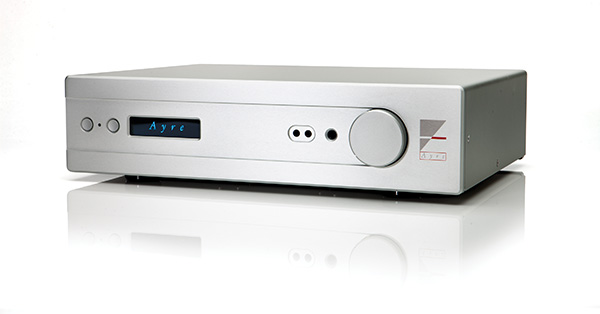
Ayre Acoustics KX-8 preamplifier

For the past decade or so, I haven't been using a preamplifier. The D/A processors I have been using all have volume controls, so I have been feeding their outputs directly to the power amplifiers. It would seem logical that having nothing in the signal path would have less of a degrading effect than a preamp's input and output sockets, switches, volume control, printed circuit-board traces, and active and passive parts, not to mention an additional pair of interconnects. However, with some of the preamplifiers I have auditioned in my system, there was no doubt that the sound quality improved compared with the direct connection from the digital processor.


The most recent of these preamps was the MBL N11 that Jason Victor Serinus reviewed in July 2021, which was preceded by the Pass Labs XP-32 I reviewed in March 2021, the Benchmark LA4 Kalman Rubinson reviewed in January 2020, and going back even further, the Ayre Acoustics KX-R Twenty I reviewed in December 2014, which was one of the products Ayre released to celebrate its 20th year of operation.


I am now reviewing the KX-8 line preamplifier, which costs $6500 in basic form.

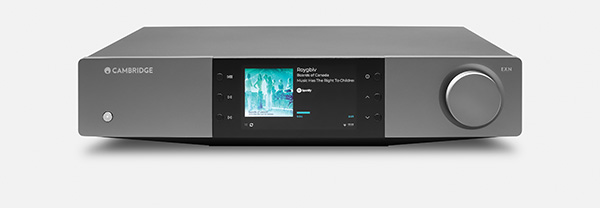
Cambridge EXN100 streaming D/A processor

The marriage of little streaming computers to DACs was at first a shotgun thing, a way to add Swiss Army knife capabilities at a price point. That was back when it was cutting-edge to have a NAS server full of digital files on the home network, and when commercial streaming was new, primitive, and lossy. Remember Pandora? Cool idea, but who wants to sit through ads and not be able to skip over more than a handful of disliked tunes every hour. Then Spotify came along. Then Apple and Amazon jumped in, and that's all she wrote. Eventually, streaming even got around to us audiophiles who desired lossless audio of at least CD resolution. Viva Qobuz!


The EXN100 is Cambridge Audio's state-of-the-art streaming DAC. It's half of the new EX line; the other half is the EXA100 integrated amplifier.

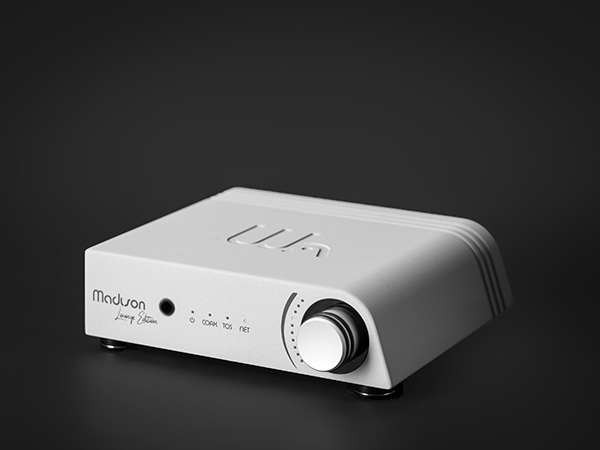
Wattson Audio Madison LE D/A processor

After it was delivered, I weighed the box containing Wattson Audio's DAC-equipped Madison LE Streamer on my bathroom scale. It was hardly bigger than a shoebox. It weighed 8.3lb.


When I opened the main box, I found two smaller boxes. The little brown one contained a fist-sized power supply in a chassis of extruded aluminum, with a label attached that said "AC/DC Hybrid Adaptor" next to a circle containing a sun cross symbol and the words "Designed, Engineered and Built in Switzerland" in capital letters circling its top edge. Below the circle was more writing: "Wattson Audio—a CH Precision company."


The Wattson Madison LE's 2.3lb chassis was inside a larger white box with black block letters saying "Madison." Under that, written in cursive, were the words "Lounge Edition." The L in LE is for Lounge, not Limited as you might expect.


I've reviewed a few DACs but never one this small, light, and elegantly formed.

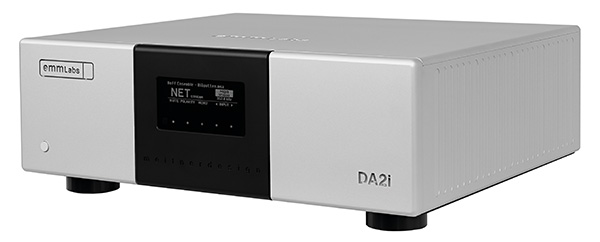
EMM Labs DA2i D/A processor

More than five years have passed since I evaluated the original, Canada-made DV2 D/A converter ($30,000 in 2019) from EMM Labs. Since then, I've heard it and other top DACs—many of them at audio shows; some in my reference system—and my appreciation for what the original DV2 could deliver has only increased.


Now arrive two new components, the DV2's twin successors: the DV2i, an "integrated" stereo D/A converter with a software-driven, high-resolution digital volume control, and the subject of this review, the DA2i, a straight D/A with no volume control. Both cost $35,000.

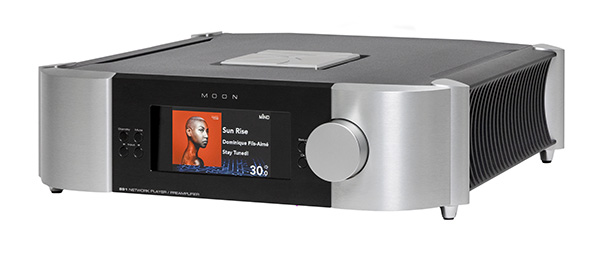
Moon 891 streaming preamplifier

No fewer than eight boxes, powered by six after-market power cables, comprise my current reference front-end. As much as separate boxes can afford superior isolation and provide far more room for visionary engineers to work their magic, the advantages of a single box, which requires a single power cable and far fewer after-market interconnects, are obvious.


Enter Simaudio's Moon 891 network player/preamplifier ($25,000; footnote 2). Also called a "streaming preamplifier,"it includes a DAC that converts PCM and MQA files up to 32/384 (with 24-bit files upconverted to 32-bit) and DSD files up to 256. It also includes what Simaudio company co-owner Costa Koulisakis describes as "a fully configurable" MC/MM phono stage. Both theoretically and practically, it's an ideal solution for someone with space and/or budget constraints.

TEAC UD-701N streaming D/A preamplifier

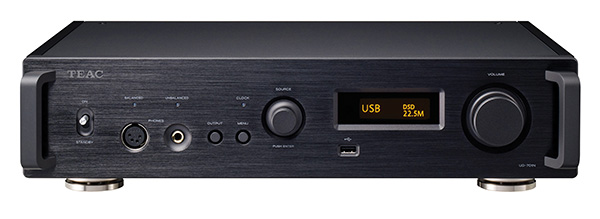
In Gramophone Dreams #88, I described the sound of TEAC's VRDS-701T CD transport as "dense and precise in a way I had never previously heard from digital." I went on to explain, "by 'dense,' I mean there was a tangible corporeality effected by seemingly infinite quantities of small, tightly packed molecules of musical information."


What I noticed most during the review period was the extraordinary volume of data the 701T was vacuuming off those pits and lands and turning into music. As I have gotten to know it better, what I've noticed most is how the 701T sorts and delivers all that data in a manner that makes every DAC I pair it with sound more corporal and dynamic.


As I wrote that review, I wondered how the 701T would perform partnered with its matching UD-701N converter/streamer/preamplifier and how the TEAC flagship DAC's sound character would compare to flagship DACs from HoloAudio, Denafrips, and dCS.

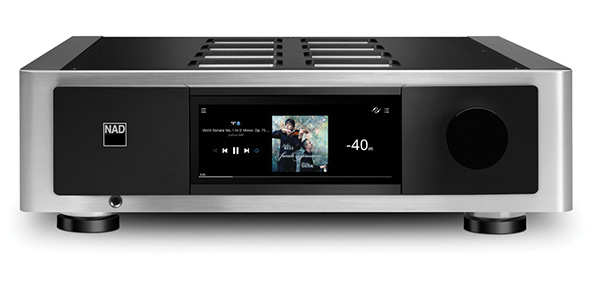
NAD M66 streaming preamplifier

In my early years in audio, I witnessed the rise and fall of the AM-FM receiver, first in vacuum tube mono and later in solid state stereo. Some of them grew to be behemoths, supporting multiple inputs, equalizers, dual speaker zones, and powerful amplifiers. When radio sources receded in popularity and with the rise of CDs, cable TV, and DVD, radio receivers were replaced by A/V receivers in the mainstream market.


Today, the ascension of streaming as the conduit for both audio and video content has nudged these, too, from the center stage. One can stream content from the bewildering variety of products with internet access including cell phones, smart TVs, almost any computer, and of course, dedicated streaming devices from the cheap-and-cheerful to seriously audiophile. If your music is on the web or on a NAS, many of these will let you browse for it, find it, and play it.

Linear Tube Audio Aero D/A processor

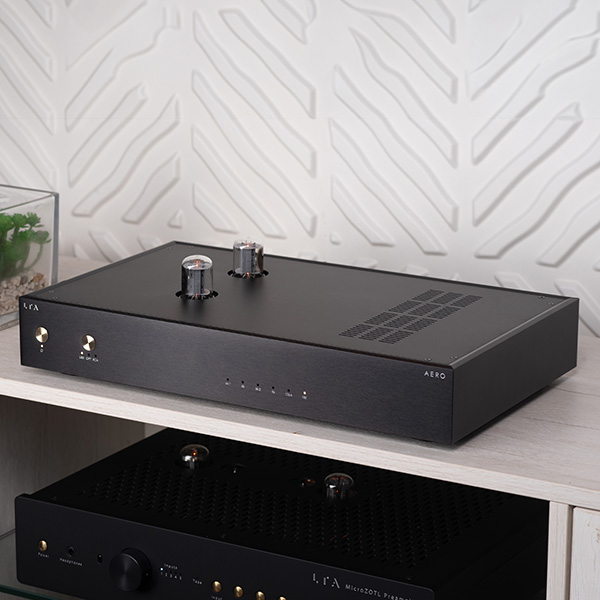
This paragraph from Linear Tube Audio's website description of their new Aero DAC sets the tone for the story I'm about to tell. "After trying various options, we chose the Analog Devices AD1865 R2R DAC chip, which is sometimes called the 'vinyl DAC,' for its organic sound. It is a non-oversampling DAC, with no digital filters. The AD1865 is much-loved by audiophiles and is used by at least one hi-fi company in a flagship DAC costing over $150,000."


Check the forums and you find that the AD1865 chip is also a heavy DIY favorite. Home brewers are attracted to this discontinued, "obsolete" 18-bit chip for its easy implementation and unprocessed, music-friendly sound.

Advertisement
Advertisement
Advertisement