Digital Processor Reviews

Sort By: Post DateTitle Publish Date

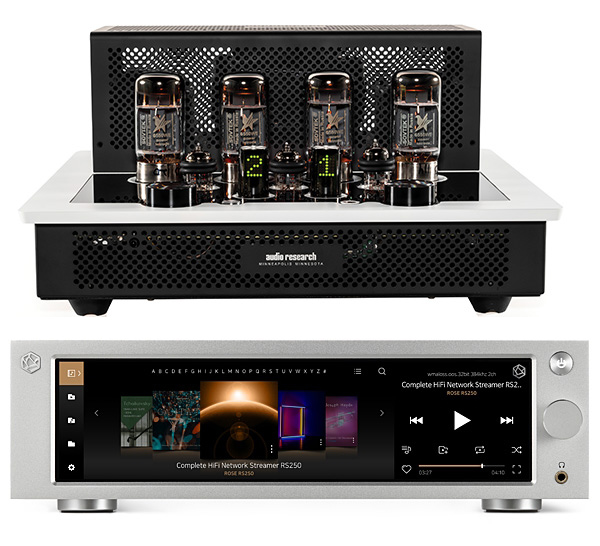
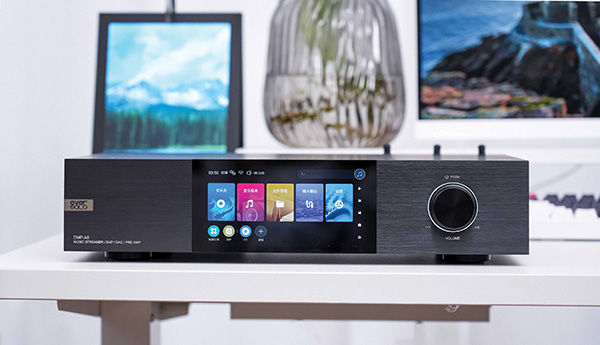
Eversolo DMP-A8 streaming preamplifier
A few summers ago, I briefly got it in my head that I could become a wine connoisseur. This was due to a very generous and unexpected gift. A local acquaintance had passed away, and his wife wanted to rid her basement of his small wine collection.


I don't know why I was chosen as the lucky recipient, but after stammering half a dozen thank-yous, I suddenly owned about 150 fine wines. A few carried four-figure price tags.


Reliably telling a Pinot Grigio from a Chardonnay isn't part of my skill set. Grape varieties, terroir, vintages? You might as well ask a toddler to become conversant in quantum mechanics. Still, I was intrigued by the bottles and amused by the ridiculousness of the situation. Me, an oenophile? I supposed I could pretend, and I did.


After opening and drinking, with my wife, a 1988 Château Léoville Barton, I wrote an over-the-top review and emailed it to a wine-loving friend for his amusement. "I beheld Hawthorn berries and beef stock along with a suggestion of blonde tobacco. Other than the obvious green walnut, there was a top note of wet Baja beach at dawn, mixing subtly with minke-whale flatulence and a hint of two-day-old scallop innards. Finally, with subsequent sips, I detected the aroma of the well-worn merkin of a Honduran sex worker. All in all, not a bad wine."


Eat your heart out, Robert Parker!
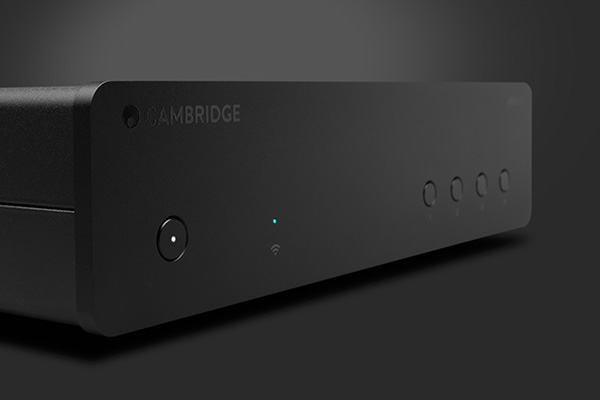
Cambridge Audio MXN10 streamer–D/A processor

For music listening circa 2024, streaming is both the present and the future. Physical formats are still around, and they are still the best choice in some cases, as with deluxe reissues of beloved albums, which may add value with extra live performances, full-resolution surround sound, and other perks. The niche vinyl market continues to thrive, and that business model obviously works for releases of a few thousand copies. (It also works, apparently, for releases of hundreds of thousands of T-Swift platters to be displayed on shelves and hung on walls.)


But facts is facts: Streaming is now the only mass medium for listening to recorded music—the primary carrier for music—and has been for a few years now. According to RIAA statistics, the crossover year was 2016. That's when, in revenue terms, streaming outpaced physical formats. By 2022, the latest full year tabulated, streaming accounted for 84% of US recorded-music revenue.


So what's a long-time audiophile, born into the analog world, with strong roots in physical media, supposed to do?

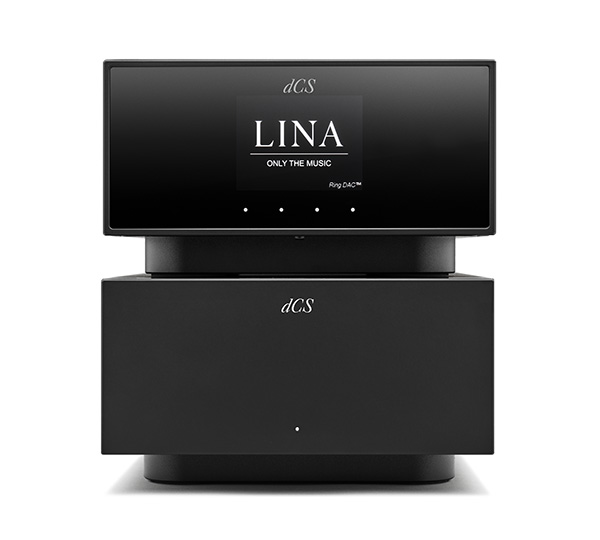
Gramophone Dreams #84: dCS Lina D/A processor and Lina Master Clock

I was at least 40' away when I spied my first dCS Lina stack at CanJam. It was black, sitting conspicuously on a table emitting a strong Space Odyssey Monolith vibe. I can't remember which headphones I used, but I do remember how good it felt to face the stack and experience its startling clarity, showing off the bass end of a piano keyboard with a force I could feel in my shoulders. That impactful piano bass plus the stack's matte-finish, neo-Brutalist façade, and feels-like-cashmere volume control, made a strong first impression.


We all know everything sounds like what it looks like—right? It also sounds like what it's made of, who made it, and how much it costs. Well, the $13,500 Lina D/A converter could hardly look more different or feel or cost more different than the $46,500 dCS Vivaldi. The Lina is dCS's lowest priced streaming DAC, so it has to sound less good than my long-term reference Bartók, or the Bartók Apex I reviewed in Gramophone Dreams #75. That's just logical, right?

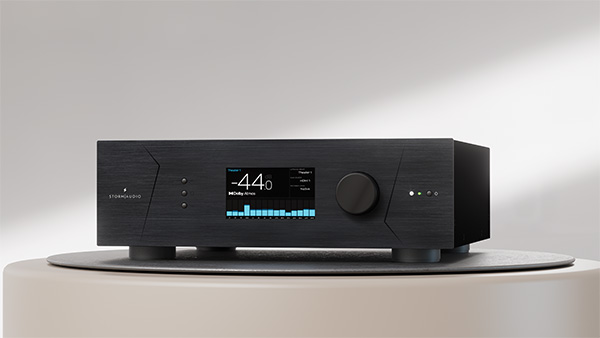
StormAudio ISP Evo immersive sound preamp/processor

One thing that interested me about the StormAudio ISP Evo is that, despite its obvious hi-fi function, it's more like a computer than a typical "prepro." While it does offer a few "legacy" analog inputs, it is for the most part all-digital, input to output, including network connections on both ends. Consequently, it is less likely to leave sonic fingerprints on the music than devices that convert digital to/from analog or modulate their signals with active amplification or attenuation. It is notable that, despite its audio function, the Storm completely lacks traditional audio specifications—distortion, dynamic range, and so on.


Yes, that aspect of the product was appealing, but the real trigger for me was that when I began this review, the StormAudio ISP Evo was the only consumer device to fully incorporate the latest version of Dirac Live Active Room Treatment (ART).

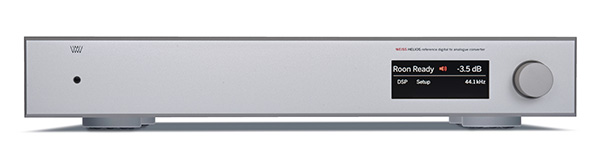
Weiss Engineering Helios D/A processor

When standalone digital/analog processors made an appearance a quarter-century ago, they were limited to the CD medium's 16 bits of resolution—at best. These days, almost every DAC can process at least 24 bits, and many models offer between 20 and 21 bits of real-world resolution. Modern models from Benchmark, dCS, , Merging, Mola Mola, Okto, and Weiss illustrate not just the skill of the circuit designer but also that of the engineer who laid out the printed circuit board.


One of the first digital processors I encountered that offered 21 bits of resolution was the Weiss DAC202, which Erick Lichte reviewed in January 2012. Subsequent processors from this Swiss company have consistently performed well, not just on the test bench but also in the listening room.

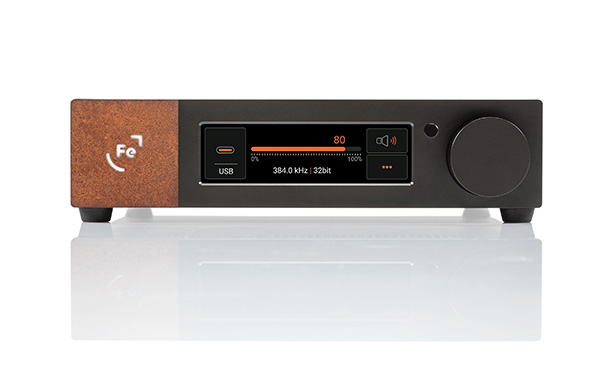
Ferrum Wandla D/A preamplifier

I can roll out of bed and install a $10,000 phono cartridge while finishing my coffee, but I postpone DAC installations until I am in the exact right mood to handle the potential stress—especially DACs with a touch screen and a complex menu. To my delight, Ferrum Audio's new Wandla digital converter was completely stress-free to install. It took only minutes to connect the USB-C cable, the Cardas Audio Clear Beyond interconnects, and 24V DC power adapter.


Connecting the power adapter caused a power-switch symbol to appear on the front panel touch screen. The moment I touched it, I smiled like the Cheshire Cat, because I saw a USB-C symbol, a loudspeaker symbol, three dots in a box, and a volume control bargraph. That told me the Wandla recognized my chosen input and was waiting for a signal. All that remained was for my Roon Nucleus+ server to recognize and enable the new DAC, which it did without prodding or reprimand. For me, that was a wow moment, a good start to what promised to be an interesting review.

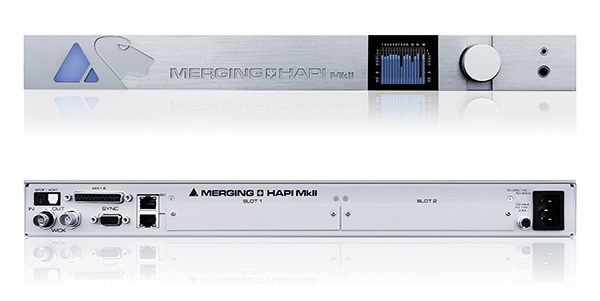
Merging Hapi MkII multichannel digital processor

I've been running a 5.1 system for years. Recently, I expanded it to 5.3 with the addition of two more subwoofers. This system is manageable with one of my eight-channel DACs.


Even more recently, I dipped my toe into Dolby Atmos, which made it necessary to lash up at least four more channels. That was a big problem, since neither JRiver nor Roon can support and sync more than one output device at a time, and the multichannel DACs I already owned tap out at eight channels.


I turned to the Arvus H2-4D Renderer, which offers 16 channels of digital output over AES3 and 16 channels of balanced-analog output. This worked, but piping everything through the Arvus meant forswearing DSP, including DiracLive. I really needed a DAC with at least 12 channels.


The Merging+Hapi has been around for years...

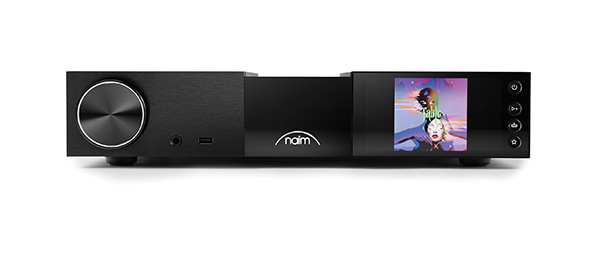
Naim NSC 222 streaming preamplifier & NPX 300 power supply

Naim has comprehensively reimagined its Classic Series, which has been around for some 20 years with improvements along the way. Included in the new range of products is the 200 series, comprised of two products: the NAP 250 power amplifier, which I reviewed in the November 2023 issue of Stereophile, and the NSC 222 streaming preamplifier ($8999), which is reviewed here. A third component in the New Classic series, the NPX 300 power supply (also $8999), which is intended to be paired with the NSC 222 and other Naim components, is also considered in this review.

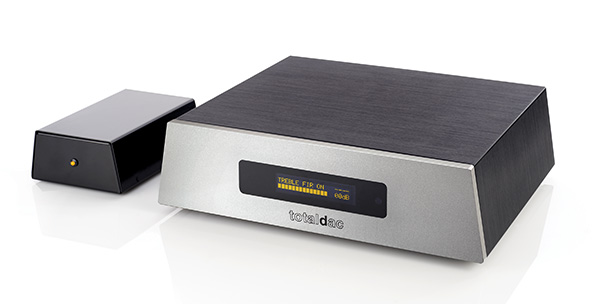
Brilliant Corners #9: a DAC and a Streamer from France's Totaldac

To misquote Morrissey, some knobs are better than others. The Manley Neo-Classic 300B amplifiers that I've been listening to, for example, have a knob marked "feedback" that goes from 0 to 10. I've learned so much from using it that I've come to believe that if your amp doesn't have such a knob, it should. You see, the higher you set this control, the better the amp will measure. Applying more global negative feedback to these amps lowers their nonlinear distortion and noisefloor, increases their bandwidth, renders them less sensitive to the speaker's impedance variations and otherwise makes them more stable and efficient. In fact, by applying lots of feedback to an amplifier, it's possible to reduce distortion to barely measurable levels.


So what's the problem? Well, a few turns of the knob suggest that negative feedback isn't as useful as it appears on paper.

Advertisement
Advertisement
Advertisement