

2020 Jitter Measurements
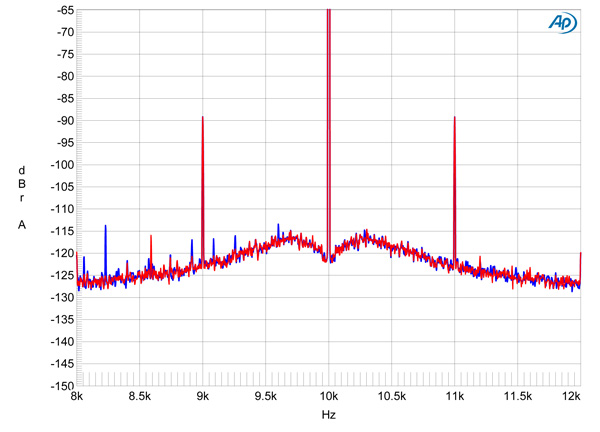
Even as digital/analog processors were becoming a hot product category in the early 1990s, audiophiles were also learning that timing uncertainties in the AES/EBU and S/PDIF serial datastreamsjitterwould compromise any improvement in sound quality offered by these DACs. Some companies therefore introduced products to reduce or eliminate jitterin the November 1994 issue of Stereophile, Robert Harley reviewed three such products: the Audio Alchemy DTI Pro, the Digital Domain VSP, and the Sonic Frontiers UltrajitterBug. I still have Stereophile's review samples of the UltraJitterBug and VSP, along with two contemporary DACs: a PS Audio UltraLink and a Parts Connection Assemblage DAC-1.
As our reviews of these products were published before Paul Miller's and the late Julian Dunn's development of the "J-Test" diagnostic signal, I performed J-Test jitter measurements to bring that 1994 review into the 21st Century. You can see what I found here.
47 Laboratory 4715 D/A processor & 4716 CD transport
Back in 1984, when I still had all my hair and began listening to digital audio (wait a minute...), I was disappointed with the compact disc. Most of that disappointment came from the format's musical performance, which was poor, but a portion of my dismay came from realizing that my days as a hands-on hobbyist were numbered: I was used to selecting and setting up my own turntable, tonearm, and cartridge, but a CD player defied such involvement. Plugging it in and playing it were all that I or most anyone else could do.
A FollowUp RoundUp
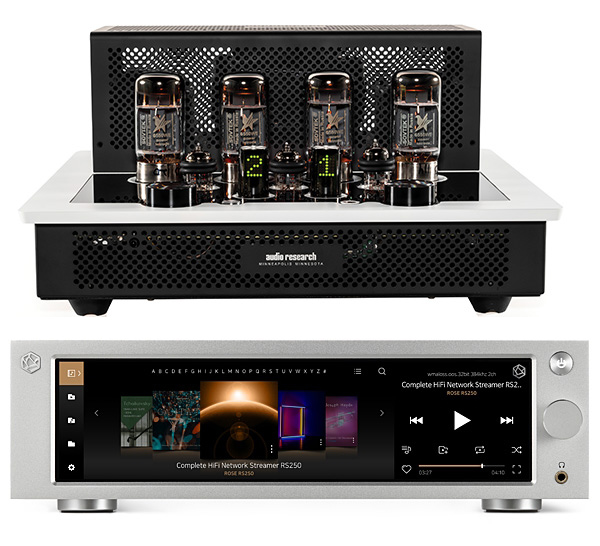
Three products were recently subjected to second opinions: I reviewed the revised RS250A version of HiFi Rose's RS250 streaming D/A preamplifier and the optional DC1 DAC module for Audio Research's I/50 integrated amplifier; Ken Micallef wrote about his time with the Volti Razz loudspeaker.
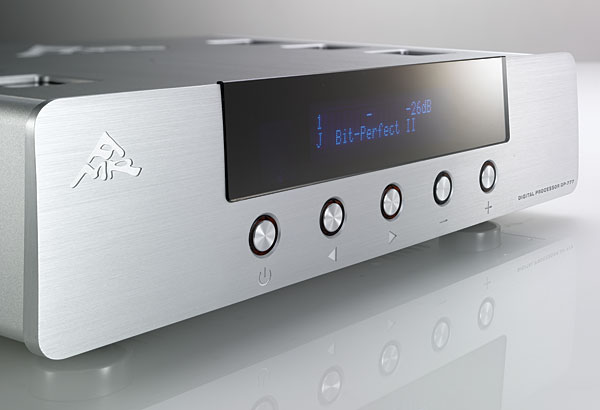
Abbingdon Music Research DP-777 D/A processor
Computer audio is more than just a pleasant distraction. For the jaded reviewer, USB digital converters and the like are an escape from that humdrum, if only because they bring with them so many variables: myriad combinations of different platforms, storage devices, operating systems, device drivers, media players, codecs, word lengths, sampling rates, connection protocols, and more. Challenging though they may be, computer-audio products are a tonic for reviewers inclined toward apathy.
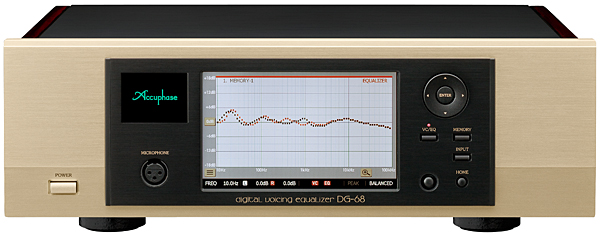
Accuphase DG-68 Digital Voicing Equalizer
We hold these truths to be self-evident, that all men are created equal.
A great conceptsound enough to serve as the foundation for an independent democratic nation.
Yet what's sound in one sphere doesn't necessarily apply to sound in another, namely the rooms in which our systems reside. As much as we audiophiles may wish to declare our independence from room resonances, image smearing from first-order reflections, slap echo, and every other environmental and speaker-related factor that can handicap system performance, no mere declaration will make it so. Not all roomsand not all componentsare created equal.
Accuphase DP-100 Super Audio CD transport & DC-101 Digital Processor
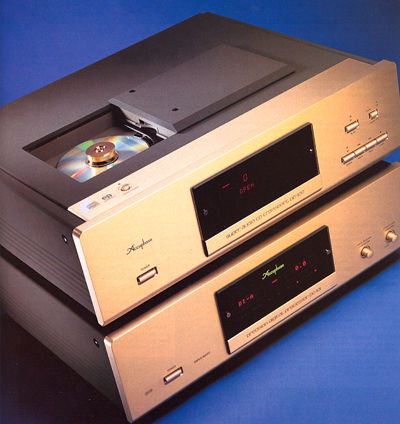
What's it take to compete on the bleeding edge of digital? Foresight, commitment of resources, and lots of money. Of course, it's all fundamentally about money, so we shouldn't be surprised that the audiophile's emotional needs aren't paid much respect by the large international manufacturing and marketing concerns stalking the earth today. Megaglom vs Cockroachacus. [Sigh] Where are those pesky miniature princess twins when you need 'em?
Accuphase DP-80L CD player & DC-81L digital processor
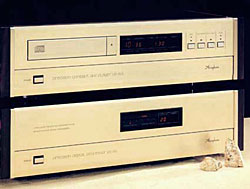 $13,000! You could buy two Hyundai Excels for that kind of money. Or one 5-liter Ford Mustang. Or two-thirds of a Saab 900 Turbo. How could the purchase of this Accuphase two-box CD player be justified on any rational grounds? What if it did offer state-of-the-art sound quality? Would it really be 50 times better than a humble Magnavox? Would it even be 4.3 times better than the California Audio Labs Tempest II CD player? And would it approach the sound quality routinely offered from LP by the similarly priced Versa Dynamics 2.0 turntable?
Accuphase DP-90 CD transport & DC-91 D/A processor
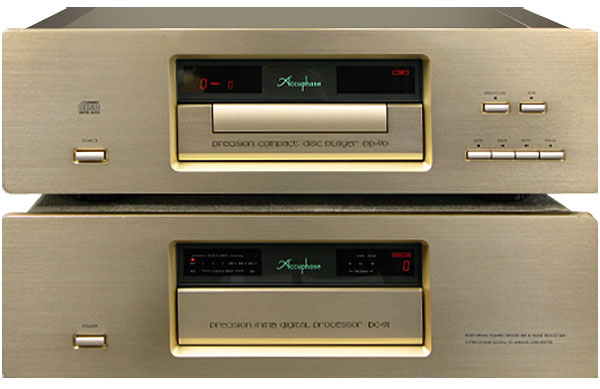
In 1995, as the compact disc enters its second decade of commercial reality, it's fair to say that the associated hardware has come of age, exorcising at last the digital gremlins of time-base jitter and quantization noise. Digital-processor maturation is particularly evident in the design of the all-critical D/A processor. The simplistic digital circuitry of yesterday has given way to considerable design sophistication that deals directly with jitter and low-level nonlinearities.
Adcom GDA-700 D/A processor
 The availability of the Pacific Microsonics High Definition Compatible Digital (HDCD®) PMD100 decoder chip, manufactured by San Jose's VLSI Technology, has brought about a minor revolution in Compact Disc playback. It brings sonic improvements in imaging, soundstaging, and resolution of detail. In the past six months, Stereophile has published a number of reports on the HDCD decoder's operation, what HDCD recordings are available, and the improvements brought by the HDCD chip to specific digital audio processors (footnote 1). High-end manufacturers are incorporating the $40 HDCD chip in their newest decoders, including the $4695 Sonic Frontiers SFD-2 Mk.II D/A processor, the $15,950 Mark Levinson No.30.5, and the $8195 Spectral SDR-2000 Professional HDCD D/A Processor (reviewed in Vol.18 No.5).
Aesthetix Saturn Romulus DAC/CD player
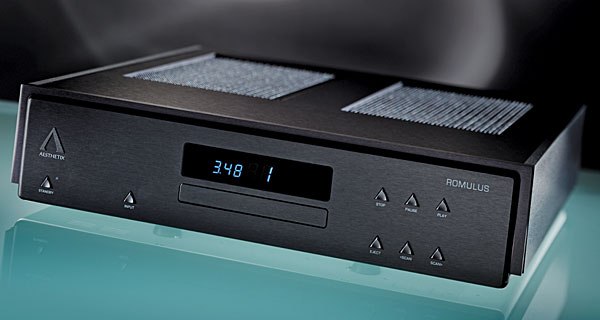
Tubes?
In a CD player?
Century-old technology embedded in a modern digital design?
I realize that Aesthetix's Saturn Romulus is not the first disc player or D/A processor with tubes, nor will it be the lastbut does combining these technologies even make sense? Are audiophiles working at cross purposes to themselves, looking for modern perfection but preferring a little old-school sweetening here and there?