

Apple AirPort Express Wi-Fi Hub-D/A processor
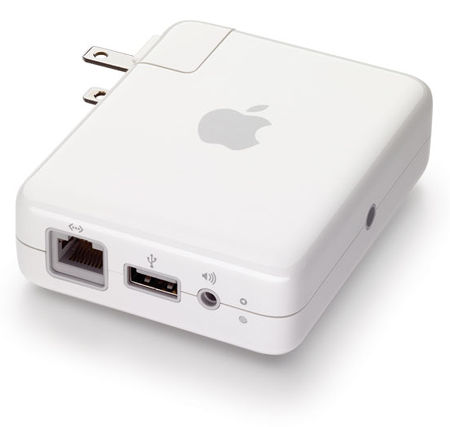
Usually, a Stereophile "Follow-Up" follows up (duh!) a full review of the component in question. This review, however, is intended to flesh out a cryptic comment made by Wes Phillips in April's "As">http://www.stereophile.com/asweseeit/405awsi">As We See It": "When Apple introduced its AirPort Express wireless multimedia link," Wes wrote, "it even included a digital port so that an audiophile—such as Stereophile's editor—could network his system, using the AE to feed his Mark">http://www.stereophile.com/digitalsourcereviews/159">Mark Levinson No.30.6 outboard D/A converter. 'Sounds okay,' deadpans JA."
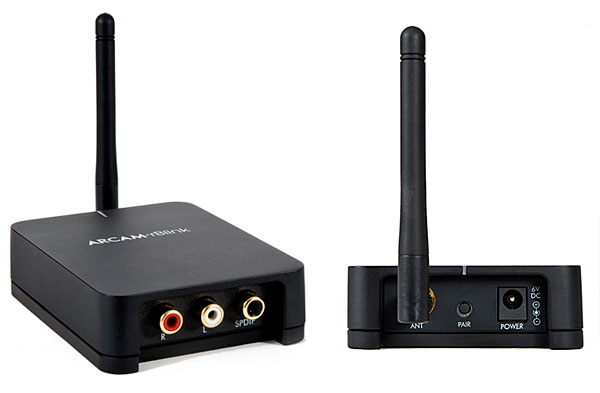
Arcam rBlink Bluetooth D/A processor
Am I the only one who values content and convenience over sound quality?
There. I've said it. I am not an audiophile; ie, someone who's in love with recorded sound for its own sake. The search for ideal sound can leave a person burned out and broke.
ASUS Xonar Essence One Muses Edition D/A processor–headphone amplifier
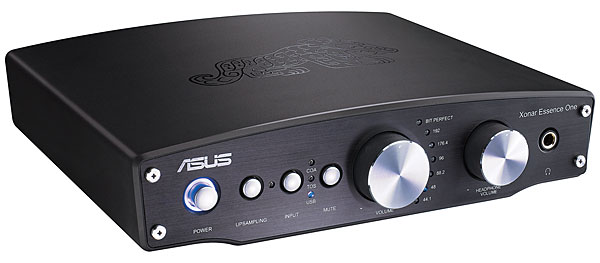
Back in the summer of 2009, USB-connected D/A processors that could operate at sample rates greater than 48kHz were rare. Ayre Acoustics had just released its groundbreaking QB-9, one of the first DACs to use Gordon Rankin's Streamlength code for Texas Instruments' TAS1020 USB 1.1 receiver chip. Streamlength allowed the chip to operate in the sonically beneficial asynchronous mode, where the PC sourcing the audio data is slaved to the DAC. But high-performance, USB-connected DACs like the Ayre were also relatively expensive back then, so in the January 2010 issue of Stereophile I reviewed a pair of soundcards from major computer manufacturer ASUS , the Xonar Essence ST and STX, which, at $200, offered a much more cost-effective means of playing hi-rez files on a PC.
ASUS Xonar Essence ST/STX soundcards
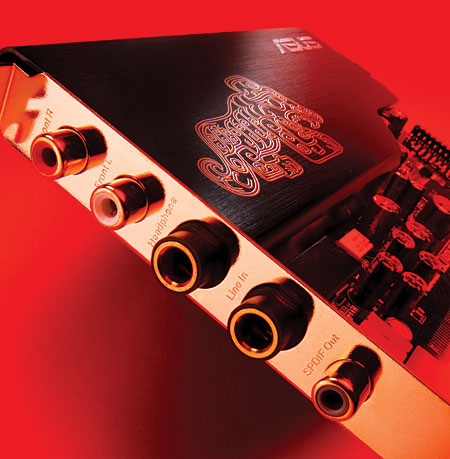
With all the current fuss about getting audio data from a computer to a standalone D/A processor via S/PDIF, USB, FireWire, WiFi, or Ethernet (footnote 1), it has been overlooked that the oldest way to get audio from a PC is to use a high-performance soundcard plugged into the host machine's motherboard. I remember how excited I was when I installed a Sound Blaster Pro 16 board in the 486-based Dell running Windows 3.1 that I was using in the early Clinton era, plugged its analog output into my high-end rig, and played back 16-bit/44.1kHz files.
AudioQuest DragonFly USB D/A converter
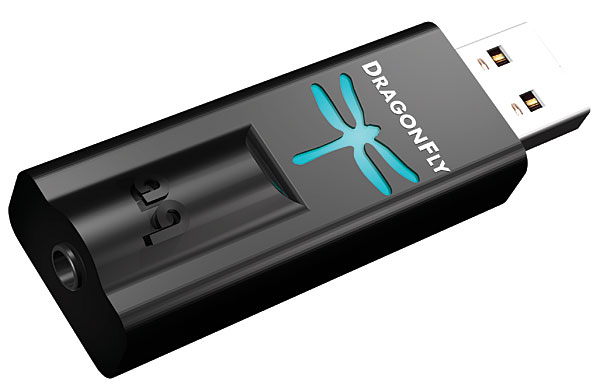
"This product is an industry disrupter."
Thus spoke AudioQuest's Steve Silberman, VP of development, of their brand-new USB D/A converter, the DragonFly. "There are a lot of very good DACs out there," he continued. "There are even a lot of very good affordable DACs. But the problem is, people outside of audio don't want them: They don't want old-style components like that.
AudioQuest JitterBug USB noise filter
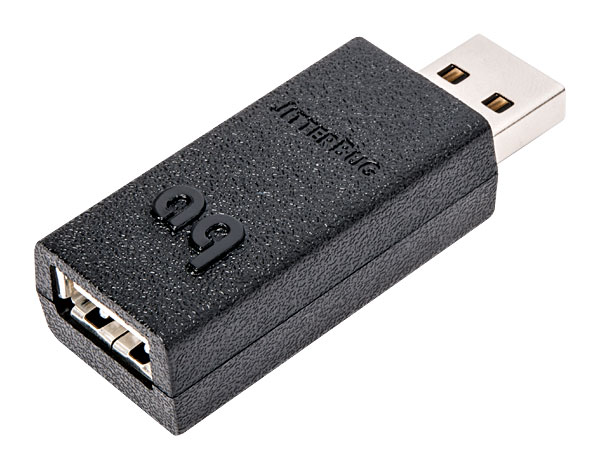
I got an early start on computer audio. At the end of the last century I was using WinAmp with first a CardDeluxe PCI soundcard, then a similar card from RME, to play files on a Windows PC. After I became a MacPerson, I used FireWire audio interfaces from pro-audio company Metric Halo and an inexpensive USB-connected ADC/DAC from M-Audio. But it was with the USB version of Benchmark's DAC 1 that the computer began taking over from physical discs for my music listening. At first I used iTunes au naturel, but as I acquired more high-resolution files, I began using Pure Music to handle all the tedious audio housekeeping, assigning as a dedicated music server a G4 Mac mini I'd bought in 2006.
Ayre Acoustics QA-9 USB A/D converter
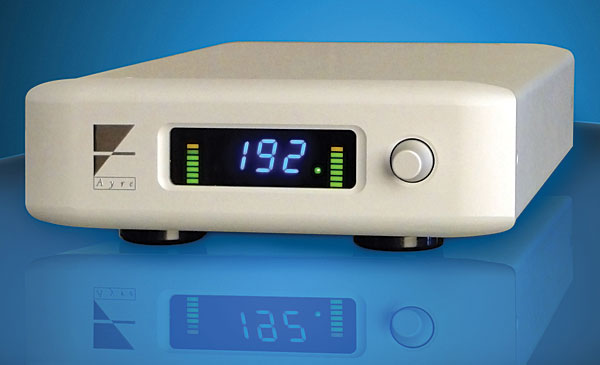
Since its founding in 1993, Colorado-based Ayre Acoustics has made its name with amplifiers and preamplifiers based on truly balanced, solid-state circuitry that didn't use the ubiquitous panacea of loop negative feedback to produce linear behavior. Their first digital product was the D-1x DVD player, reviewed for Stereophile by Paul Bolin in February 2003, which offered unusually good video performance. The D-1x was followed by the C-5xe and DX-5 universal players, respectively reviewed by Wes Phillips (July 2005) and Michael Fremer (December 2010). But the most intriguing digital product to come from Ayre was the QB-9 digital processor. Reviewed by WP in October 2009, the QB-9 has just one input, USB, and uses Gordon Rankin's proprietary Streamlength code to give asynchronous operation, which in theory offers the best jitter suppression. "The QB-9 isn't a computer peripheral," said Ayre's marketing manager at that time, Steve Silberman. "It makes computers real high-end music sources"a statement with which WP agreed.
Ayre Acoustics QB-9 USB DAC
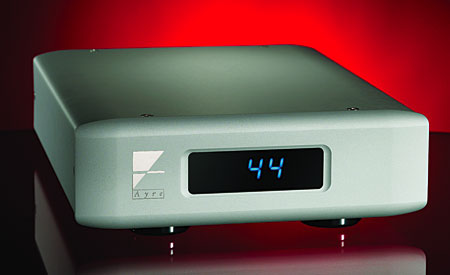
These days, it seems you can't shake a stick without hitting a USB DAC, but Ayre's QB-9 ($2500) is something a little different. Ayre's marketing manager, Steve Silberman, was adamant: "The QB-9 isn't a computer peripheral. It makes computers real high-end music sources."
Bel Canto e.One DAC3 D/A processor
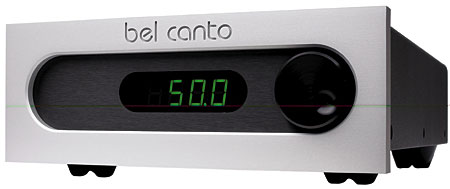
"You've got to hear it!"
Bel Canto USB Link 24/96 USB-S/PDIF converter
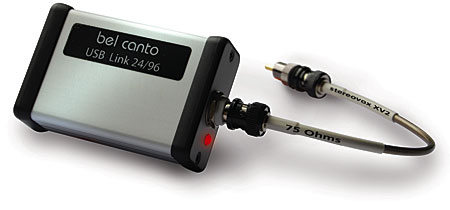
The speed with which audiophiles have adopted a computer of some sort as their primary source of recorded music might be thought breathtaking. But with the ubiquitous Apple iPod painlessly persuading people to get used to the idea of storing their music libraries on computer hard drives, the next logical step was to access those libraries in listening rooms as well as on the move. A few months back, I wrote a basic guide to the various strategies for getting the best sound from a computer: "Music Served: Extracting Music from your PC." Since then, Minnesota manufacturer Bel Canto Design has released a product that aims to simplify matters even further.