

iFi Audio iDAC & iUSBPower USB D/A processor & outboard power supply

Bratty, mollycoddled, and altogether spoiled consumers such as you and I have inflicted on computer audio the same injustice that laparoscopic surgery, antilock brakes, mobile telephones, word processors, e-mail, microwave ovens, and over-the-counter proton-pump inhibitors have suffered at our hands in recent years: In less time than it takes to say "ho-hum," we've knocked it from the pedestal to which all such breakthroughs are entitled and begun taking it for granted.
Inside MQA
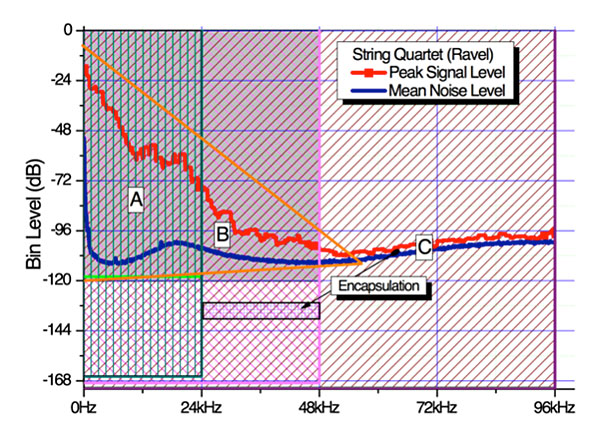
Jim Austin briefly discusses MQA in his review of the Explorer2 in this issue, but a more complete description of MQA can be found in an article posted on Stereophile's website at the end of 2014.
MQA involves two fundamental concepts, discussed in a paper presented to the Audio Engineering Society in October 2014, the first responsible for a potential improvement in sound quality, the second responsible for a large reduction in the bandwidth required for storage and streaming of high-resolution files...
Lindemann & Stello USB-S/PDIF converters
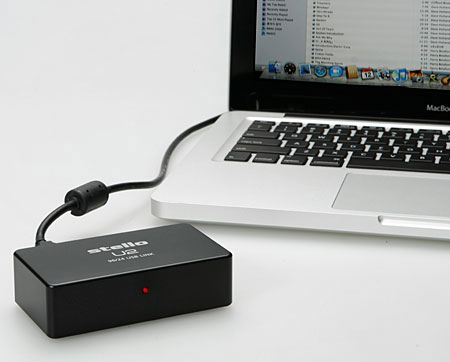
As someone who wrestled endlessly with the nine-pin serial ports and the RS-232 protocol with which early PCs came fitted (footnote 1), I welcomed the Universal Serial Bus (USB) interface when I first encountered it a decade ago, on the original Apple iMac. Plug it in. Don't worry. Be happy. The computer peripherals work as they should, which was often not the case with RS-232. It was a given, therefore, that the then-new USB port would be seen as a natural means of exporting audio data from a PC (footnote 2), but the first generation of USB-connected audio devices offered disappointing performance.
Listening #103
As metaphors go, the silver bullet is somewhat ambiguous, given that it's used to represent both the reliably destructive and the reliably beneficial. (Who would have guessed that an idea from a Lon Cheney Jr. film would prove too subtle and complex for people in the 21st century?) Nevertheless, at Montreal's Salon Son et Image on April 2, those of us who comprised Stereophile's reliably responsive "Ask the Editors" panelJohn Atkinson, Robert Deutsch, and Ivolleyed it with the sort of sprightly, vernal abandon that is the sole province of men with gray hair. To wit: We agreed that no materials, technologies, or design decisions can either guarantee or prevent good sound. Not vinyl. Not star grounding. Not class-A circuits. Neither tubes nor transistors. Neither belt nor idler nor electrostats nor multiway nor single-driver nor copper nor silver nor silk nor beryllium. Not even harmonic distortion. Each of those ideas may mean something to someone, in the short term, in the narrow view, but that's all. There are no silver bullets.
Listening #33

I'm beginning to understand why some people enjoy writing about crazy tweaks like electron counseling and magic listening trousers: When an idea is that new, it brings with it the chance for some gifted but heretofore unappreciated journalist to rise through the ranks and describe it to an anxious world. By contrast, when a defeated and baggy old establishment writer sets out to describe a CD player or amplifier, the product is surely the millionth such thing to come down the pike, and before long the readers complain: We used to like you, but you don't try very hard to excite us anymore.
Logitech Squeezebox Touch network music player
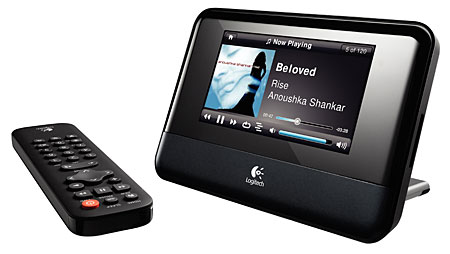
When it comes to ripping CDs and downloading music, I've been sitting on the sidelines feeling more than a bit of envy. Stereophile's reviews of various media servers have whetted my appetite, but not so much as to overcome my timidity about getting into a new realm of technology in which I would be a beginner all over again. Still, I've sneaked a few peeks.
MP3 vs AAC vs FLAC vs CD

As Wes Phillips recently reported on this website, CD sales are down and legal downloads of audio files are up. Stereophile has been criticized more than once for not paying enough attention to the subjects of MP3 and other compressed file formats, such as AAC, and for offering no guidance at all to readers about how to get the best sound quality from compressed downloads.
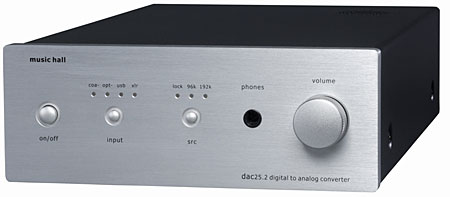
Music Hall dac25.2 D/A processor
Roy Hall has been Creek Audio's US importer for more than 20 years. Did you know that all Creek gear is now made in China? Just like Cambridge Audio, Quad, and many B&W models. Just like some US speaker brands, for which virtually all parts are made in China but are assembled, it's claimed, in the US. Three cheers for brands like LFD, Rega, Sugden, and Harbethall still made in the UK. For French marques made in France. For Italian products produced in Italy. Etc.
Music in the Round #76
In my last column, in the November 2015 issue, I talked about Marantz's AV8802A preamplifier-processor and two accessories: UpTone Audio's USB Regen, and a DIY battery supply for my DAC. This month's column is all about accessories, and for me that's unusual. Some items, like interconnects and speaker cables, are usually considered accessories because they're not fundamental components (eg, source, amplifier, speaker), even though they're essential to getting any sound at all.
Music in the Round #85: Nimitra, exaSound, Baetis, Roon
It's been going on for a while now: Despite support for multichannel in audio/video receivers and A/V processors priced from as little as $200 to $30,000, there are still very few offerings that cater to the music listener. They may offer stereo-only streaming features through their USB or Ethernet inputs, but these inputs don't see your multichannel files. To handle such files, they would require you to add a music server with HDMI output. However, I know of no turnkey music servers that will output multichannel audio via HDMI.