

dCS Debussy D/A processor
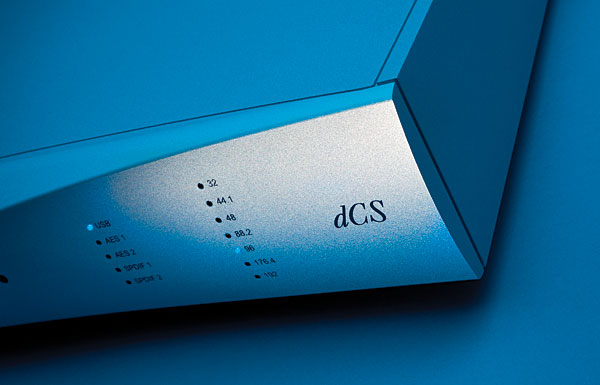
Don't have $80,000 to drop on dCS's four-component Scarlatti SACD stack that I reviewed in August 2009, or $17,999 for their Puccini SACD/CD player that John Atkinson raved about in December 2009? Even if you do, the new Debussy D/A processor ($10,999) might be a better fit for your 21st-century audio system. Sure, you don't get an SACD transportor any kind of disc play, for that matterbut the odds today are that you already have a player you like that's got an S/PDIF output that can feed the Debussy.
Digital Audio Labs CardDeluxe PC soundcard

Convergence. There, I've said it. I swore I wasn't going to use the "C" word, but when you're faced with writing about a product that smashes the boundaries between component categories as completely as the CardDeluxe does, you have little choice.
Echo Indigo IO CardBus soundcard
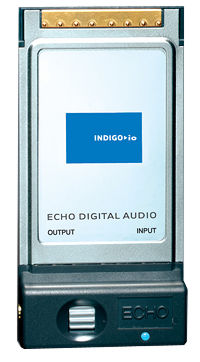
The integration of computers into high-end audio is contentious. A reader">http://www.stereophile.com/showvote.cgi?340">reader poll last spring on our website indicated that a significant proportion of audiophiles—a quarter—is dead set against the idea, yet both Microsoft, with Windows Media Player 9, and Apple, with iTunes, seem convinced that the future of domestic music reproduction involves computers. To support that idea, both Apple- and Windows-based computers (the latter with Intel's about-to-be-launched HD Audio technology) are promoting hi-rez audio playback.
Empirical Audio Off-Ramp 4 USB format converter
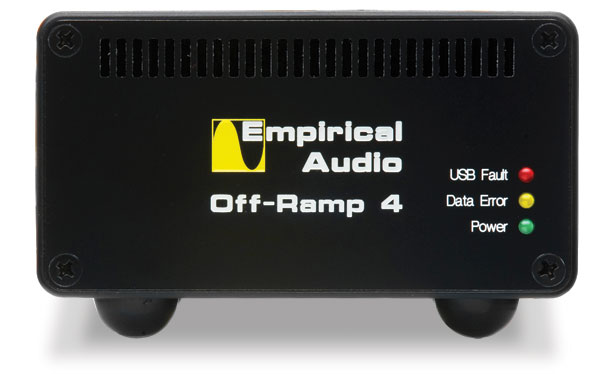
If an audiophile visiting an audio show in 1991 were to have been transported two decades into the future, at first he would not be aware of any difference: A two-channel system would be playing in a hotel room. But on closer inspection, he would notice that the CD player, the ubiquitous source 20 years ago, would be conspicuous by its absence. Yes, there might be a turntable"Good to see that people are playing LPs in the future," he would thinkbut why is there a PC in the room?
Halide Design DAC HD D/A converter
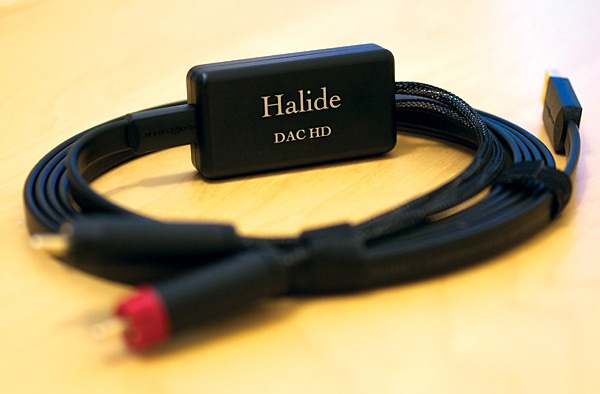
When it comes to getting audio from a PC via its USB port, the buzzword du jour is asynchronous. This cryptic term refers to which device has control over the timing of the audio data being streamed from the computer: the computer itself, or the device receiving the data. It might seem logical to have the computer control the timing, but this is not so. When digital audio data are converted to analog by a D/A converter, control over exactly when each dataword is converted is critical for the best quality of sound. Any uncertainty in that timing manifests itself as analog distortion, aka jitter.
Halide Design S/PDIF Bridge USB-S/PDIF converter
The weekly Vote! Page is one of the most popular features of the Stereophile website, and the August 22 question, "Should Stereophile review more or fewer computer-audio products?", generated a record number of responses. No less than 88% of those responding asked for more coverage of products that allow a computer to be a legitimate source of music in a high-end context. Just 7% of readers wanted less coverage.
HRT Music Streamer HD USB D/A processor

No history of the computer-audio marketplace could be complete without some mention of High Resolution Technologies, the California company whose Music Streamer was, in 2009, the first perfectionist-quality USB digital-to-analog converter to sell for as little as $99. One could argue that HRT's entire business model has contributed to shaping our attitudes toward the hobby: Because digital-audio technology continues to evolve at such a rapid pace, HRT has introduced a succession of newer and ever more effective Music Streamers, occasionally to the obsolescence of their predecessors; yet because those products have all been so affordableremarkably and laudably so, given their thoroughly American provenancewe tend not to mind.
HRT Music Streamer Pro USB D/A converter

Art Dudley and others have covered the first products released by HRT, and now the company has added to its product line a Pro version of its Music Streamer, which sports balanced circuit design from tip to tail.
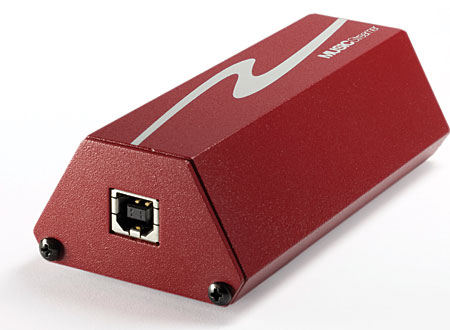
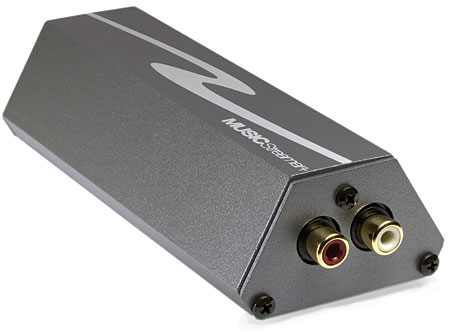
Housed in the same simple, functional, six-sided case of extruded aluminum as HRT's other products, the Pro is painted a bright blue to distinguish it from the Music Streamer II (red) and Music Streamer II+ (gray). At 5.6" it is also a tad longer than the others, and includes a single B-type USB 1.1 jack centered on one end, and two small, fully balanced TiniQ output jacks on the other. More about these special mini sockets later.
HRT Music Streamer USB D/A Converter
My favorite moment in the Zack Snyder film Watchmen—apart from the Dylan-fueled title sequence, which itself contains some of the most memorable scenes in recent cinema—comes when retired crimefighter Daniel "Nite Owl II" Dreiberg arrives home to find the doctrinaire and mildly crazy Walter "Rorschach" Kovacs in his kitchen, eating beans straight from the can. The startled Dreiberg asks his visitor, "Would you like me to heat those up for you?"
HRT Music Streamer+ USB D/A Converter
Every now and then an affordable product comes along that's so good, even wealthy shoppers want it. Past examples in domestic audio include the Rega">http://www.stereophile.com/turntables/184rega">Rega RB300 tonearm, the original Quicksilver Mono amplifier, the Grace F9E phono cartridge—even Sony's unwitting CD player, the original PlayStationhttp://www.stereophile.com/cdplayers/708play">PlayStation;. Based on word of mouth alone, one might add the HRT Music Streamer+ to that lauded list.