Rob Schryer wrote about the Benchmark DAC3 B in July 2026
In his review of the Benchmark DAC3 B ($1799 when last reviewed, $1899 in 2026) John Atkinson designated it an "audiophile bargain" and added it to Class A+ in Stereophile's Recommended Components list, where it remains today alongside its more extensively outfitted brother, the DAC3 HGC ($2299, when last reviewed, $2399 in 2026),which Jim Austin reviewed earlier, in 2017 (footnote 1). The DAC part of these components—the B and the HGC—is exactly the same. What's different is the feature set: To borrow from John's description, the DAC3 B is a "stripped-down version of the DAC3 HGC. While it uses the same complement of ES9028PRO DAC chips as the flagship HGC and retains the USB port, the B offers a fixed output level and omits the headphone amplifier, balanced and unbalanced analog inputs, volume, mute, and polarity controls, and the remote control." Meanwhile, the DAC3 B is a simple (but apparently very good) D/A converter. Even Benchmark says that when both are used as a DAC they sound exactly the same. Consequently, they occupy a single entry in Recommended Components, still in A+, under Digital Processors. The DAC3 entry—representing both versions—has earned the $$$ symbol, indicating exceptional value. The DAC3 B arrived at my house as I was reviewing the Wattson Emerson network bridge. In that review I also employed, in addition to the DAC3 B, my iFi iDSD Diablo DAC. The rest of my system consisted of a Simaudio 260D transport, a Grandinote Shinai integrated amp, and a pair of Dynaudio Contour 30i speakers, with interconnect and speaker cabling by Kimber Kable and Audience and power cords and power-management products by DR Acoustics and Shunyata Research. I took the opportunity to do some comparative DAC listening.
 Am I suggesting that streaming can sound as good as CD? Well, no—I'm suggesting it can sound better, especially with quality hi-rez recordings, but it doesn't always. My answer, then, is a definitive Yes. No. It depends.
 On the other hand, CDs played through the Benchmark sounded stable. Average-sounding ones sounded average—though less average than through my iFi DAC—while well-recorded ones sounded uniformly excellent. The movie soundtrack The Knack ... and How to Get It (CD, Quartet Records QR577) was dynamic as all get-out, with trenchant texture. Piano and drums on Tord Gustavsen's Being There (CD, ECM B0008757-02) were radiant and finely engraved. The congas on "Pusherman," from Curtis Mayfield's Superfly (CD, Rhino R2 75803), popped out into my room in vivid, material shapes, like replicas of the real thing. Both saxophone and piano on Coltrane Plays the Blues (CD, Atlantic Jazz CD 1382) were tonally dense and set deep within the soundstage.
 With a proper recording and a solid internet connection, music streamed via Qobuz, even at CD resolution, could sound better than CD. CD could sound a tad drier and more tempered harmonically—less effervescent and scenically varied, though not less physical. In comparison, the stream could at its best sound freer, breathier, more open-window—as if the music were unconstrained by physical boundaries. That's less physical in a good way! The DAC3 B made the case for me that streaming, at its core, has the capacity to sound better than CD, even in 16/44.1.
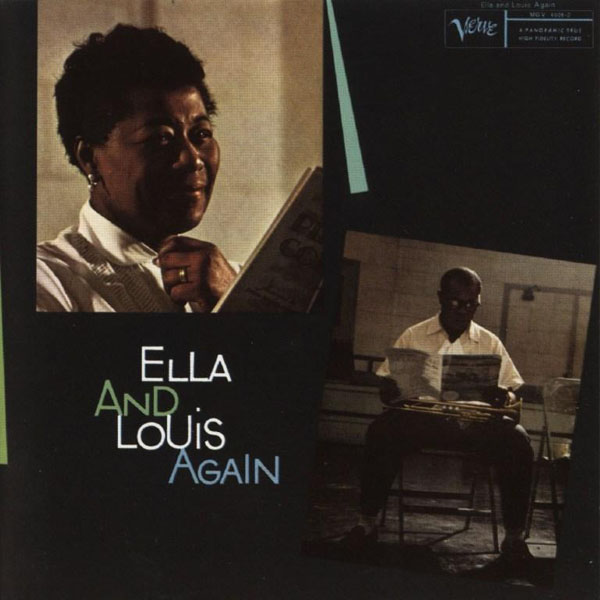
Hi-rez through the Benchmark was even more convincing. Standing starkly against a richly ambient background, the voices of Ella Fitzgerald and Louis Armstrong on "Autumn in New York" from Ella and Louis Again (24/96 FLAC, Verve Reissues/Qobuz) sounded natural and explicit, discernibly emanating from real human lungs and delivered on a current of warm breath. Their words were oval-shaped and articulate, revealing that beneath the gruffness of Armstrong's voice lay a gifted singer who could swing his voice from polished to coarse on a dime, always in tune. Likewise, his trumpet groaned and pierced, dynamically spry and extended. The Cure's "The Last Day of Summer (Live)," from the live album Curaetion-25: From There to Here | From Here to There (24/48 FLAC, Mercury Studios/Qobuz), scaled large and unleashed an avalanche of musical energy. Colorful synth-chord slabs and gusts of overlapping bass tones filled my room.
With a proper recording and a solid internet connection, music streamed via Qobuz, even at CD resolution, could sound better than CD. CD could sound a tad drier and more tempered harmonically—less effervescent and scenically varied, though not less physical. In comparison, the stream could at its best sound freer, breathier, more open-window—as if the music were unconstrained by physical boundaries. That's less physical in a good way! The DAC3 B made the case for me that streaming, at its core, has the capacity to sound better than CD, even in 16/44.1.
Hi-rez through the Benchmark was even more convincing. Standing starkly against a richly ambient background, the voices of Ella Fitzgerald and Louis Armstrong on "Autumn in New York" from Ella and Louis Again (24/96 FLAC, Verve Reissues/Qobuz) sounded natural and explicit, discernibly emanating from real human lungs and delivered on a current of warm breath. Their words were oval-shaped and articulate, revealing that beneath the gruffness of Armstrong's voice lay a gifted singer who could swing his voice from polished to coarse on a dime, always in tune. Likewise, his trumpet groaned and pierced, dynamically spry and extended. The Cure's "The Last Day of Summer (Live)," from the live album Curaetion-25: From There to Here | From Here to There (24/48 FLAC, Mercury Studios/Qobuz), scaled large and unleashed an avalanche of musical energy. Colorful synth-chord slabs and gusts of overlapping bass tones filled my room.
 Another, very different treat was Iron & Wine's "Autumn Town Leaves" (24/88 FLAC, Sub Pop/Qobuz), whose beginning rippled into my room in luminescent waves of plucked guitar chords. Vocal harmonies emitted an inward, gleaming focus, sounding sweet, finely combed, and fixed in space.
I associate the ECM label primarily with thoughtful, atmospheric jazz defined by silences between the notes, textural nuance, painterly playing, and a palpable sense of space. One track that checks all those boxes—one of the best-sounding recordings I've heard in ages—discovered during one of my forays into Qobuz's hi-rez district, is French drummer Manu Katché's "November 99," from Neighbourhood (24/96 FLAC, ECM/Qobuz), with ECM stalwarts Jan Garbarek on tenor saxophone and Tomasz Stańko on trumpet. Through the Benchmark, this piece was a sonic stun grenade. I couldn't move, so engrossed was I in the music show that materialized in front of me, with its playful, bulbous, sparkling piano rolls. Percussion manifested potent blends of texture and tone; bass notes were firm and supple, laying out a slow-swinging hypnotic foundation. I swear I stopped breathing a couple of times.
The Benchmark DAC3 B offers a remarkable combination of stability and transparency. Attached to either my Simaudio transport or the Wattson Emerson network bridge, it never sounded less than enthralling.
Another, very different treat was Iron & Wine's "Autumn Town Leaves" (24/88 FLAC, Sub Pop/Qobuz), whose beginning rippled into my room in luminescent waves of plucked guitar chords. Vocal harmonies emitted an inward, gleaming focus, sounding sweet, finely combed, and fixed in space.
I associate the ECM label primarily with thoughtful, atmospheric jazz defined by silences between the notes, textural nuance, painterly playing, and a palpable sense of space. One track that checks all those boxes—one of the best-sounding recordings I've heard in ages—discovered during one of my forays into Qobuz's hi-rez district, is French drummer Manu Katché's "November 99," from Neighbourhood (24/96 FLAC, ECM/Qobuz), with ECM stalwarts Jan Garbarek on tenor saxophone and Tomasz Stańko on trumpet. Through the Benchmark, this piece was a sonic stun grenade. I couldn't move, so engrossed was I in the music show that materialized in front of me, with its playful, bulbous, sparkling piano rolls. Percussion manifested potent blends of texture and tone; bass notes were firm and supple, laying out a slow-swinging hypnotic foundation. I swear I stopped breathing a couple of times.
The Benchmark DAC3 B offers a remarkable combination of stability and transparency. Attached to either my Simaudio transport or the Wattson Emerson network bridge, it never sounded less than enthralling.
Footnote 1: Benchmark Media Systems, Inc. 203 E. Hampton Place, Suite 2 Syracuse, NY 13206. Tel: (800) 262-4675. Web: benchmarkmedia.com