

Allnic D-5000 DHT D/A processor
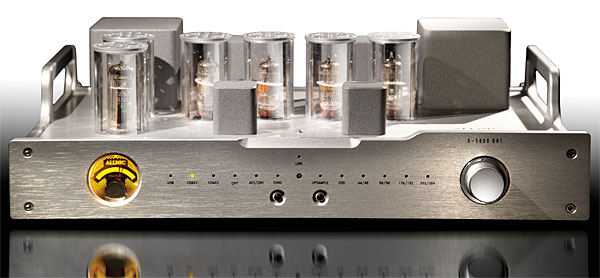
There may have been a time when vacuum tubes and microprocessors seemed strange bedfellows. But nowadaysgiven the countless digital processors with tubed output stages, and an even greater number of tubed amps and preamps whose insides are crawling with the latest solid-state deviceswe're more or less used to the idea. Here as elsewhere, hybrids are no big deal.
Antelope Audio Zodiac Platinum D/A processor–headphone amplifier & Voltikus power supply
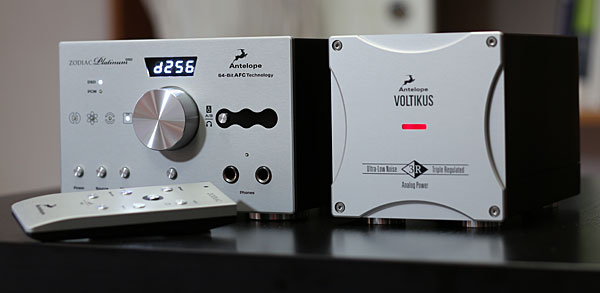
Professional digital audio is like gravity to consumer audio's antigravity: pro gear draws music into digital files, and consumer audio releases those same notes back out again.
It's not surprising, then, that many audiophile digital-to-analog converters come to us from the pro-audio industry, which has a hierarchy similar to the consumer side: value-oriented products all the way up to ultimate-performance brands. Examples of pro-audio companies that also offer audiophile DACs for consumers abound: Benchmark, CEntrance, Grace Design, Korg, Mytek, and Nagra, to name a few.
Apogee Electronics Groove D/A headphone amplifier
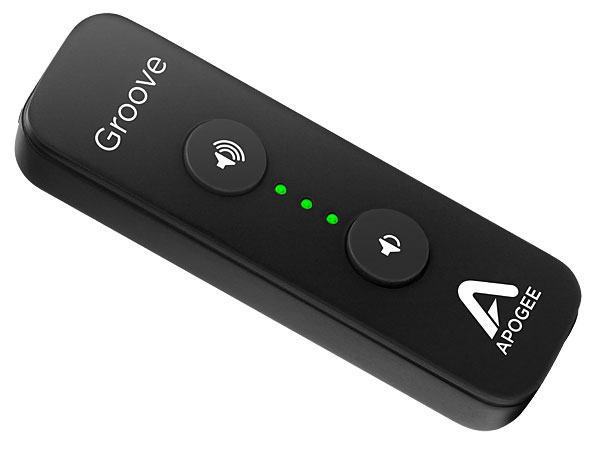
Apogee Electronics Corp. has been in business for 30 years, and I've always thought of them as one of the pro-audio companies responsible for moving digital in the right direction. They've made their mark in recording studios around the planet with digital-audio interfaces and master clocks that have long been considered some of the most technically and sonically advanced, and that were probably used in a high percentage of the recordings in your collection. So when I saw Apogee pop up at the consumer end of the market with a technically unique product, budget-priced at $295, it got my attention.
Apogee Electronics PSX-100 digital converter
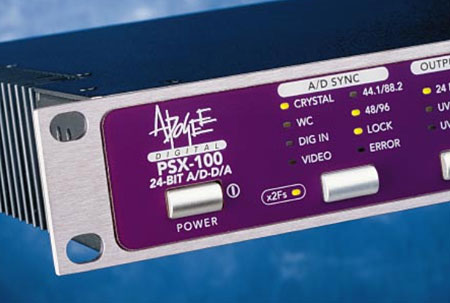
Can a piece of studio gear find happiness on an audiophile's equipment stand? More important, can an audiophile derive satisfaction from its sound?
Apple AirPort Express Wi-Fi Hub-D/A processor
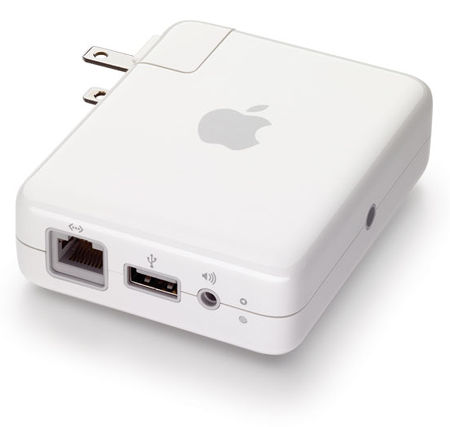
Usually, a Stereophile "Follow-Up" follows up (duh!) a full review of the component in question. This review, however, is intended to flesh out a cryptic comment made by Wes Phillips in April's "As">http://www.stereophile.com/asweseeit/405awsi">As We See It": "When Apple introduced its AirPort Express wireless multimedia link," Wes wrote, "it even included a digital port so that an audiophile—such as Stereophile's editor—could network his system, using the AE to feed his Mark">http://www.stereophile.com/digitalsourcereviews/159">Mark Levinson No.30.6 outboard D/A converter. 'Sounds okay,' deadpans JA."
Aqua Acoustic Quality Aqua Formula xHD D/A processor
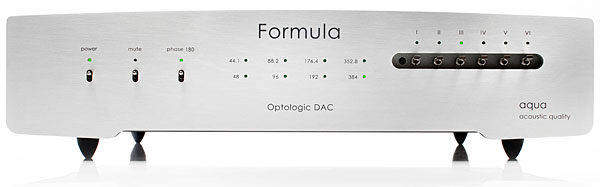
At the 2018 Consumer Electronics Show, when John Atkinson and I entered the room shared by Lamm Industries, Aqua Acoustic Quality, and Kharma room, we were looking for two things: good sound, and digital products for me to review. When we spied AAQ's Formula xHD digital-to-analog converter, the possibility of evaluating a potentially excellent DAC made by someone other than the usual suspects felt like a golden opportunity.
Arcam Delta Black Box D/A processor
 As explained by Ken Kessler elsewhere in this issue, the English A&R Cambridge company made their name by producing one of the UK's most successful integrated amplifiers, the 40Wpc A60. This neatly styled model was in production for a decade or so and was the basis for a large number of good-sounding but inexpensive audio systems. These days, the company, whose products in the US sell under the Arcam banner, is a major British hi-fi manufacturer, with a product line that includes integrated amplifiers, tuners, loudspeakers, cartridges, and even a CD player. A&R was, I believe, the first UK manufacturer to obtain a player-manufacturing license from Philips, and with the product under review here, has broken new territory for a supposedly "audiophile" company in having a custom LSI chip manufactured to their own requirements.
Arcam FMJ D33 D/A processor
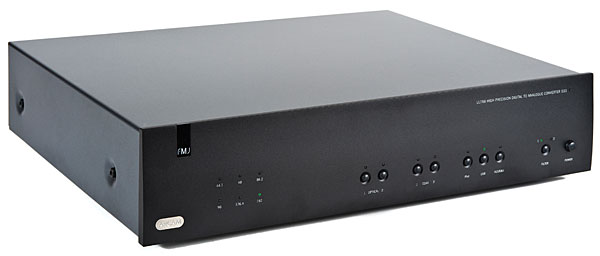
As I wrote in my review of the Bricasti M1 D/A processor in February 2012, it seemed a good idea in the late 1980s: upgrade the performance of your CD player by feeding its digital output to an outboard digital/analog processor. British manufacturer Arcam, one of the first companies to see the opportunities in this strategy, introduced their Black Box in 1988. When I reviewed the Black Box in February 1989, I found that its low-level linearity was among the best I had measured at that time for a product featuring the 16-bit Philips TDA1541 DAC chip set. However, that linearity still wasn't very good in absolute terms. Back then, it required heroic and expensive engineering to obtain D/A performance that did justice to the 16-bit CD. These days, however, the semiconductor foundries produce a plethora of relatively inexpensive D/A processor chips that both handle 16-bit data with ease and wrest full resolution from 24-bit data.
Arcam irDAC-II D/A processor
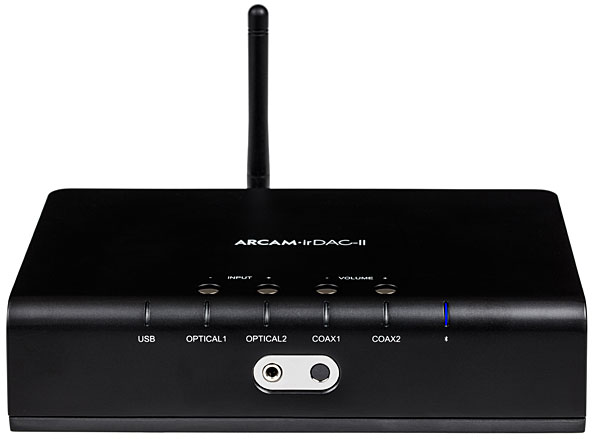
For digital playback, in recent months I've been breathing some rarefied air, pricewise. In December 2016, I reviewed dCS's Rossini Player and Clock, followed in May 2017 by Meridian's Ultra DAC, and in June by Chord's DAVE DAC. The Rossini Player costs $28,499 without the Clock, the Meridian $23,000, and though the DAVE is less expensive than either at $10,588, that's still a fair chunk of change. Even PS Audio's PerfectWave DirectStream DAC, which I bought following Art Dudley's review in September 2014, costs $6899 with the Network Bridge II, which hardly counts as "affordable."
Arcam rBlink Bluetooth D/A processor
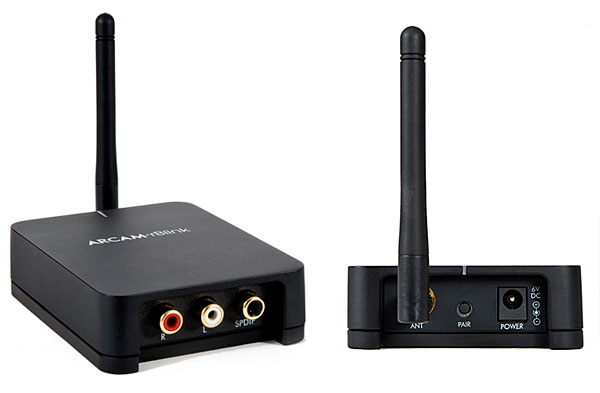
Am I the only one who values content and convenience over sound quality?
There. I've said it. I am not an audiophile; ie, someone who's in love with recorded sound for its own sake. The search for ideal sound can leave a person burned out and broke.