Walking through any big art museum, even at a brisk pace, it's impossible not to notice how boldly each object wears the unique stamp of its time and place of manufacture.
It doesn't matter whether the artist worked in Paris or Polynesia, in the 15th or 20th century. The force of the creator's persona, united with the constraints of the cultural system that supported the making of that type of art, determines the vibe the object emits. That vibe is what I'm hoping to grasp.
Whether I'm examining a Zulu beer pot or a John Cage drawing (both of which I've lived with), my first step toward entering the mind of an artwork's creator(s) is to penetrate the cultural force field that surrounds the object. That invisible shield prevents the uninitiated from grasping the object's more esoteric intents.
I doubt Zulu warriors and John Cage intellectuals mingled much.
If my knowledge and imagination are too limited to grasp the object's original purpose, the object will remain foreign and other—a mysterious curio from another place and time made and used by people I shall never mingle with.
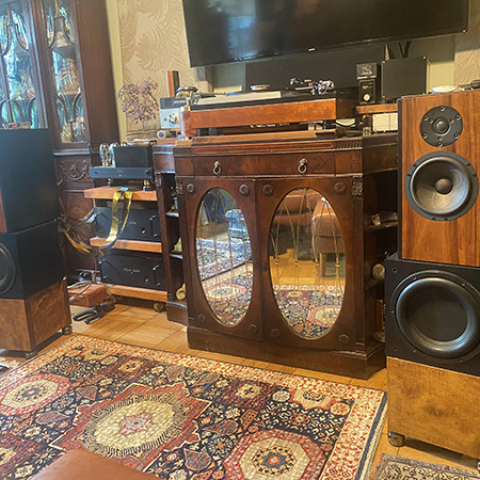
In my tribal hut, playing old recordings with exotic new and vintage audio gear is exactly this type of anthropology, though applied to audio recordings not objet d'art. It's a branch of the audio hobby that doesn't mingle much with the mainstream. The technical, sonic, and aesthetic differences between a Jules Futterman OTL amplifier, a chrome-bumper Naim NAIT, Hiroyasu Kondo's Ongaku, and a Bruno Putzeys amplifier module are such that these tribes tend to ignore each other.
Similarly, audiophiles who came of age with wood boxes on the living room floor don't mingle much with today's young head-fi crowd.
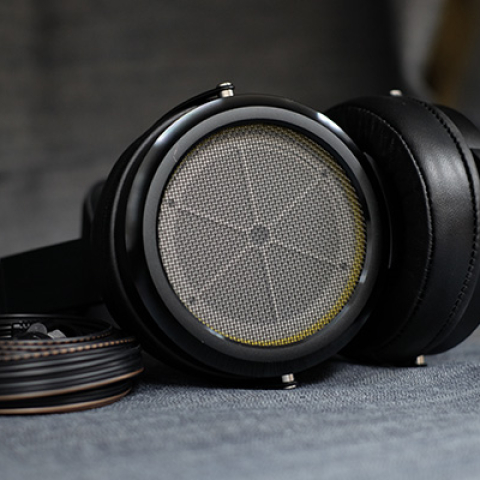
This month's Gramophone Dream will describe the new, "Advanced & Reimagined" Stax SR-007S Earspeakers ($2390; footnote 1). I hope this Dream will inspire readers of all ages and levels of experience to learn the 007's long backstory by reading Stereophile's previous Stax SR-007 reports: Jonathan Scull's 2001 exposé of the SR-007 Omega II electrostatic headphone and Tom Norton's milestone 1995 report on Stax's original SR-Omega.
Even if you're not a headphone collector-aficionado, these superbly written reports represent an important part of head-fi's history prior to stepping into the global CanJam spotlight (2005–2015) under the inspired guidance of Jude Mansilla (Head-Fi.org) and Tyll Hertsens (InnerFidelity), who pulled me into Headphonelandia with his incredible measurements database. Tyll and I got along pretty well, but I could never resist badgering him: "How do you know what a headphone sounds like if you measure first and listen second?" Or, "How will I recognize low distortion when I hear it?" Things like that. I was teasing because one of the things we always agreed on was the best answer to the old question "What does low distortion sound like?" For Tyll and I, it sounded like Stax headphones.
Stax SR-207 vs SR-007 Omega vs Koss ESP/950
I have a youngish (under 50) audiophile friend who dabbles at the elite levels of vintage audio. One time when I visited him, his speakers were reproductions of Western Electric horns, powered by a 205D amplifier. His turntable was a grease-bearing Garrard 301 with a Fidelity Research FR64 tonearm and a Koetsu Black cartridge. This timeless system turned his Manhattan apartment into a widescreen sense-o-rama, with life-sized illusions and conspicuously low distortion. As I was leaving, my host handed me a canvas bag with a pair of 1990s Stax SR-Omega headphones inside. Smiling coyly, he winked. "Let me know what you think."
This friend knows my tastes. We both mingle with those triode-horn cats, and both of us regard vintage phono cartridges with the same reverence as art in a museum. Beyond the fact that my friend liked them, I had zero clue what these glamorous-looking Stax Earspeakers might sound like. I'd never auditioned a Stax product I didn't like or at least respect, but the only Stax headphone I've owned and used at great length is the unglamorous SR-207.
I bought the SR-207s used because I guessed (correctly) they would play my collection of field recordings with a little extra you-are-there vividosity. What I didn't anticipate was how much juice and color would come along with that vividosity.
[a violin tunes up ...]
 Ready
Ready
I love it when the fiddler talks to the recordist then pauses to cough in the middle of his song. For me, such details enhance the cinema vérité effect and make "The Scotch Musick," as fiddled and sung by Absie Morrison, into a trip to Lands, Arkansas, in 1959. This track is on Volume 7 of Alan Lomax's Southern Journey Ozark Frontier (Rounder CD 1707). For me, this is note-perfect time travel. My mind saw clearly into that room through the grille on Lomax's microphone.
I love it, too, when on track 11 of that same CD, singer-fiddler Neil Morris remembers how his father Milt Oldfield (who was also an Arkansas congressman at the time) declared, "Music Has No End."
"You could learn everything the other guys knew, and after you get that done—something new would crop up." Neil and Milt agreed. "Music grew like a grapevine that was never pruned. Each year, it put on a little bit more." They declared, "That's how music is advanced." It is how it evolves to fit the times.
With my vintage Stax SR-207, powered by Stax's new SRM-700S driver unit (described below), these spoken words and environmental sounds came from a darker, more shadowy space, where instrumental textures are displayed in dramatic bas-relief. Where tones are densely pigmented. I enjoy the 207s because they sound a lot like my Koss ESP/950 electrostatics, which are my reference for how much painterly midrange beauty is possible.
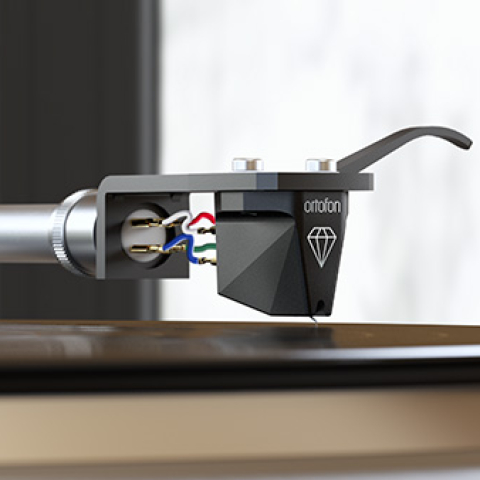
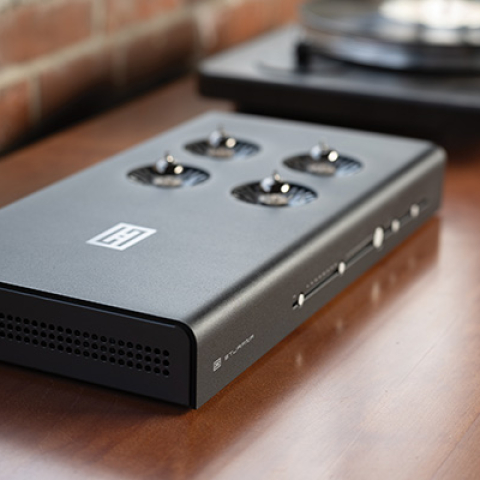
 I wish all Stereophile readers could have heard Igor Stravinsky's 1919 version of L'Oiseau de Feu played by the Chicago Symphony Orchestra under the baton of Carlo Maria Giulini (EMI LP 2C 069-0.2070), as traced by the Shibata stylus of Ortofon's new MC X40 moving coil cartridge (review in process), adjusted and amplified by the Schiit Stjarna phono stage wired directly into my Koss ESP/950 electrostatic headphones and power supply. This humble system plowed its way effortlessly through some powerful, complex orchestration happening in a deep, illusionary space. Sometimes when the strings got fully revved,
I would smile and think, "those strings sound 'bright,'" but they were not harsh or unpleasant. At all.
The Koss stats made each section of the CSO stand out as a unique body of players with a specific range of harmonic forces under their control. Best of all, the 950s made every record enjoyable, each in its own special way, by letting it sound as different as possible from every other record. I regard that "make every record sound different" talent as the cornerstone of audio system accuracy.
I wish all Stereophile readers could have heard Igor Stravinsky's 1919 version of L'Oiseau de Feu played by the Chicago Symphony Orchestra under the baton of Carlo Maria Giulini (EMI LP 2C 069-0.2070), as traced by the Shibata stylus of Ortofon's new MC X40 moving coil cartridge (review in process), adjusted and amplified by the Schiit Stjarna phono stage wired directly into my Koss ESP/950 electrostatic headphones and power supply. This humble system plowed its way effortlessly through some powerful, complex orchestration happening in a deep, illusionary space. Sometimes when the strings got fully revved,
I would smile and think, "those strings sound 'bright,'" but they were not harsh or unpleasant. At all.
The Koss stats made each section of the CSO stand out as a unique body of players with a specific range of harmonic forces under their control. Best of all, the 950s made every record enjoyable, each in its own special way, by letting it sound as different as possible from every other record. I regard that "make every record sound different" talent as the cornerstone of audio system accuracy.
 The new Stax SR-007S earspeaker
Compared to my beloved 950, Stax's new SR-007S produced a radically clearer, more three-dimensional, better lit, more sharply focused sound, polished, satiny, and slightly dry, more in line with contemporary audiophile taste. In 1995, Stereophile's Tom Norton declared, "If you want the truth, however—at least as honestly as I've heard it in any headphones—you want the Stax SR-Omegas. "The SR-Omegas will stack up against any loudspeaker I know of in overall balance, definition, and sheer ability to convince the listener that he or she is indeed hearing exactly what's on any given recording." My loaner SR-Omegas played silky-pure and preternaturally transparent, as befits a flagship earspeaker from Stax, but they also came across feeling precode-Hollywood glamorous. Tom Norton didn't notice the glamour factor as much as I did. (He was a fighter pilot. I'm a Marlene Dietrich fan.) Sounds, especially female vocals, presented with a radiant aura. More than any other headphone in my studio, the SR-Omegas aroused all my senses. When I returned them, my friend looked me in the eye and raised his eyebrows, asking what I thought, whereupon I flashed my biggest smile and declared them "Glorious!"
Stax's new SR-007S, then, stands in front of a decades-long backdrop of top-level transducers.
Here's what the Stax website has to say about the new Stax earspeaker (footnote 2). "The all new SR-007S features updated diaphragms and ... newly redesigned large circular fixed electrodes featuring a 20% reduction in air vent hole diameter compared to earlier models." I have no way of knowing, but I suspect these changes are the part of "advanced and reimagined" responsible for the uptick in refined beauties outlined below.
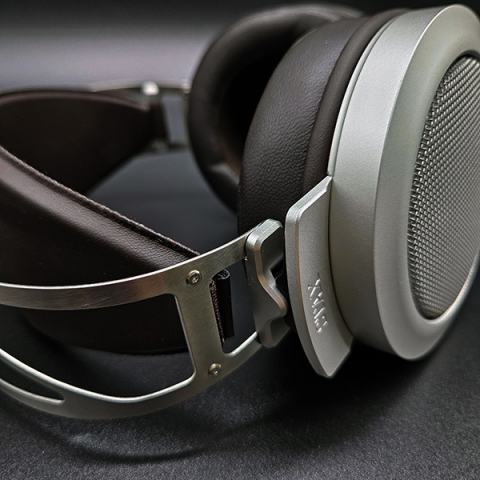
In addition, the SR-007S incorporates Stax's "All-New ARS (Anti Resonance Structure)." ARS is a cleverly formed headband arc "inspired by the flagship SR-X9000, utilizing a seamless stainless-steel plate for enhanced rigidity and vibration reduction."
These new 007Ss exude design elegance and material build quality. The SR-007S are among the finest looking, best built headphones I've ever used.
 The Stax website also mentions the new earpads, which serve several purposes. "The SR-007S earpads feature a rotating design that adapts seamlessly, improving both comfort and fit. Crafted from premium sheepskin, the material enhances sound quality by reducing unwanted reflections and optimizing acoustic absorption. The newly redesigned inner earpad further refines sound absorption, offering a heightened sense of perspective and contributing to a more expansive, precise soundscape. Finished in a STAX signature brown, it pays homage to the traditional aesthetic of the 007 series, merging classic elegance with cutting-edge audio engineering." I repeat, the fit, finish, and material build quality of Stax's $2390 SR-007S are among the finest I've encountered.
Some part of the feel of that fine fit and finish comes from the 007S's supple detachable cables: "A detachable cable system has been implemented for easy maintenance, longevity of the earspeaker, as well as future support and replacement, where necessary." To a chorus of applause, Stax began implementing detachable cables on some headphone models beginning in 2019.
I respect old, established companies like Stax because they do not make a flashier improved MKII model every year to keep their brand in people's news feeds. During the course of these auditions, I kept admiring how this new SR-007S is not a changed or upgraded version but rather a refinement of the original Omega gestalt.
Three decades into its development, this SR-007S looks basically the same, but I think this "S" manifestation looks more finely wrought with its new stainless steel headband arc and new three-tone brown earpads featuring luxurious sheepskin inners. Like its classy forebears, the SR-007S showcases understated Japanese elegance.
The Stax website also mentions the new earpads, which serve several purposes. "The SR-007S earpads feature a rotating design that adapts seamlessly, improving both comfort and fit. Crafted from premium sheepskin, the material enhances sound quality by reducing unwanted reflections and optimizing acoustic absorption. The newly redesigned inner earpad further refines sound absorption, offering a heightened sense of perspective and contributing to a more expansive, precise soundscape. Finished in a STAX signature brown, it pays homage to the traditional aesthetic of the 007 series, merging classic elegance with cutting-edge audio engineering." I repeat, the fit, finish, and material build quality of Stax's $2390 SR-007S are among the finest I've encountered.
Some part of the feel of that fine fit and finish comes from the 007S's supple detachable cables: "A detachable cable system has been implemented for easy maintenance, longevity of the earspeaker, as well as future support and replacement, where necessary." To a chorus of applause, Stax began implementing detachable cables on some headphone models beginning in 2019.
I respect old, established companies like Stax because they do not make a flashier improved MKII model every year to keep their brand in people's news feeds. During the course of these auditions, I kept admiring how this new SR-007S is not a changed or upgraded version but rather a refinement of the original Omega gestalt.
Three decades into its development, this SR-007S looks basically the same, but I think this "S" manifestation looks more finely wrought with its new stainless steel headband arc and new three-tone brown earpads featuring luxurious sheepskin inners. Like its classy forebears, the SR-007S showcases understated Japanese elegance.
Footnote 1: Stax Ltd., Japan, 3798-1 Shimonanbata, Fujimi, Saitama Prefecture, 354-0004 Japan. Web: stax-international.com. US distributor: Woo Audio, 29 West 46th St., New York, NY. Tel: (917) 773-8645. Email: info@wooaudio.com. Web: staxaudio.com. Footnote 2: See staxheadphones.com/collections/earspeakers/products/sr-007s-electrostatic-earspeaker.
ReadyI love it when the fiddler talks to the recordist then pauses to cough in the middle of his song. For me, such details enhance the cinema vérité effect and make "The Scotch Musick," as fiddled and sung by Absie Morrison, into a trip to Lands, Arkansas, in 1959. This track is on Volume 7 of Alan Lomax's Southern Journey Ozark Frontier (Rounder CD 1707). For me, this is note-perfect time travel. My mind saw clearly into that room through the grille on Lomax's microphone.
I wish all Stereophile readers could have heard Igor Stravinsky's 1919 version of L'Oiseau de Feu played by the Chicago Symphony Orchestra under the baton of Carlo Maria Giulini (EMI LP 2C 069-0.2070), as traced by the Shibata stylus of Ortofon's new MC X40 moving coil cartridge (review in process), adjusted and amplified by the Schiit Stjarna phono stage wired directly into my Koss ESP/950 electrostatic headphones and power supply. This humble system plowed its way effortlessly through some powerful, complex orchestration happening in a deep, illusionary space. Sometimes when the strings got fully revved,
I would smile and think, "those strings sound 'bright,'" but they were not harsh or unpleasant. At all.
The Koss stats made each section of the CSO stand out as a unique body of players with a specific range of harmonic forces under their control. Best of all, the 950s made every record enjoyable, each in its own special way, by letting it sound as different as possible from every other record. I regard that "make every record sound different" talent as the cornerstone of audio system accuracy.
The new Stax SR-007S earspeakerCompared to my beloved 950, Stax's new SR-007S produced a radically clearer, more three-dimensional, better lit, more sharply focused sound, polished, satiny, and slightly dry, more in line with contemporary audiophile taste. In 1995, Stereophile's Tom Norton declared, "If you want the truth, however—at least as honestly as I've heard it in any headphones—you want the Stax SR-Omegas. "The SR-Omegas will stack up against any loudspeaker I know of in overall balance, definition, and sheer ability to convince the listener that he or she is indeed hearing exactly what's on any given recording." My loaner SR-Omegas played silky-pure and preternaturally transparent, as befits a flagship earspeaker from Stax, but they also came across feeling precode-Hollywood glamorous. Tom Norton didn't notice the glamour factor as much as I did. (He was a fighter pilot. I'm a Marlene Dietrich fan.) Sounds, especially female vocals, presented with a radiant aura. More than any other headphone in my studio, the SR-Omegas aroused all my senses. When I returned them, my friend looked me in the eye and raised his eyebrows, asking what I thought, whereupon I flashed my biggest smile and declared them "Glorious!"
The Stax website also mentions the new earpads, which serve several purposes. "The SR-007S earpads feature a rotating design that adapts seamlessly, improving both comfort and fit. Crafted from premium sheepskin, the material enhances sound quality by reducing unwanted reflections and optimizing acoustic absorption. The newly redesigned inner earpad further refines sound absorption, offering a heightened sense of perspective and contributing to a more expansive, precise soundscape. Finished in a STAX signature brown, it pays homage to the traditional aesthetic of the 007 series, merging classic elegance with cutting-edge audio engineering." I repeat, the fit, finish, and material build quality of Stax's $2390 SR-007S are among the finest I've encountered.
Some part of the feel of that fine fit and finish comes from the 007S's supple detachable cables: "A detachable cable system has been implemented for easy maintenance, longevity of the earspeaker, as well as future support and replacement, where necessary." To a chorus of applause, Stax began implementing detachable cables on some headphone models beginning in 2019.
I respect old, established companies like Stax because they do not make a flashier improved MKII model every year to keep their brand in people's news feeds. During the course of these auditions, I kept admiring how this new SR-007S is not a changed or upgraded version but rather a refinement of the original Omega gestalt.
Footnote 1: Stax Ltd., Japan, 3798-1 Shimonanbata, Fujimi, Saitama Prefecture, 354-0004 Japan. Web: stax-international.com. US distributor: Woo Audio, 29 West 46th St., New York, NY. Tel: (917) 773-8645. Email: info@wooaudio.com. Web: staxaudio.com. Footnote 2: See staxheadphones.com/collections/earspeakers/products/sr-007s-electrostatic-earspeaker.