What you see
The 330M's impressive array of 10 tubes is clearly visible through either its transparent glass front plate, on which an update of its classic watt meter appears in white, and through its open top. Because the fully balanced amp does not use heavy toroidal transformers, it weighs far less than you might expect for a component that's 19" wide, 10.25" high, and 21.5" deep. Most of its 101 lb resides in the rear. Handles on the front and rear panels make the 330M easier to lift than many other amps its size and weight. Below the front meter and logo is a horizontal array of six small LEDs that indicate the condition of the six power tubes. Between them are four pushbuttons with a single green LED in the middle. Left to right, the buttons control power (On/Off ), the meter light, what the meter indicates, and tube-monitor activation. Without a manual to guide me, I depressed only the power button; wherever Haggar set the meter light level and action was fine by me. Because the output tubes have screen fuses, the user-activated tube monitor function can detect burned-out fuses. To turn the amp on, you depress the power button once and wait until the green LED in the middle of the four buttons goes from blinking to fully on. It takes a few minutes. To turn the amp off, depress the power button once. Constan-Wahl and Skucius said it takes 45–60 minutes for the amp to warm up fully. Since idle consumes 386Wpc, leaving it on for a long time with nothing playing serves neither your utility budget nor the environment.
 The rear panel includes both XLR and RCA inputs (one each), 4 and 8 ohm speaker outputs, 12V triggers, RS-232 remote control, a 20A IEC inlet and an associated fuse, an audio ground post, and three on/off toggle switches that control auto shutoff, fan speed (footnote 1), and your choice of input, single-ended or balanced. There's also an "hours" indicator to help monitor tube use. Everything is laid out sensibly—that's not true of every amplifier—with plenty of space between power inlet, signal inputs, and speaker outputs.
What we did
The rear panel includes both XLR and RCA inputs (one each), 4 and 8 ohm speaker outputs, 12V triggers, RS-232 remote control, a 20A IEC inlet and an associated fuse, an audio ground post, and three on/off toggle switches that control auto shutoff, fan speed (footnote 1), and your choice of input, single-ended or balanced. There's also an "hours" indicator to help monitor tube use. Everything is laid out sensibly—that's not true of every amplifier—with plenty of space between power inlet, signal inputs, and speaker outputs.
What we didAllan Haggar journeyed to Port Townsend to help with unpacking and setup. After he installed the 330M's power tubes, which are packed separately and numbered to ensure correct placement, we carried the amps to my amp stands. We had hoped to use the 330M's attached EAR Isodamp isolation feet, but they would not fit on my undersized stands. Our only choice was to either put the amps on the floor or lift them high enough above the stands' corner posts by placing three Wilson Audio Pedestals between the amps and stands. Since I routinely use Pedestals under my reference amplifiers, the latter route made sense. For reasons no one has ever adequately explained, but which I confirmed when I reviewed the original 160Ms, Wilson speakers with a 4 ohm nominal impedance sound best through Audio Research's 8 ohm taps. So Haggar and I did what we both knew to be best—we used those 8 ohm taps. A week after Haggar installed the amps, Wilson Brand Ambassador Peter McGrath checked in to ensure I'd used the 8 ohm taps.
 Where I went
I went to heaven and back. I didn't want to come back to Earth, but I had to take notes, write this review, and pack up one of the amps for shipment to Technical Editor John Atkinson, who lives 2946.1 miles away. Before Haggar left, we played a number of classic Reference Recordings tracks. I didn't think I would be able to sit through another round of Minnesota Orchestra/Rachmaninoff's Symphonic Dances. In reality, I didn't just sit through it; I marveled at how much more detail, nuance, midrange beauty, and bass foundation I heard than through any other system I'd heard it on. Ultimately, I loved listening to it.
 When Kevin Wolff, director of global sales for CH Precision, visited to install the L10 preamp for review, he introduced me to bassist Kham Meslien's "Ta Confiance" from the album Fantômes ... Futurs (24/48 FLAC, Heavenly Sweetness/Qobuz). I've heard enough double-bass performances to recognize how spot-on natural and clear the colors were. Then, on Rachael Yamagata's album version of "Duet" with Ray LaMontagne, from Elephants...Teeth Sinking into Heart (16/44.1 FLAC, Warner Records/Qobuz), the 330M excelled in conveying intimacy with the same ease as it reproduced big-boned music.
I never expected to like Rage Against the Machine's not exactly demure "Killing in the Name" (16/44.1 FLAC, Epic/Legacy/Qobuz), from XX (20th Anniversary Special Edition), let alone go wild as they drew a line in the sand while repeatedly hammering out the phrase, "Fuck you, I won't do what you tell me!" But there I was, laughing heartily as the band routed out any vestige of Mozart lingering in the corners of my music room.
When Kevin Wolff, director of global sales for CH Precision, visited to install the L10 preamp for review, he introduced me to bassist Kham Meslien's "Ta Confiance" from the album Fantômes ... Futurs (24/48 FLAC, Heavenly Sweetness/Qobuz). I've heard enough double-bass performances to recognize how spot-on natural and clear the colors were. Then, on Rachael Yamagata's album version of "Duet" with Ray LaMontagne, from Elephants...Teeth Sinking into Heart (16/44.1 FLAC, Warner Records/Qobuz), the 330M excelled in conveying intimacy with the same ease as it reproduced big-boned music.
I never expected to like Rage Against the Machine's not exactly demure "Killing in the Name" (16/44.1 FLAC, Epic/Legacy/Qobuz), from XX (20th Anniversary Special Edition), let alone go wild as they drew a line in the sand while repeatedly hammering out the phrase, "Fuck you, I won't do what you tell me!" But there I was, laughing heartily as the band routed out any vestige of Mozart lingering in the corners of my music room.
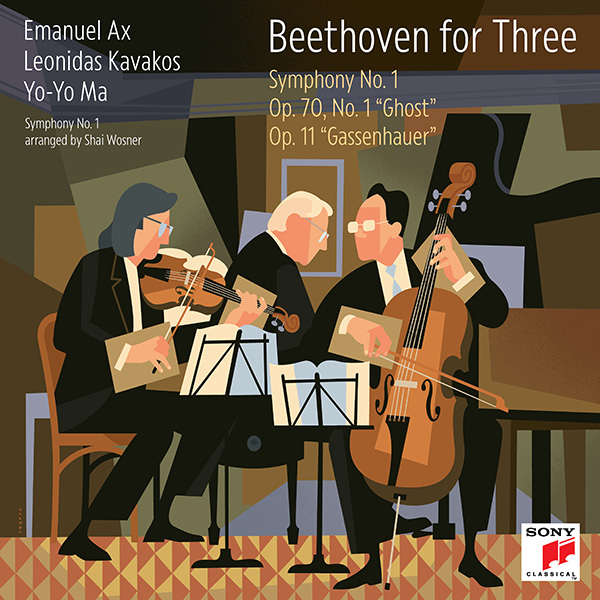 Getting a grip—I'll let those who know me well decide if I've ever succeeded in that department—I switched gears to Emanuel Ax, Leonidas Kavakos, and Yo-Yo Ma's fourth volume of Beethoven for Three, specifically the master's Symphony No.1 (24/96 WAV, Sony Classics/download) arranged for piano trio. I could hardly get enough of the delight that illumined Ax's pianism in the second movement. The trio's rendition of the "Ghost" trio—Piano Trio No.5—impressed me as much for its range of color as for the emotions the three musicians and the 330Ms successfully conveyed, from carefree exuberance to heartfelt, mournful sadness to mystery. Again, every timbre was spot on, conveyed with attention-seizing clarity. I strive at all costs to avoid parroting a manufacturer's claims about their product. Yet there I was, listening to the Sleepwalking scene from Verdi's Macbeth on Warner's excellent, high-resolution transfer of the 1958 analog recording Maria Callas Portrays Verdi Heroines (24/96 FLAC, Warner/Qobuz), and realizing that I had never heard the Philharmonia Orchestra's bass foundation so strong and right sounding—this from tube amplifiers, which are often criticized for their lack of strong, well-controlled deep bass!
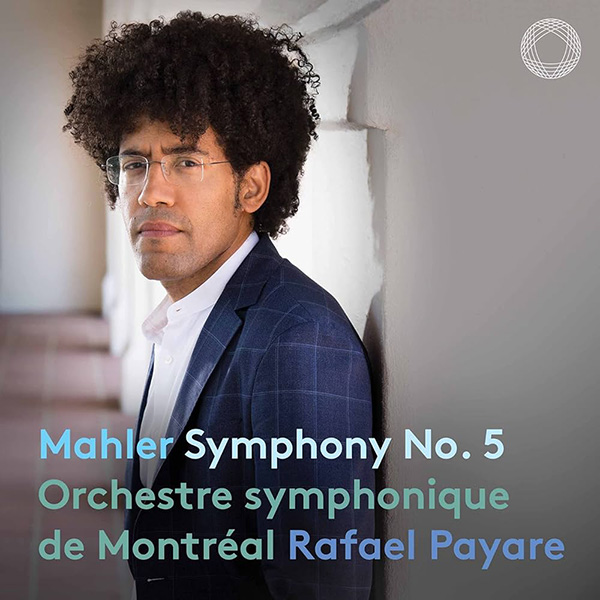
Even more impactful was bass from another frequent reference, the first movement of Mahler Symphony No.5 performed by the Orchestre symphonique de Montréal under Rafael Payare (24/96 FLAC, Pentatone/download). Even though I've returned to this recording over and over because its initial huge percussive pounds reveal so much about an amplifier's bass response, the performance as a whole never seemed to convey the gravitas of Bernstein's sonically inferior 1987 live recording with the Vienna Philharmonic (16/44.1 FLAC, Deutsche Grammophon/Qobuz). Yet because through the Audio Research 330Ms, bass response was so strong and deep, I could finally appreciate the profound sorrow and tragedy that Payare expected Montréal's double basses to bring to the performance.
Getting a grip—I'll let those who know me well decide if I've ever succeeded in that department—I switched gears to Emanuel Ax, Leonidas Kavakos, and Yo-Yo Ma's fourth volume of Beethoven for Three, specifically the master's Symphony No.1 (24/96 WAV, Sony Classics/download) arranged for piano trio. I could hardly get enough of the delight that illumined Ax's pianism in the second movement. The trio's rendition of the "Ghost" trio—Piano Trio No.5—impressed me as much for its range of color as for the emotions the three musicians and the 330Ms successfully conveyed, from carefree exuberance to heartfelt, mournful sadness to mystery. Again, every timbre was spot on, conveyed with attention-seizing clarity. I strive at all costs to avoid parroting a manufacturer's claims about their product. Yet there I was, listening to the Sleepwalking scene from Verdi's Macbeth on Warner's excellent, high-resolution transfer of the 1958 analog recording Maria Callas Portrays Verdi Heroines (24/96 FLAC, Warner/Qobuz), and realizing that I had never heard the Philharmonia Orchestra's bass foundation so strong and right sounding—this from tube amplifiers, which are often criticized for their lack of strong, well-controlled deep bass!
Even more impactful was bass from another frequent reference, the first movement of Mahler Symphony No.5 performed by the Orchestre symphonique de Montréal under Rafael Payare (24/96 FLAC, Pentatone/download). Even though I've returned to this recording over and over because its initial huge percussive pounds reveal so much about an amplifier's bass response, the performance as a whole never seemed to convey the gravitas of Bernstein's sonically inferior 1987 live recording with the Vienna Philharmonic (16/44.1 FLAC, Deutsche Grammophon/Qobuz). Yet because through the Audio Research 330Ms, bass response was so strong and deep, I could finally appreciate the profound sorrow and tragedy that Payare expected Montréal's double basses to bring to the performance.
 That experience and many others made me wish I could return to some of the powerhouse solid state monoblocks I've reviewed over the past few years and hear them again with my current reference quartet: Innuos Nazaré music server, dCS Varèse DAC system, D'Agostino Relentless preamp, and Wilson Alexia V. Would their bass have equaled the bass the Audio Research 330M consistently delivered. Would their midrange have sounded as ravishing, their top as smooth and musical? All I know for certain is that in my system, no solid state amplifier has delivered a bottom end as strong, well-controlled, perfectly proportioned, and timbrally true as the tubed Audio Research 330M. If you love the depth of double basses or the resonant low range of a cello, you've got to hear how those instruments sound through the 330M.
 Harking back to favorite evaluation tracks—the title track on Grant Green's Idle Moments (24/192 FLAC, Blue Note Records/Qobuz), Ravel's Bolero and Mahler Symphony No.4 performed on period instruments by Les Siècles under François-Xavier Roth (both 24/96 WAV, Harmonia Mundi/downloads), Guillaume Lekeu's gorgeous song, "Nocturne," performed by Véronique Gens and I Giardini on the album Nuits (24/96 FLAC, Harmonia Mundi/Qobuz), Mozart's Horn Concerto No.1 performed by Alec Frank-Gemmill and the Swedish Chamber Orchestra guided by Nicholas McGegan (24/96 FLAC, BIS/download), and the ultra-assaultive bass torture test second movement of the Shostakovich Symphony No.11, performed by Andris Nelsons and the Boston Symphony Orchestra (24/96 FLAC, Deutsche Grammophon/Qobuz)—the 330Ms delivered everything I could possibly want, including spot-on timbres, utter clarity, timbral beauty, the gorgeous warmth of Gens's voice over perfectly judged string quartet accompaniment, the profundity of bass drum, staggering detail in the strings, the perfect mix of warmth and abrasiveness from the horn, and a clearer, more gut-wrenching presentation of the intentionally torturous bass assault than I'd heard before through my system. Some amplifiers may put greater emphasis on dynamic contrasts, but few handle those dynamic shifts as effortlessly as the Audio Research 330M.
Lest I fail to mention two of my (many) favorite divas, I cued up Kathleen Battle performing the final vocal movement from Mahler's Fourth with the Vienna Philharmonic under Lorin Maazel (16/44.1 FLAC, Sony/Qobuz) and Aretha Franklin singing "Bridge over Troubled Water" on the compilation Aretha (24/96 FLAC, Rhino Atlantic/Qobuz). Both sounded marvelous, with the down-and-dirty bass in Aretha's performance the deepest I've heard.
Harking back to favorite evaluation tracks—the title track on Grant Green's Idle Moments (24/192 FLAC, Blue Note Records/Qobuz), Ravel's Bolero and Mahler Symphony No.4 performed on period instruments by Les Siècles under François-Xavier Roth (both 24/96 WAV, Harmonia Mundi/downloads), Guillaume Lekeu's gorgeous song, "Nocturne," performed by Véronique Gens and I Giardini on the album Nuits (24/96 FLAC, Harmonia Mundi/Qobuz), Mozart's Horn Concerto No.1 performed by Alec Frank-Gemmill and the Swedish Chamber Orchestra guided by Nicholas McGegan (24/96 FLAC, BIS/download), and the ultra-assaultive bass torture test second movement of the Shostakovich Symphony No.11, performed by Andris Nelsons and the Boston Symphony Orchestra (24/96 FLAC, Deutsche Grammophon/Qobuz)—the 330Ms delivered everything I could possibly want, including spot-on timbres, utter clarity, timbral beauty, the gorgeous warmth of Gens's voice over perfectly judged string quartet accompaniment, the profundity of bass drum, staggering detail in the strings, the perfect mix of warmth and abrasiveness from the horn, and a clearer, more gut-wrenching presentation of the intentionally torturous bass assault than I'd heard before through my system. Some amplifiers may put greater emphasis on dynamic contrasts, but few handle those dynamic shifts as effortlessly as the Audio Research 330M.
Lest I fail to mention two of my (many) favorite divas, I cued up Kathleen Battle performing the final vocal movement from Mahler's Fourth with the Vienna Philharmonic under Lorin Maazel (16/44.1 FLAC, Sony/Qobuz) and Aretha Franklin singing "Bridge over Troubled Water" on the compilation Aretha (24/96 FLAC, Rhino Atlantic/Qobuz). Both sounded marvelous, with the down-and-dirty bass in Aretha's performance the deepest I've heard.
 From childlike naiveté to the grit of New York's Lower East Side ca. 1970: Want to hear bass on an ultrafamiliar track sound better than you've ever heard it? Play Lou Reed's "Walk on the Wild Side" (24/96 FLAC, RCA - Legacy/Qobuz) through the 330Ms. This track always brings back memories of seeing Holly Woodlawn ride the New York subway wearing an adorable pastel blue jumpsuit a year after she and Joe Dallesandro appeared in Paul Morrissey's hilarious "Andy Warhol presented" movie, Trash. I've heard Reed's classic countless times at audio shows but never with the resounding deep bass and transparency that, through the 330Ms, supply yet more reasons for the track's popularity amongst audiophiles.
Final thoughts
From childlike naiveté to the grit of New York's Lower East Side ca. 1970: Want to hear bass on an ultrafamiliar track sound better than you've ever heard it? Play Lou Reed's "Walk on the Wild Side" (24/96 FLAC, RCA - Legacy/Qobuz) through the 330Ms. This track always brings back memories of seeing Holly Woodlawn ride the New York subway wearing an adorable pastel blue jumpsuit a year after she and Joe Dallesandro appeared in Paul Morrissey's hilarious "Andy Warhol presented" movie, Trash. I've heard Reed's classic countless times at audio shows but never with the resounding deep bass and transparency that, through the 330Ms, supply yet more reasons for the track's popularity amongst audiophiles.
Final thoughtsI'll be the first to acknowledge that it's a challenge for a reader to determine the ultimate musical value of a component solely through words on paper. You won't have to look hard to find other head-over-heels reviews of amplifiers that cost far less (or far more) than the Audio Research 330M. For all I know, some of those amplifiers may even measure better.
Footnote 1: High fan speed is normally used in situations where ventilation is restricted. It is not necessary for amplifiers sitting in an open rack or on individual bases. Footnote 2: When I briefly reinstalled my reference D'Agostino Momentum M400 MxV monoblocks, I put on several ultrafamiliar tracks with deep bass and confirmed that the bass traps had absolutely improved the room's bass response. Footnote 3: The recording also includes Adès's Violin Concerto performed by Leila Josefowicz. Footnote 4: See classicalvoiceamerica.org/2025/09/02/fest-within-a-festival-offers-chamber-music-at-a-passionate-pitch/. Footnote 5: See classicalvoiceamerica.org/2025/09/09/evocation-of-the-andes-takes-listeners-to-peak-on-string-quartet-bill/. Footnote 6: I repeated this test with complex passages from the symphonies of Shostakovich and Mahler. No matter how complex the writing—no matter how many instruments were playing different notes simultaneously—every line emerged with clarity.