Tube Power Amp Reviews

Sort By: Post DateTitle Publish Date

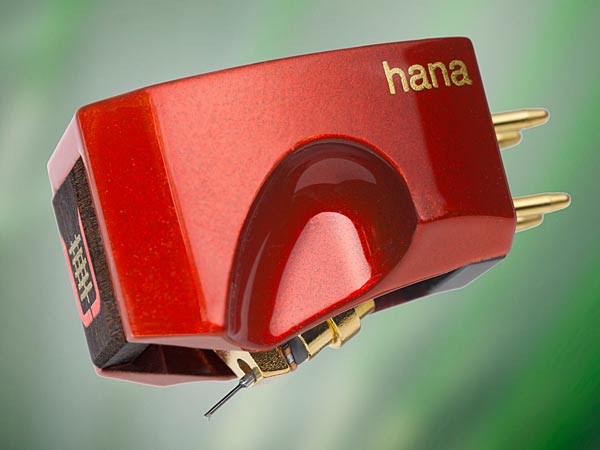
Gramophone Dreams #47: Hana Umami Red, Musical Surroundings Nova III, Ampsandsound Bigger Ben
At the end of Gramophone Dreams #46, I was lost in the pristine beauty of Decware's 25th Anniversary Zen Triode amplifier driving the DeVore Fidelity Orangutan O/93 speakers. That was an extremely enjoyable system, and I was hoping to keep it intact for another month. My plan was simply to morph into my long-postponed opus on tube rolling using the Zen Triode as well as Ampsandsound's Bigger Ben headphone and loudspeaker amp. Both are single-ended triode, no-feedback designs and therefore perfectly suited for tube-swapping comparisons.

Gramophone Dreams #46: Decware Zen Triode Amplifier

I am not a fan of that amp designer who promoted his products by pointing a condescending finger while scolding audiophiles, like errant children, for preferring their records to sound "pleasant" rather than "accurate."


He reminds me of my least favorite teacher, Professor Grausamkeit, who was just like that and said similar things. Every time I smarted back, "Accurate to what?" he'd whack me with a wooden yardstick.

VAC Statement 452 iQ Musicbloc mono/stereo power amplifier

VAC's Statement 452 iQ Musicbloc amplifier ($75,000 for a single amp; $150,000/pair mono, as reviewed) is tall, young, and lovely, but unlike the girl from Ipanema, it isn't tan. Nor, at 280lb in its flight case, is it likely to "go walkin'." Getting the pair moved into my listening room required considerable effort—fortunately not mine.

Listening #206: Shindo Cortese amplifier

Only recently did I learn that successive generations of the Chevrolet Corvette are referred to by the cognoscenti with two-character alpha-numeric identifiers: C1, C2, C3, and so on. I learned this while reading about the most recent version—C8, known to non-cognoscenti as the 2020 Corvette—which happens to be the first version since C2 that impresses me. (I say that as one who used to work for the owner of a C3, a then-middle-aged male who actually boasted, while under the influence, that he and two of his C3-owning friends drove them solely because their juvenile styling attracted juveniles. Rest assured I left his employ within days of that revelation.)

Audio Research Reference 160S power amplifier

This, our February issue, is the first Stereophile issue to arrive during the year 2020, which marks the 50th anniversary of the founding of Audio Research—in my view one of the key events in the history of high-end audio. So it makes sense for this issue to include an Audio Research review—in this case, of the $20,000 Reference 160 S stereo amplifier.

Listening #200: Tzar DST1 & Shindo Montille CV 391

Products come and go. Some impress more than others, and in our little world, the ones that impress the most wind up in Class A of our semiannual "Recommended Components" feature.


After a product makes it to that list, if Stereophile's reviewers go more than a few years without hearing it again—in a home system or a dealer's showroom or even at an audio show—that product falls off the list, usually quietly. Thus, if a reviewer is maximally knocked out by a piece of playback gear, yet the fates allow neither a purchase nor an extended loan, he or she or someone else on staff must endeavor to borrow it again so it can stay recommended.

Balanced Audio Technology VK-56SE power amplifier

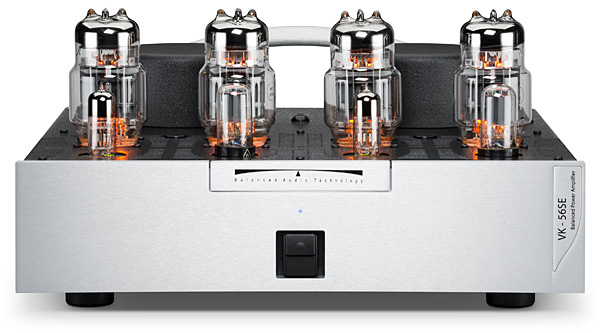
I had never been alone with a Russian-manufactured 6C33C tube. At least not at night, in the dark. The first night Balanced Audio Technology's VK-56SE tubed amplifier was in my system, I sat on the floor studying the unusual shape and dark orange glow of its four 6C33C-B output tubes. I noticed their brightly lit, cathedral-like innards. My Russian neighbor told me they were used as regulator tubes in MiG jets during the Cold War. I could believe it—their exposed cathodes were the exact color of the Soviet flag. From more than a foot away, I could feel the heat from their high-amperage filaments.

Gramophone Dreams #27: EleKit TU-8600R amplifier kit

I will never forget.


In 1988 I had my first experience with Western Electric 300B tubes. It took place on a quiet, streetlights-and-snow night at my friend Ryoichi's apartment on Riverside Drive, in Manhattan.


I had never heard of the late Japanese amplifier designer Ken Shindo, of Shindo Laboratory. But that evening, Ryo's audio system was all Shindo: a hammertone gray Shindo-restored, grease-bearing Garrard 301 turntable sitting on a Shindo plinth of glossy wood, with a Shindo-modified Ortofon tonearm and SPU cartridge, a Shindo moving-coil step-up transformer, and a Shindo preamplifier with a moving-magnet phono stage.

Air Tight ATM-300R power amplifier

To audio designers in Japan and elsewhere, the single-ended, 300B-tubed amplifier is like a haiku: an art form defined by both its prescribed limitations and the potential such restraint offers for artistic expression. Here, the only hard-and-fast rule is a simple one: output devices are limited to one 300B directly heated triode tube per channel. From there, it's a blank slate: Do you want AC or DC on the output-tube heaters? Tube or solid-state rectification? Low or high gain? Fixed or cathode bias? New parts, vintage parts, or a mix of both? Triode or pentode tubes as drivers? Capacitors or transformers—or nothing at all—between the plates of the driver tubes and the grids of the output tubes?

Cary Audio CAD-805RS monoblock power amplifier

There's no place for fashion in epidemiology, aeronautical engineering, or the mining and storage of uranium. Fortunately, domestic audio is less serious, its goals more scattered and ambiguous, than those and a thousand other pursuits.


And so, throughout the 20th century, any number of trends in domestic audio popped up their heads, some remembered as fads, others as legitimate approaches to playback. Among the latter are amplifiers whose output sections operate in single-ended mode, in which the entire signal waveform is amplified by a single device.

Advertisement
Advertisement
Advertisement