Perhaps there is no subject more vigorously debated among audiophiles than the primacy of the loudspeaker. Many 'philes believe there is no more important element in a hi-fi system—after all, they reason, it doesn't matter how good the components ahead of the speakers are; if the transducers can't reproduce the signal, you can't hear it. On the other hand, the source adherents maintain, speakers can't reproduce information that hasn't been retrieved from the recording. Loudspeakers can limit the amount of information you hear, but they can't increase it. This is one of those irresolvable paradoxes similar to the question of which came first, the roast chicken or the omelet.
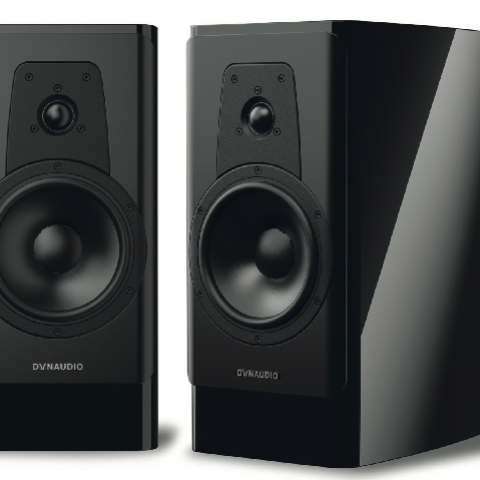
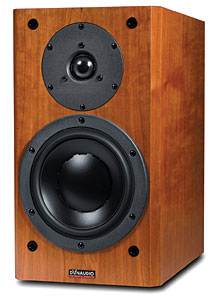
 Another imponderable is which sounds better: floorstanding loudspeakers or stand-mounted monitors? Each has its strengths and weaknesses, but speakers such as Dynaudio's Focus 140 ($1800/pair) make it awfully tough for floorstanding advocates to argue their case on the basis of merit alone. The 140 packs a gallon of performance into a quart jar—and that's not open to debate.
What can be said at all, can be said clearly
Another imponderable is which sounds better: floorstanding loudspeakers or stand-mounted monitors? Each has its strengths and weaknesses, but speakers such as Dynaudio's Focus 140 ($1800/pair) make it awfully tough for floorstanding advocates to argue their case on the basis of merit alone. The 140 packs a gallon of performance into a quart jar—and that's not open to debate.
What can be said at all, can be said clearly
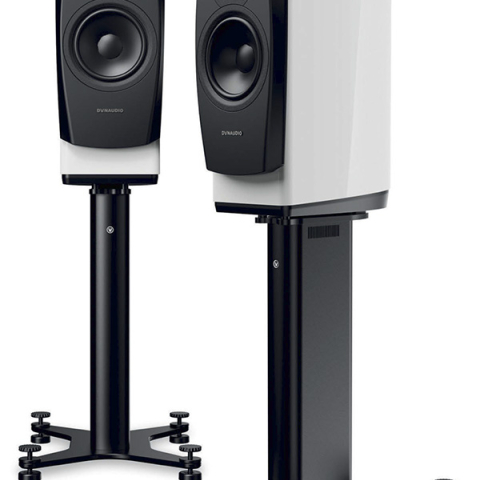
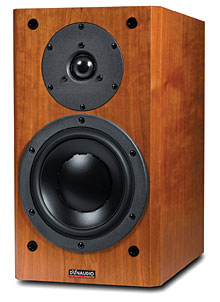
Dynaudio's Focus loudspeakers are designed to bridge the gap between its entry-level Audience line and its higher-aspiration Confidence models. Focus speakers feature asymmetrical cabinets with sidewalls that flare slightly into "shoulders" from the narrow baffle before tapering to an even narrower rear panel, along with real-wood veneers, first-order crossovers, and proprietary Esotec+ drivers. The Focus 140, the larger of the line's two stand-mounted monitors, sports a 1.1" soft-dome tweeter, and a 6.5" one-piece woofer of magnesium silicate polymer (MSP) with an oversized voice-coil and double-magnet motor system. The 140 is reflex-loaded through a largish, flared port on its rear panel. Like all Dynaudio designs, even the top-of-the-line Evidence Masters ($90,000/pair), the Focus 140 employs a single pair of WBT speaker terminals. My review samples were seductively clad in beautifully satiny rosewood. The speaker's 19-lb heft, while lighter than the 26-lb Special Twenty-Fives reviewed by John Atkinson in June 2005, was still sufficient to require substantial speaker stands, to which I affixed the 140s with Blu-Tack.
Whereof one cannot speak, thereon one must remain silent
I placed the Focus 140s on 26"-high, aggregate-filled stands and faced 'em straight ahead with no, or extremely minimal, toe-in. This placed their tweeters at ear height for me. Then I waited. And suffered. How come? Dynaudio had told me up front that the 140 requires lots of break-in. Unlike with many loudspeakers, however, breaking in the 140 for a long time did not result in a small difference between good sound and better. It was more like the difference between god-awful and astonishingly good. Out of the box, I found the 140 veiled, murky, and pretty hard to listen to. After about 100 hours of playing music, they might have actually sounded worse—fortunately, when it comes to pain, humans have short memories. But after the 140s had played 250 hours' worth of full-range, dynamically challenging music, I walked into the house after a day spent elsewhere and listened in amazement. I heard music—and I saw that it was good. Considering how good the 140s sounded once I'd broken them in, I'm almost tempted to minimize how unimpressed I was by them at first. Almost. The problem is, given the scant hours of play any given demo speaker receives in a hi-fi shop, you may never hear a properly broken-in pair until you've taken them home and endured that long, heart-stopping trial by fire. If you buy a pair, hang in there. There's one heck of a payoff. Eventually.
Although the Focus 140s come with foam port inserts, I didn't use them, preferring their tonal balance unplugged; however, the inserts may come in handy in some rooms. To my ears, the 140s sounded best well away from the walls. Moving them closer to the room boundaries did reinforce the midbass, but in that area they required little boost.
Be obscure clearly
The Focus 140 didn't sound like a small speaker. When I played the Hilliard Ensemble's recording of Nicolas Gombert's Missa Vita in Morte Sumus (CD, ECM New Series 1884), the group's six voices inhabited my room, twining about one another in a large, reverberant acoustic. This isn't music that begs to be played loud, but it has to be reproduced at a fairly realistic volume or it lacks impact. When I say "realistic volume," I'm punning a little; it's less an issue of loudness than of filling a space. The 140s "disappeared" seamlessly—the concepts of tweeter and woofer, left and right, did not apply. The sound was vivid, of whole cloth, and completely independent of the two boxes in my living room.
But unaccompanied vocal music ought to be the meat'n'taters of a stand-mounted two-way, oughtn't it? What if I gave the Dynaudios a bit more of a challenge, like some technopop from the Propellerheads' Decksandrumsandrockandroll (CD, DreamWorks DRMD-50031)?
Propellerheads is DJ Alex Gifford and drummer Will White, and their recordings are layered with samples, scratches, and Hammond organ. What they lack in audio vérité they compensate for in drive and slam. "On Her Majesty's Secret Service" starts out with some intentionally cheesy channel-hopping effects before settling into a slamming groove—and do I ever mean slammin'. The Dynaudio Focus 140s were a brick house: They mighty mighty.
Wait a minute, you're probably saying. How slammin' can a stand-mounted monitor be? The Focus 140 is rated to 41Hz, but it seemed to produce fairly solid 35Hz bass-drum thwacks in my room. The bass sounded robust and controlled—not what some writers call "chest-thumping," but solid and true and very physical. More important, the rhythmic drive and skittering coherence of Will White's drumming sounded as natural and detailed as Alex Gifford's scratching sounded artificial and constructed. Both were accurate and both were proportionate.
Proportionate is a good description of the 140's sound. From its surprisingly solid bottom to its extended top end, the Dynaudio was balanced in response. No single element dominated. Listening to Manu Katché's Neighborhood (CD, ECM 1896), an acoustic jazz quintet outing, brought this sharply into focus for me. Katché is a spare, muscular drummer, on this disc ably supported by trumpeter Tomasz Stanko, tenor saxophonist Jan Garbarek, pianist Marcin Wasilewski, and double-bassist Slawomir Kurkiewicz. That's a wide-ranging group of instruments, but the Focus 140 kept things in perspective, from the impact of Katché's kick drum to the heft of Kurkiewicz's bass through to the delicate shimmer of Katché's Zildjian cymbals. The 140 captured the buzzy texture of Stanko's pedal tones introducing "Lullaby," as well as the way the studio's acoustic reinforced the tom-toms and the double bass's middle register. The Dynaudios were extremely revealing—not "ruthlessly," as the cliché goes, but I was never in doubt that Wasilewski was playing a Yamaha rather than a Steinway or Bösendorfer. And the 140s also clearly told me there were a couple of buzzy spots in the piano's action. Prepared piano? Unprepared studio? I can't speculate; I can only report what I heard.
And yes, the Focus 140s built a soundstage that was wide and deep. In fact, the speakers created a soundstage wider than their distance from each other, which is something that far larger and far more expensive loudspeakers have rarely achieved in my listening room. When that happens, you can't help but get goose bumps. And I did. Boy, did I.
If I am not clear, all my world crumbles to nothing
Since Dynaudio's stated purpose in launching the Focus line was to bring the exacting performance levels of its top-tier Contour series to a moderate price range, I compared the Focus 140s to Dynaudio's Special Twenty-Fives ($5200/pair)—especially since I have a pair and enjoy listening to them. The Twenty-Fives were Blu-Tacked to 24"-tall Cliff Stone Foundation stands in their usual positions in my listening room, somewhat closer to the front wall than the optimal positions for the Focus 140s.
It may strike you as odd that I put the larger, costlier speakers closer to a boundary than I did the smaller guys, but I've spent a lot of time with the Twenty-Fives, and as good as they are, they're tricky to set up. They need a little boundary-love to perk up their midbass, though too much will kill the speakers' impressive bass extension.
That bass extension did make a difference, with both the Propellerheads and the Manu Katché quintet. The synth-bass lines in "On Her Majesty's Secret Service" were noticeably deeper through the Twenty-Fives, while the interaction between Katché's drumkit and the studio's room sound was more organic. "More organic" is reviewer shorthand for those two aural events sounding more interconnected, more a single thing than the discrete entities of "drumkit" and "room sound."
Although the Twenty-Fives gave me more low-end punch, I was irritated that they didn't quite "get" the mix of the Propellerheads track. Yes, the 'heads are about as sonically manipulative as groups come, but they're excellent craftsmen with good ears. I've heard "On Her Majesty's Secret Service" on a lot of different systems, and it usually sounds pretty impressive. What did the Focus 140s get right that the Special Twenty-Fives didn't?
Balance. Much as I love the Twenty-Fives, there's a slight disconnect between their superb bottom two-thirds and their top third. They can be a tad forward. Heck, they can be a tad tiring with some recordings, front-ends, even amplifiers. Decksandrumsandrockandroll is one of those recordings they just don't work with.
But once I got to thinking about questions of balance, I listened again to Katché's Neighborhood through both pairs of speakers, concentrating less this time on what the specific differences were and more on my enjoyment of the music. I sometimes refer to this as the Turtle Test: I've discovered that when I completely relax into the music, my neck is longer. When I'm tense, I tend to hold my shoulders higher.
Sure enough, I was more relaxed and longer-necked listening to Neighborhood through the Focus 140s. Hmmmm. Some of it was balance—from top to bottom, the 140s were pretty much seamless. Also—although this occurred to me only when I went back into minute-comparison mode—the 140s threw a deeper soundstage than did the Special Twenty-Fives, which were a shade better at putting me in the room but less precise at placing instruments specifically within that space. Weird? A little.
Does that mean I'm no longer in love with the Special Twenty-Fives? No. I am an audiophile, after all. I love quirky products with quixotic flaws. In the right room, with the right ancillary components, and—dare I say it?—the right cables, the Special Twenty-Fives can be just that: special. [Cue cash-register sound effect for each "right." ]
Prefer geniality to grammar
If there's such a thing as an $1800/pair loudspeaker that isn't for audiophiles, I'd say it's the Dynaudio Focus 140. I don't mean that it doesn't adhere to such audiophile tenets as truth and accuracy, and I certainly don't mean that it doesn't measure well. (I haven't yet seen JA's measurements, of course, but Dynaudio speakers are engineered in Denmark—they'll pass.) What I mean is that it doesn't take an audio village to make the Focus 140 sound great. It does take time to get it ready to sing, but after that, it's golden. If you value tonal consistency and sure-footed rhythmic stomp, Dynaudio's Focus 140 is singing your song—or will be, in a few hundred hours.
Another imponderable is which sounds better: floorstanding loudspeakers or stand-mounted monitors? Each has its strengths and weaknesses, but speakers such as Dynaudio's Focus 140 ($1800/pair) make it awfully tough for floorstanding advocates to argue their case on the basis of merit alone. The 140 packs a gallon of performance into a quart jar—and that's not open to debate.
What can be said at all, can be said clearly
Dynaudio's Focus loudspeakers are designed to bridge the gap between its entry-level Audience line and its higher-aspiration Confidence models. Focus speakers feature asymmetrical cabinets with sidewalls that flare slightly into "shoulders" from the narrow baffle before tapering to an even narrower rear panel, along with real-wood veneers, first-order crossovers, and proprietary Esotec+ drivers. The Focus 140, the larger of the line's two stand-mounted monitors, sports a 1.1" soft-dome tweeter, and a 6.5" one-piece woofer of magnesium silicate polymer (MSP) with an oversized voice-coil and double-magnet motor system. The 140 is reflex-loaded through a largish, flared port on its rear panel. Like all Dynaudio designs, even the top-of-the-line Evidence Masters ($90,000/pair), the Focus 140 employs a single pair of WBT speaker terminals. My review samples were seductively clad in beautifully satiny rosewood. The speaker's 19-lb heft, while lighter than the 26-lb Special Twenty-Fives reviewed by John Atkinson in June 2005, was still sufficient to require substantial speaker stands, to which I affixed the 140s with Blu-Tack.
I placed the Focus 140s on 26"-high, aggregate-filled stands and faced 'em straight ahead with no, or extremely minimal, toe-in. This placed their tweeters at ear height for me. Then I waited. And suffered. How come? Dynaudio had told me up front that the 140 requires lots of break-in. Unlike with many loudspeakers, however, breaking in the 140 for a long time did not result in a small difference between good sound and better. It was more like the difference between god-awful and astonishingly good. Out of the box, I found the 140 veiled, murky, and pretty hard to listen to. After about 100 hours of playing music, they might have actually sounded worse—fortunately, when it comes to pain, humans have short memories. But after the 140s had played 250 hours' worth of full-range, dynamically challenging music, I walked into the house after a day spent elsewhere and listened in amazement. I heard music—and I saw that it was good. Considering how good the 140s sounded once I'd broken them in, I'm almost tempted to minimize how unimpressed I was by them at first. Almost. The problem is, given the scant hours of play any given demo speaker receives in a hi-fi shop, you may never hear a properly broken-in pair until you've taken them home and endured that long, heart-stopping trial by fire. If you buy a pair, hang in there. There's one heck of a payoff. Eventually.
The Focus 140 didn't sound like a small speaker. When I played the Hilliard Ensemble's recording of Nicolas Gombert's Missa Vita in Morte Sumus (CD, ECM New Series 1884), the group's six voices inhabited my room, twining about one another in a large, reverberant acoustic. This isn't music that begs to be played loud, but it has to be reproduced at a fairly realistic volume or it lacks impact. When I say "realistic volume," I'm punning a little; it's less an issue of loudness than of filling a space. The 140s "disappeared" seamlessly—the concepts of tweeter and woofer, left and right, did not apply. The sound was vivid, of whole cloth, and completely independent of the two boxes in my living room.
Since Dynaudio's stated purpose in launching the Focus line was to bring the exacting performance levels of its top-tier Contour series to a moderate price range, I compared the Focus 140s to Dynaudio's Special Twenty-Fives ($5200/pair)—especially since I have a pair and enjoy listening to them. The Twenty-Fives were Blu-Tacked to 24"-tall Cliff Stone Foundation stands in their usual positions in my listening room, somewhat closer to the front wall than the optimal positions for the Focus 140s.
If there's such a thing as an $1800/pair loudspeaker that isn't for audiophiles, I'd say it's the Dynaudio Focus 140. I don't mean that it doesn't adhere to such audiophile tenets as truth and accuracy, and I certainly don't mean that it doesn't measure well. (I haven't yet seen JA's measurements, of course, but Dynaudio speakers are engineered in Denmark—they'll pass.) What I mean is that it doesn't take an audio village to make the Focus 140 sound great. It does take time to get it ready to sing, but after that, it's golden. If you value tonal consistency and sure-footed rhythmic stomp, Dynaudio's Focus 140 is singing your song—or will be, in a few hundred hours.