Last summer, John Atkinson and I were playing a jazz gig poolside at my local club, and during a break we began discussing equipment. As JA adjusted his microphones and I became increasingly nervous about the running, jumping kids splashing chlorinated water on his Nagra digital recorder, he asked me if I'd like to review the Z1 loudspeaker from BG Corp. "It's an interesting little bookshelf speaker featuring a ribbon tweeter." Hmm—an affordable bookshelf speaker matching a ribbon tweeter to a dynamic woofer? Very interesting. "Sounds good," said I, and resumed my ivory duties.
 Company
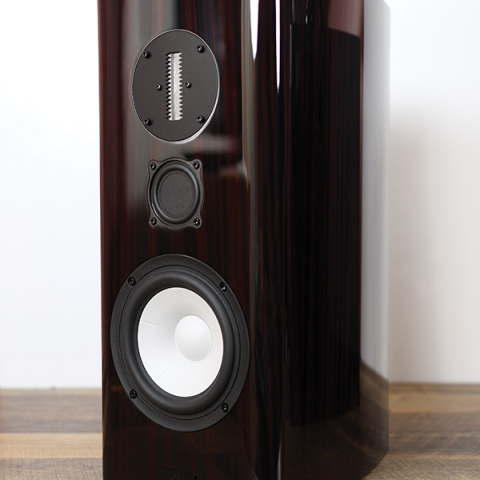
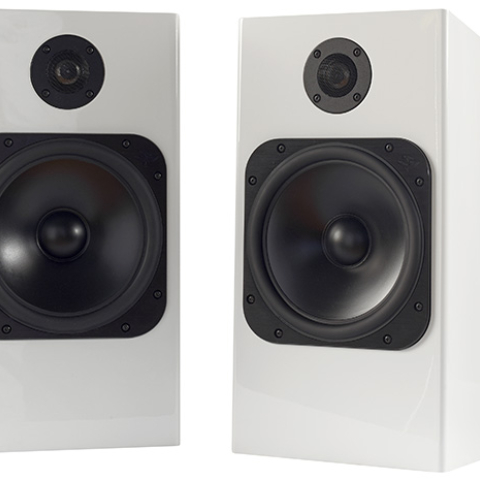
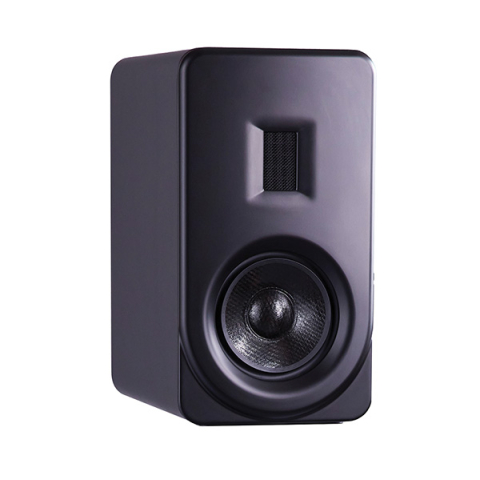
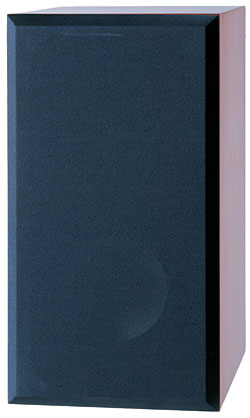
Bohlender-Graebener Corporation, now known as BG Corp., is a Nevada-based company that since 1994 has produced a broad range of loudspeakers, all of them featuring BG's proprietary ribbon-tweeter technology. In addition to a line of conventional speaker pairs—the flagship of which, the Radia 520i ($4000/pair), Larry Greenhill reviewed in December 2004—BG manufactures a wide range of in-wall, on-wall, and custom-installation speakers. The Z1 ($499/pair), the first model in BG's affordable Z series, is a fairly unassuming shielded bookshelf speaker in which BG's ribbon tweeter is coupled with a 5.25" aluminum-cone woofer. BG feels strongly that a ribbon driver is the best way to reproduce midrange and high frequencies. The mass of BG's tweeter diaphragm is 30–50 times less than that of a typical dome tweeter. Thus, according to BG, the tweeter's mass is comparable to that of the air that is vibrating along with the diaphragm. It can be energized more quickly, stores much less energy and inertia, can stop vibrating sooner, and its decay pattern is cleaner. BG credits two major developments in materials science over the last two decades that have enabled further advancement in ribbon technology. First, neodymium has become less costly, making it viable for use in the motor structure of ribbon tweeters. Magnets made of neodymium have magnetic energy 20–30 times greater than the ceramic magnets used in the ribbons of the 1970s and '80s. Second, BG makes their diaphragms of Teonex film, developed by DuPont in the 1990s. BG feels that Teonex can withstand higher temperatures and is stronger than the Mylar film used in earlier ribbon designs.
BG set out to design a ribbon tweeter with smooth frequency response, low noise, wide horizontal dispersion, and high efficiency, all at low cost. Their patented ribbon design uses fewer magnets than conventional ribbons by eliminating side magnets positioned close to the clamping frame and, instead, placing strips of acoustically semitransparent absorptive material close to the diaphragm in the area between the diaphragm and the metal plates. BG says this allows them to largely retain the transducer's necessary sensitivity while providing sufficiently wide horizontal dispersion.
Sound
I placed the Z1s on my trusty Celestion Si stands, loaded with sand and lead shot. Although BG felt there would be a slight improvement in sound on-axis with the speakers' grilles removed, I got the most timbrally natural sound with them left on, which is how I did most of my listening. The difference was slight, however. The Z1's detailed, delicate, coloration-free, and holographic midrange presentation impressed me with all vocal recordings. The notes I took while listening to the acappella introduction of Brian Wilson's "Our Prayer," from SMiLE (CD, Nonesuch 79863-2), read the same as my notes for Madeleine Peyroux's "Hey, Sweet Man," from Dreamland (CD, Atlantic 82946-2): "gorgeous, silky, holographic vocals." The Peyroux track also had me fixated on Marc Ribot's dobro; the extended and detailed high-frequency capabilities of the Z1's ribbon tweeter revealed levels of detail, delicacy, and immediacy that I'm not used to hearing from a $499/pair speaker.
The Z1's resolution of the high frequencies of vocal sibilants was so accurate that I felt I was listening to Janis Ian's Breaking Silence (CD, Analogue Productions CAPP 027) for the first time—a tough thing to do, considering that it's the most-played recording I own. The Z1's combination of low-level dynamic articulation and what appears to be a remarkable tweeter let me hear tactile nuances from this recording that I'd not noticed before through any speaker costing less than $2000/pair.
I began to mine my collection for recordings of acoustic stringed instruments. Don Fiorino's lotar—a fretless, four-string Moroccan lute—on Attention Screen's La Tessitura (CD, Hojo HOJO 10) sounded as if it was in the room with me. My listening notes: "Texture! Timbre! Transients!"
The Z1's low-level dynamic capabilities made me want to listen to woodwinds and brass as well as strings. On his Way Out West (CD, JVC VICJ 60083), Sonny Rollins' tenor sax was incredibly realistic in timbre, texture, and dynamics. Similarly, the saxes and trombones on the Jerome Harris Quintet's recording of Duke Ellington's "The Mooche," from Editor's Choice (CD, Stereophile STPH016-2), bloomed with a sense of organic and linear dynamics, with no trace of compression. The ride cymbals during the horn solos also seemed very lifelike.
The Z1 was also able to articulate transients with senses of speed, delicacy, and attack that I've come to associate only with much more expensive speakers. The transient attacks, decays, and timbre of Gary Burton's vibes on his first album, New Vibe Man in Town (LP, RCA LSP-2920), were sufficiently lifelike that I dropped my notebook. My mouth was agape as I focused on Burton, then an 18-year-old wonder trained in the classical marimba, trading fours with Joe Morello's brushes on "Joy Spring."
One acid test I use to test a speaker's high-frequency articulation is "Tiden Bar Gor," from Depth of Image (CD, Opus3 CD 7900). The beginning of the track features the interplay of two acoustic guitars, one steel-string, one nylon-string. With speakers of exceptional HF resolution, it's pretty obvious which guitar is which; through many affordable speakers, they can sound quite similar. With the BG Z1, the difference between the two guitars' textures was as easy to delineate as it is with my $12,000/pair Nola Circes.
One aspect of the Z1's HF performance concerned me, though only with certain recordings. If I played music with significant high-frequency energy and fast transients, such as the more pyrotechnic piano solos on the Jamie Saft Trio's Astaroth (CD, Tzadik TX 7348), the highs seemed to have an "etched" quality, particularly when the speakers were driven hard. But this, the Z1's sole deviation from neutrality, reared its head only occasionally.
The Z1's midbass and upper-bass performance was quite natural. A slight bit of warmth in the midbass was evenly distributed across a broad frequency range and did not detract from the musical experience. Ray Brown's bass solos on Way Out West were warm but natural, it was very easy to follow the pitches, and there was no sense of sluggishness or overhang.
Although the Z1 never sounded bass-shy, it didn't seem to have much in the way of low-bass extension. The bass drums on Antal Dorati and the London Symphony's recording of Stravinsky's The Firebird (CD, Mercury Living Presence/Classic SR 90226) and the CD layer of David Chesky's Area 31 (SACD, Chesky SACD282) sounded natural but did not shake the room much, and the lower register of the organ pedals on John Rutter's Requiem (CD, Reference RR-57CD) were missing in action.
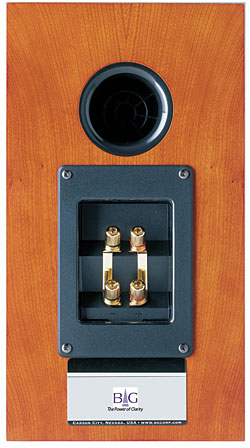 To achieve a well-balanced midbass presentation that didn't sound bass-shy, I had to follow JA's setup recommendations. Normally, I place bookshelf speakers on stands anywhere from 2' to 4' from the front wall, depending on the speaker. To achieve a natural bass balance with the Z1s, I had to place them 1' from the front wall, which affected their soundstage presentation. On any well-recorded acoustic music, the speakers "disappeared," placing pinpoint holographic images across the soundstage. However, when the Z1s were only 1' from the front wall the depth become somewhat foreshortened. At 2' from the wall the soundstage depth increased significantly, but then the speakers sounded a bit bass-shy. This effect was sufficiently noticeable that I preferred the sound of the Z1s closer to the wall rather than out in the room.
For a bookshelf model with limited low-bass extension, the BG Z1 performed admirably as a rock speaker, and at fairly high volume levels. Wandering down memory lane, I cranked up "Jingo," from Best of Santana (CD, Columbia CK 65561), one of my favorite tunes from the set list of my old high school band, and started twitching around the room in my T-shirt and shorts, playing a mean air B-3. (My wife and kids weren't home. The dog looked at me strangely and left the room.) I had a similar reaction to the dramatic power and authority of Kraftwerk's Minimum-Maximum at 95dB (CD, EMI ASW 60611).
In fact, almost all the recordings I threw at the Z1 sounded natural and involving. Bill Frisell's idiosyncratic arrangement of "I Heard It Through the Grapevine," on East/West (CD, Nonesuch 79863-2), was devoid of coloration. This live recording sounded so immediate that I felt I was sitting in Yoshi's club in Oakland listening to the band.
Comparisons
To achieve a well-balanced midbass presentation that didn't sound bass-shy, I had to follow JA's setup recommendations. Normally, I place bookshelf speakers on stands anywhere from 2' to 4' from the front wall, depending on the speaker. To achieve a natural bass balance with the Z1s, I had to place them 1' from the front wall, which affected their soundstage presentation. On any well-recorded acoustic music, the speakers "disappeared," placing pinpoint holographic images across the soundstage. However, when the Z1s were only 1' from the front wall the depth become somewhat foreshortened. At 2' from the wall the soundstage depth increased significantly, but then the speakers sounded a bit bass-shy. This effect was sufficiently noticeable that I preferred the sound of the Z1s closer to the wall rather than out in the room.
For a bookshelf model with limited low-bass extension, the BG Z1 performed admirably as a rock speaker, and at fairly high volume levels. Wandering down memory lane, I cranked up "Jingo," from Best of Santana (CD, Columbia CK 65561), one of my favorite tunes from the set list of my old high school band, and started twitching around the room in my T-shirt and shorts, playing a mean air B-3. (My wife and kids weren't home. The dog looked at me strangely and left the room.) I had a similar reaction to the dramatic power and authority of Kraftwerk's Minimum-Maximum at 95dB (CD, EMI ASW 60611).
In fact, almost all the recordings I threw at the Z1 sounded natural and involving. Bill Frisell's idiosyncratic arrangement of "I Heard It Through the Grapevine," on East/West (CD, Nonesuch 79863-2), was devoid of coloration. This live recording sounded so immediate that I felt I was sitting in Yoshi's club in Oakland listening to the band.
Comparisons
I compared the BG Z1 ($499/pair) to the NHT SB-3 ($600/pair), the Nola Mini ($695/pair), and the Epos M5 ($650/pair). The NHT SB3's rich midrange was similar to the BG's, but with much less detail in the midrange and highs. The NHT's bass extension and high-level dynamics were more impressive than the BG's, however. The Epos M5 revealed more midrange detail than the BG Z1, and had a tighter, slightly less warm midbass. The M5's highs were also rather extended, but the Z1 was a bit more detailed. The Nola Mini had better resolution of midrange detail than the BG Z1, and even better articulation of low-level dynamics. The Mini's highs were as extended as the Z1's, but the BG's highs seemed a bit more delicate. The Nola Mini's bass extension and high-level dynamics were superior, however.
Summing up
Overall, the BG Z1 was a top performer on a wide range of music—it played a lot of music for its price. The Z1's ribbon tweeter is a detailed and colorless transducer as long as it's not pushed too hard with complex material, and appeared to integrate seamlessly with the speaker's dynamic woofer over a broad range of program material. You may have to experiment with speaker placement, however, to achieve your optimal blend of bass extension and soundstage depth. I congratulate BG Corp. on producing a cost-effective loudspeaker for audiophiles on a budget who nonetheless seek something a bit more innovative than "two dynamic drivers in a bookshelf box." Excellent work!
Company
Bohlender-Graebener Corporation, now known as BG Corp., is a Nevada-based company that since 1994 has produced a broad range of loudspeakers, all of them featuring BG's proprietary ribbon-tweeter technology. In addition to a line of conventional speaker pairs—the flagship of which, the Radia 520i ($4000/pair), Larry Greenhill reviewed in December 2004—BG manufactures a wide range of in-wall, on-wall, and custom-installation speakers. The Z1 ($499/pair), the first model in BG's affordable Z series, is a fairly unassuming shielded bookshelf speaker in which BG's ribbon tweeter is coupled with a 5.25" aluminum-cone woofer. BG feels strongly that a ribbon driver is the best way to reproduce midrange and high frequencies. The mass of BG's tweeter diaphragm is 30–50 times less than that of a typical dome tweeter. Thus, according to BG, the tweeter's mass is comparable to that of the air that is vibrating along with the diaphragm. It can be energized more quickly, stores much less energy and inertia, can stop vibrating sooner, and its decay pattern is cleaner. BG credits two major developments in materials science over the last two decades that have enabled further advancement in ribbon technology. First, neodymium has become less costly, making it viable for use in the motor structure of ribbon tweeters. Magnets made of neodymium have magnetic energy 20–30 times greater than the ceramic magnets used in the ribbons of the 1970s and '80s. Second, BG makes their diaphragms of Teonex film, developed by DuPont in the 1990s. BG feels that Teonex can withstand higher temperatures and is stronger than the Mylar film used in earlier ribbon designs.
I placed the Z1s on my trusty Celestion Si stands, loaded with sand and lead shot. Although BG felt there would be a slight improvement in sound on-axis with the speakers' grilles removed, I got the most timbrally natural sound with them left on, which is how I did most of my listening. The difference was slight, however. The Z1's detailed, delicate, coloration-free, and holographic midrange presentation impressed me with all vocal recordings. The notes I took while listening to the acappella introduction of Brian Wilson's "Our Prayer," from SMiLE (CD, Nonesuch 79863-2), read the same as my notes for Madeleine Peyroux's "Hey, Sweet Man," from Dreamland (CD, Atlantic 82946-2): "gorgeous, silky, holographic vocals." The Peyroux track also had me fixated on Marc Ribot's dobro; the extended and detailed high-frequency capabilities of the Z1's ribbon tweeter revealed levels of detail, delicacy, and immediacy that I'm not used to hearing from a $499/pair speaker.
To achieve a well-balanced midbass presentation that didn't sound bass-shy, I had to follow JA's setup recommendations. Normally, I place bookshelf speakers on stands anywhere from 2' to 4' from the front wall, depending on the speaker. To achieve a natural bass balance with the Z1s, I had to place them 1' from the front wall, which affected their soundstage presentation. On any well-recorded acoustic music, the speakers "disappeared," placing pinpoint holographic images across the soundstage. However, when the Z1s were only 1' from the front wall the depth become somewhat foreshortened. At 2' from the wall the soundstage depth increased significantly, but then the speakers sounded a bit bass-shy. This effect was sufficiently noticeable that I preferred the sound of the Z1s closer to the wall rather than out in the room.
For a bookshelf model with limited low-bass extension, the BG Z1 performed admirably as a rock speaker, and at fairly high volume levels. Wandering down memory lane, I cranked up "Jingo," from Best of Santana (CD, Columbia CK 65561), one of my favorite tunes from the set list of my old high school band, and started twitching around the room in my T-shirt and shorts, playing a mean air B-3. (My wife and kids weren't home. The dog looked at me strangely and left the room.) I had a similar reaction to the dramatic power and authority of Kraftwerk's Minimum-Maximum at 95dB (CD, EMI ASW 60611).
I compared the BG Z1 ($499/pair) to the NHT SB-3 ($600/pair), the Nola Mini ($695/pair), and the Epos M5 ($650/pair). The NHT SB3's rich midrange was similar to the BG's, but with much less detail in the midrange and highs. The NHT's bass extension and high-level dynamics were more impressive than the BG's, however. The Epos M5 revealed more midrange detail than the BG Z1, and had a tighter, slightly less warm midbass. The M5's highs were also rather extended, but the Z1 was a bit more detailed. The Nola Mini had better resolution of midrange detail than the BG Z1, and even better articulation of low-level dynamics. The Mini's highs were as extended as the Z1's, but the BG's highs seemed a bit more delicate. The Nola Mini's bass extension and high-level dynamics were superior, however.
Overall, the BG Z1 was a top performer on a wide range of music—it played a lot of music for its price. The Z1's ribbon tweeter is a detailed and colorless transducer as long as it's not pushed too hard with complex material, and appeared to integrate seamlessly with the speaker's dynamic woofer over a broad range of program material. You may have to experiment with speaker placement, however, to achieve your optimal blend of bass extension and soundstage depth. I congratulate BG Corp. on producing a cost-effective loudspeaker for audiophiles on a budget who nonetheless seek something a bit more innovative than "two dynamic drivers in a bookshelf box." Excellent work!