It wasn't so much a vow as a prediction: After selling my last pair of Ticonal-magnet drivers and the homemade horns I'd carted around to three different houses, I supposed I would never again have a Lowther loudspeaker in my humble house.
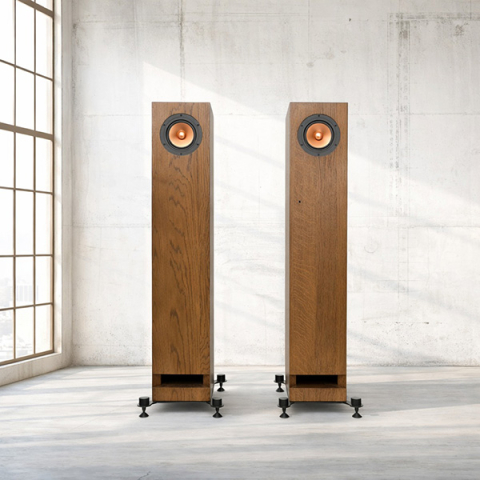
That remains literally true: The 7" full-range drivers to which I'm listening today are from a German company called Voxativ; the horn-loaded cabinets from which they play were also designed by Voxativ, and are made in Germany by the Wilhelm Schimmel piano company. And, with all due respect to Lowther, the 75-year-old English loudspeaker firm that launched a thousand DIY fantasies—not to mention a thousand very lively wavefronts—the Voxativ drivers and horns take the Lowther concept further than anyone else of whom I'm aware.
El Sidcup
For the newbie: Although there exist a few companies that can trace their origins to a time when all amps were low-powered, Lowther is the only one of those whose audio line remains exclusively dedicated to high-efficiency loudspeakers. Their calling card is a full-range driver with a 7" cone made of pale yellow paper; a smaller, concentric high-frequency cone, made of the same paper and moved by the same voice-coil; an extremely powerful magnet; and an intentionally small voice-coil gap—which, as you can imagine, requires both a precisely wound voice-coil and a perfectly round voice-coil former.
Executing those last two details has, at times, seemed a challenge for Lowther. Between 1996 and 2006 I examined no fewer than 20 pairs of Lowther drivers, some of which I bought for myself, others of which were built into review samples from other loudspeaker manufacturers. Not all of those drivers had a voice-coil and former whose shape precisely matched the gap in which it was meant to operate—the perennial culprits were seams on the formers that surely could have been flattened with a little effort and ingenuity—and, as a consequence, some of those drivers at times made disagreeable noises. Nor were those the only (apparently fixable) flaws.
Things like that don't go unnoticed for long—and there are always one or two people among the noticers who think they can do a better job themselves. So it goes in our little community: No one wants to discard the best parts of the thing (the powerful magnet, the small gap, the idea of a single motor driving two very light cones), and certain other design elements (the parchment-like appearance of the paper; the odd, asymmetrical pattern of the driver's four mounting bolts) long ago wove their way into the DNA of DIY. As a result, many high-sensitivity full-range drivers of recent vintage appear identical to that classic 7" Lowther driver—yet some are otherwise original in their design.
Among the new wave of Lowther competitors is a German engineer and audio enthusiast named Inès Adler. After working for Mercedes-Benz for a number of years—and with 14 patents to her name in the field of electronic monitoring systems for diesel motors—Adler and some friends decided to try to make a better wideband driver. "I think everyone who owns Lowthers becomes interested, at some point, in improving them," Adler told me recently. Then she added, with a laugh, "It is the German way: When we make something, we want to make it perfect!"
 In time, Adler shifted her engineering efforts from rebuilding Lowthers to designing and making her own 7" dual-cone driver. "I saw three things that I disliked about the Lowther driver," she says. "One, it was impossible to make good bass: The cone had insufficient stability at high excursions. Two, it had the famous Lowther 'shout' that made voices sound sharper than real: The louder the driver played, the worse the shout—but turning them up was something people wanted to do, to get good bass. And three, the top range was missing: There was nothing over 15kHz. So it was clear, I had to design my own driver."
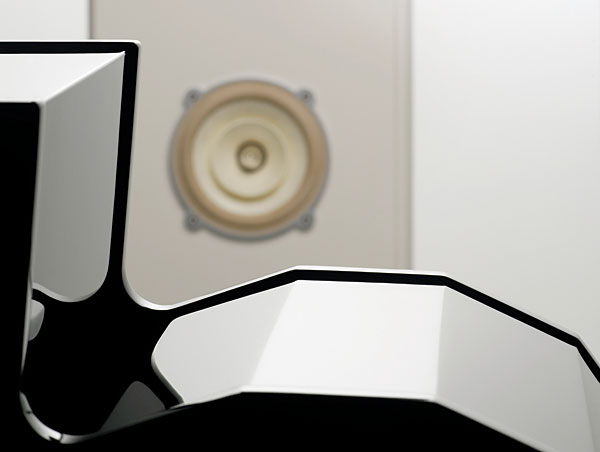
Cosmetic similarities aside, Adler's Voxativ AC-3X driver is indeed a different animal. For one thing, the Voxativ's convex surround is the reverse of Lowther's. "We do that to hide something," Adler says, laughing again. "We give the cone more material, more paper, so it goes past the surround at the rear. The cone is effectively larger for the rear wave than the front wave." Adler also says that her surround, the foam for which was developed for Voxativ by a German chemical company, is designed to accommodate a much greater excursion: 10mm total, compared with the Lowther driver's 2mm. The cone geometry, too, is different, and the generously sized whizzer cone has a very slight roll on its outer edge, as compared with the much larger roll Lowther added to their own whizzers beginning in the late 1990s: Adler says that too much of an overlap creates unwanted reflections, and that her more modest crease is just enough for some added rigidity.
At a time when DIY enthusiasts are known to pay dearly for alnico magnets—in loudspeakers as in phono cartridges—the Voxativ approach goes against the grain. Among the versions of their driver that are available to the DIY community (the Voxativ AC-3X driver is not available separately), Voxativ offers one with an alnico magnet, for customers who require such a thing. That said, Inès Adler—who does virtually all of her design work by ear—contends that the alnico version sounds no better than the one built with a more compact, powerful neodymium magnet. Besides, she adds, alnico loses its power over time, unlike neodymium. The latter's smaller size also makes the Voxativ AC-3X suitable for a horn design that seeks to minimize the volume of air in the throat area, ie, the space immediately behind the driver in a rear-wave horn, where pressure is a significant design factor. Speaking of which . . .
In time, Adler shifted her engineering efforts from rebuilding Lowthers to designing and making her own 7" dual-cone driver. "I saw three things that I disliked about the Lowther driver," she says. "One, it was impossible to make good bass: The cone had insufficient stability at high excursions. Two, it had the famous Lowther 'shout' that made voices sound sharper than real: The louder the driver played, the worse the shout—but turning them up was something people wanted to do, to get good bass. And three, the top range was missing: There was nothing over 15kHz. So it was clear, I had to design my own driver."
Cosmetic similarities aside, Adler's Voxativ AC-3X driver is indeed a different animal. For one thing, the Voxativ's convex surround is the reverse of Lowther's. "We do that to hide something," Adler says, laughing again. "We give the cone more material, more paper, so it goes past the surround at the rear. The cone is effectively larger for the rear wave than the front wave." Adler also says that her surround, the foam for which was developed for Voxativ by a German chemical company, is designed to accommodate a much greater excursion: 10mm total, compared with the Lowther driver's 2mm. The cone geometry, too, is different, and the generously sized whizzer cone has a very slight roll on its outer edge, as compared with the much larger roll Lowther added to their own whizzers beginning in the late 1990s: Adler says that too much of an overlap creates unwanted reflections, and that her more modest crease is just enough for some added rigidity.
At a time when DIY enthusiasts are known to pay dearly for alnico magnets—in loudspeakers as in phono cartridges—the Voxativ approach goes against the grain. Among the versions of their driver that are available to the DIY community (the Voxativ AC-3X driver is not available separately), Voxativ offers one with an alnico magnet, for customers who require such a thing. That said, Inès Adler—who does virtually all of her design work by ear—contends that the alnico version sounds no better than the one built with a more compact, powerful neodymium magnet. Besides, she adds, alnico loses its power over time, unlike neodymium. The latter's smaller size also makes the Voxativ AC-3X suitable for a horn design that seeks to minimize the volume of air in the throat area, ie, the space immediately behind the driver in a rear-wave horn, where pressure is a significant design factor. Speaking of which . . .
For the newbie: Although there exist a few companies that can trace their origins to a time when all amps were low-powered, Lowther is the only one of those whose audio line remains exclusively dedicated to high-efficiency loudspeakers. Their calling card is a full-range driver with a 7" cone made of pale yellow paper; a smaller, concentric high-frequency cone, made of the same paper and moved by the same voice-coil; an extremely powerful magnet; and an intentionally small voice-coil gap—which, as you can imagine, requires both a precisely wound voice-coil and a perfectly round voice-coil former.
In time, Adler shifted her engineering efforts from rebuilding Lowthers to designing and making her own 7" dual-cone driver. "I saw three things that I disliked about the Lowther driver," she says. "One, it was impossible to make good bass: The cone had insufficient stability at high excursions. Two, it had the famous Lowther 'shout' that made voices sound sharper than real: The louder the driver played, the worse the shout—but turning them up was something people wanted to do, to get good bass. And three, the top range was missing: There was nothing over 15kHz. So it was clear, I had to design my own driver."
Cosmetic similarities aside, Adler's Voxativ AC-3X driver is indeed a different animal. For one thing, the Voxativ's convex surround is the reverse of Lowther's. "We do that to hide something," Adler says, laughing again. "We give the cone more material, more paper, so it goes past the surround at the rear. The cone is effectively larger for the rear wave than the front wave." Adler also says that her surround, the foam for which was developed for Voxativ by a German chemical company, is designed to accommodate a much greater excursion: 10mm total, compared with the Lowther driver's 2mm. The cone geometry, too, is different, and the generously sized whizzer cone has a very slight roll on its outer edge, as compared with the much larger roll Lowther added to their own whizzers beginning in the late 1990s: Adler says that too much of an overlap creates unwanted reflections, and that her more modest crease is just enough for some added rigidity.
At a time when DIY enthusiasts are known to pay dearly for alnico magnets—in loudspeakers as in phono cartridges—the Voxativ approach goes against the grain. Among the versions of their driver that are available to the DIY community (the Voxativ AC-3X driver is not available separately), Voxativ offers one with an alnico magnet, for customers who require such a thing. That said, Inès Adler—who does virtually all of her design work by ear—contends that the alnico version sounds no better than the one built with a more compact, powerful neodymium magnet. Besides, she adds, alnico loses its power over time, unlike neodymium. The latter's smaller size also makes the Voxativ AC-3X suitable for a horn design that seeks to minimize the volume of air in the throat area, ie, the space immediately behind the driver in a rear-wave horn, where pressure is a significant design factor. Speaking of which . . .