I used Stereophile's loan sample of the top-of-the-line Audio Precision SYS2722 system (see www.ap.com and the January 2008 "As We See It") to examine the ASUS Xonar Essence One Muses Edition's measured behavior. I used my 2012-vintage Apple MacBook Pro running on battery power to examine the processor's performance via its USB port. Apple's USB Prober utility confirmed that the USB port operated in isochronous asynchronous mode and reported the processor's product string as "ASUS Xonar Essence One\000" from "ASUSTek Computer Inc." Peculiarly, the Mac's AudioMIDI utility identified the Xonar as "Speaker," but showed that its USB input operated at all sample rates from 44.1 to 192kHz with a 24-bit word length. Unusually, the TosLink input locked to a datastream sampled at 192kHz. (TosLink's limited bandwidth usually precludes operation at sample rates greater than 96kHz.)
Unless otherwise stated, the measured data refer to all three outputs. The maximum output level at 1kHz was 4.03V from the balanced XLR jacks, 2.02V from the single-ended RCA jacks, and 6.98V from the headphone jack. The output impedance was a low 100 ohms at all audio frequencies from the single-ended outputs; twice that, as expected, from the balanced jacks; but 11.1 ohms from the headphone output. All the outputs preserved absolute polarity (ie, were non-inverting). Channel separation from all outputs was excellent, at >120dB in both directions below 2kHz, and still 108dB at 20kHz (not shown).
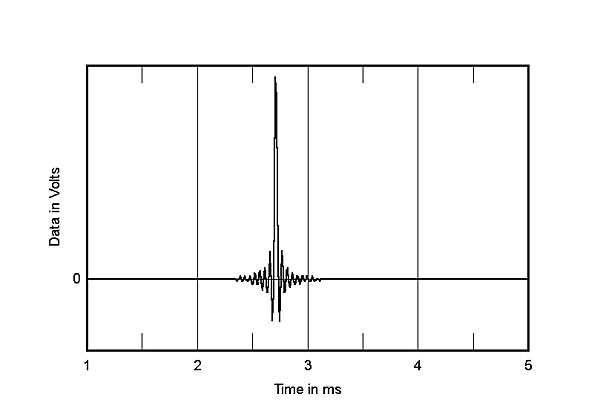
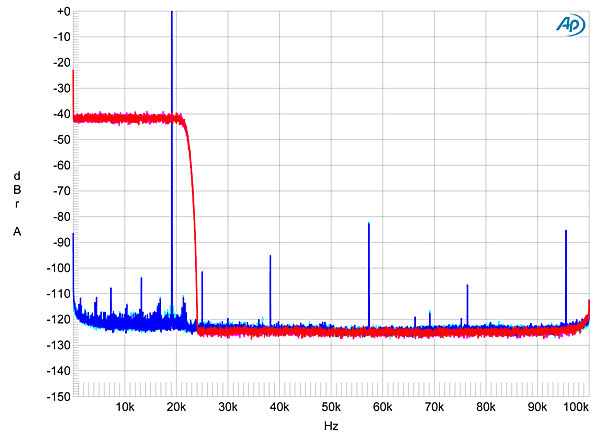
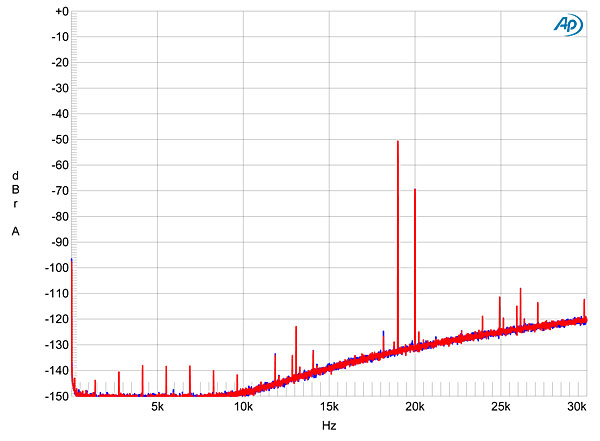
With oversampling switched off, the Xonar's impulse response with 44.1kHz data (fig.1) revealed the reconstruction filter to be a conventional linear-phase, half-band type, with time-symmetrical ringing before and after the impulse. Wideband analysis of 44.1kHz-sampled white noise at –4dBFS (fig.2, magenta and red traces) indicated a very steep rolloff above the audioband with the ultrasonic sampling image of a full-scale 19.1kHz tone at 25kHz suppressed by 100dB (cyan, blue). Harmonic distortion of the tone was low, with the third harmonic at 57kHz the highest in level, at –83dB (0.007%).
Repeating this analysis with oversampling on gave a very different picture (fig.3). The white noise now starts to roll off above 14kHz, the 19.1kHz tone is suppressed by 46dB, and, most significant, the noise floor above the audioband rises, while that within the audioband drops slightly. The "oversampling" actually appears to be inband noiseshaping, which increases audioband resolution at the expense of resolution at ultrasonic frequencies. The residual effect of this noiseshaping can be seen by comparing fig.4, which shows the waveform of an undithered 16-bit/1kHz tone at exactly –90.31dBFS without oversampling, with fig.5, which shows what happens when oversampling is switched on. There is no increase in resolution with oversampling, the waveform remaining superbly symmetrical in both graphs, with the three DC voltage levels described by the data clearly evident. But with oversampling, the waveform is now overlaid with some noise of very high frequency. With 24-bit data, the waveform is a well-formed sinewave (fig.6) that, with oversampling, is again overlaid by high-frequency noise (fig.7).
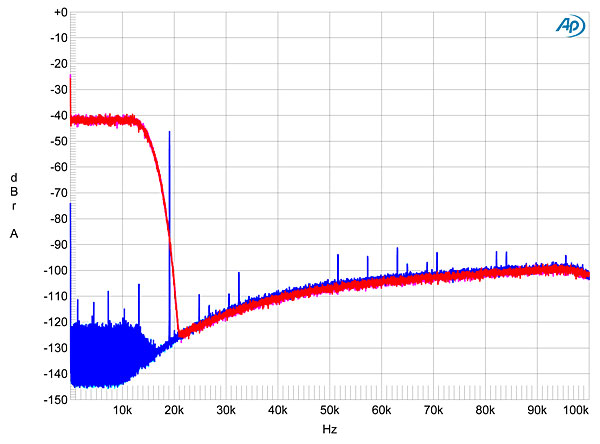
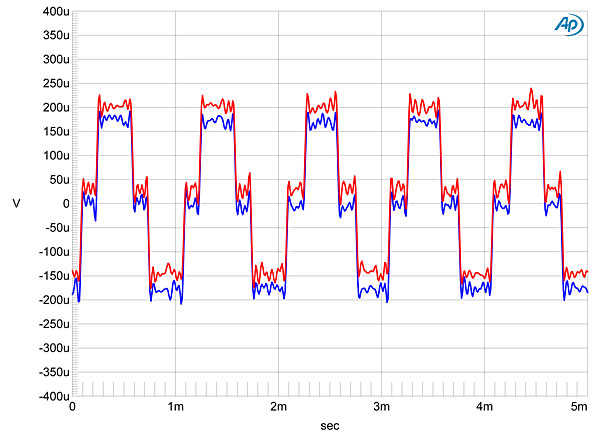
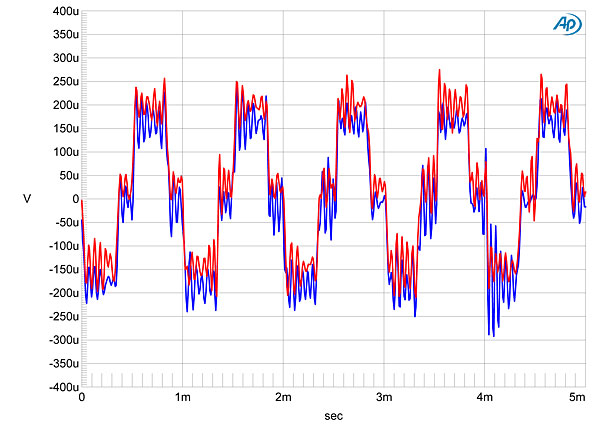
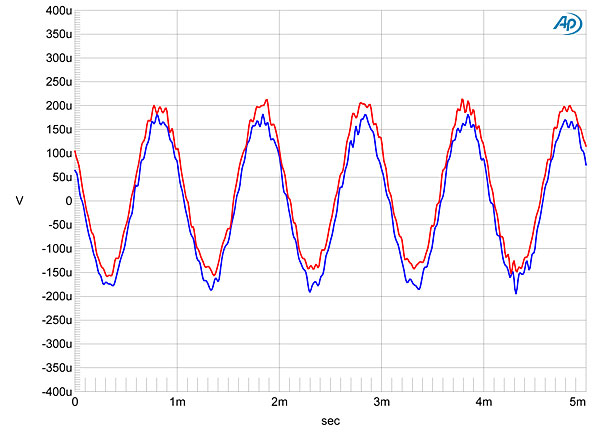
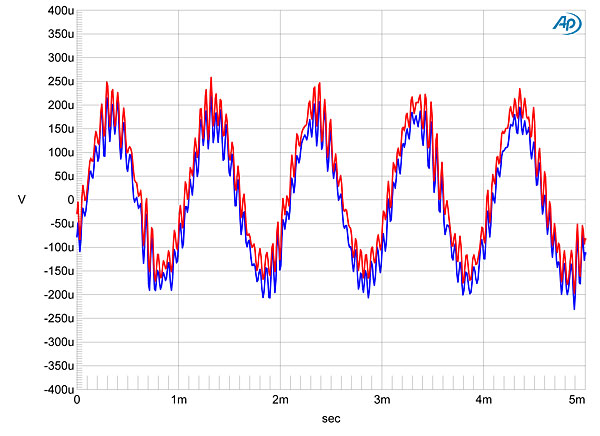
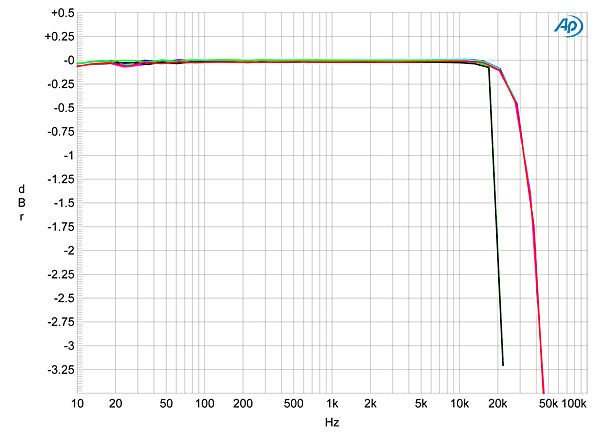
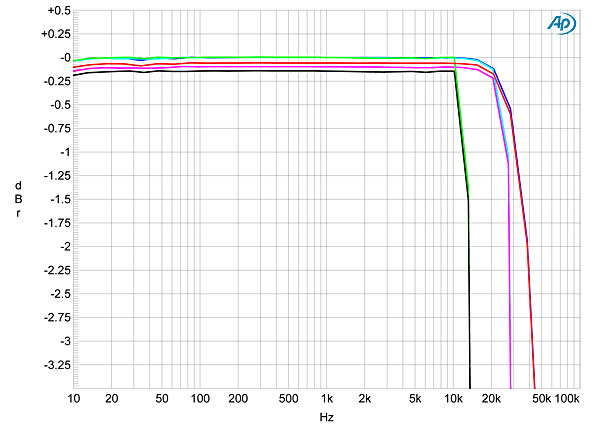
Fig.8 shows the Essence One's frequency response without oversampling with data sampled at 44.1kHz (green and gray traces), 96kHz (cyan, magenta), and 192kHz (blue, red). While the 96kHz sampling gives the correct bandwidth increase compared with 44.1kHz, the 192kHz traces exactly overlay the 96kHz traces, there not being the expected octave increase in bandwidth. With oversampling switched on (fig.9), the 44.1kHz traces now roll off sharply above 10kHz, and while the 192kHz traces now do extend higher in frequency than the 96kHz traces, this is because the latter's bandwidth has been reduced.
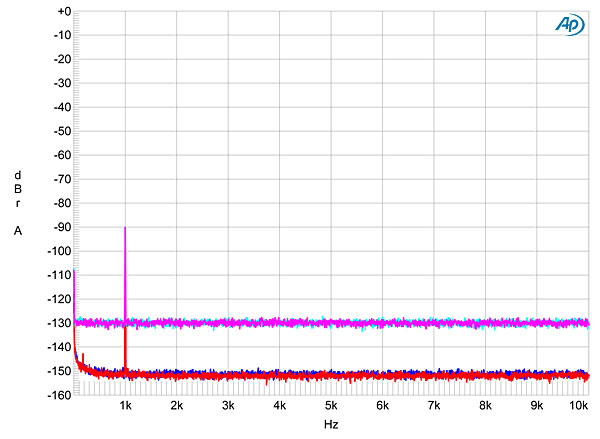
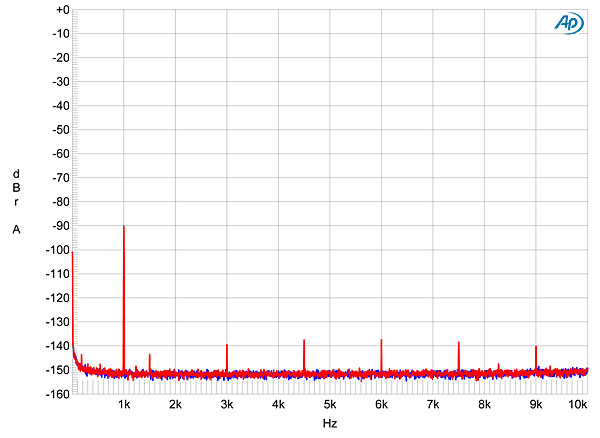
The Xonar Essence One intrinsically offers high resolution, as shown in fig.10, which plots the spectra of a dithered 1kHz tone with 16-bit data (cyan and magenta traces) and 24-bit data (blue, red). With 16-bit data, the noise floor is actually the dither noise used to encode the signal. The increase in bit depth drops the noise floor by 20dB, suggesting that the Essence One has around 19 bits of effective resolution, which is excellent at its price. And while a power-supply–related spurious tone can be seen at 120Hz, this lies more than 140dB down from full level (0.00001%). I can safely predict that this will be completely inaudible to all listeners under all circumstances! Fig.10 was taken with S/PDIF data via TosLink without oversampling; repeating the analysis with USB data gave the same result, indicating that the Xonar's USB port does operate correctly with 24-bit data. Switching in oversampling (fig.11) didn't increase the level of the 24-bit noise floor below 10kHz, but did introduce some very low-level harmonic distortion.
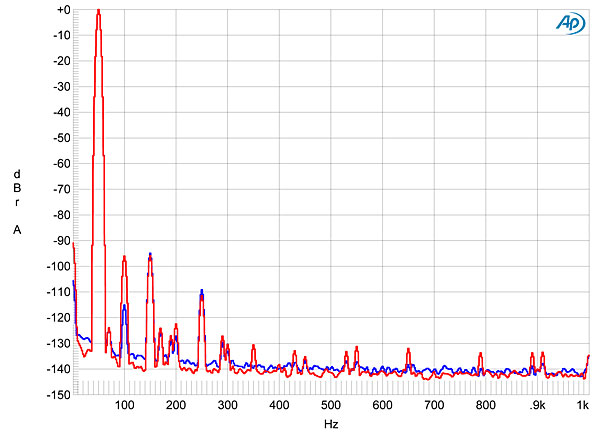
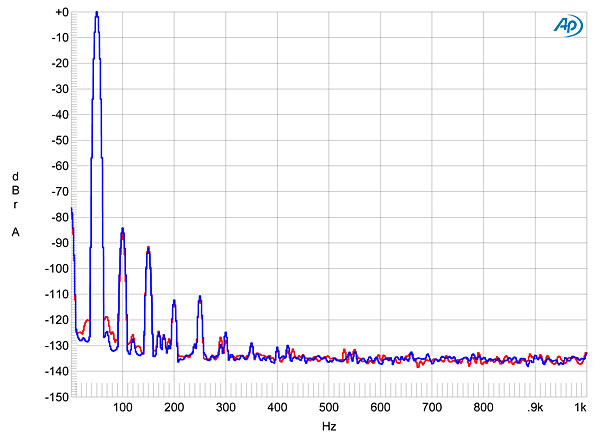
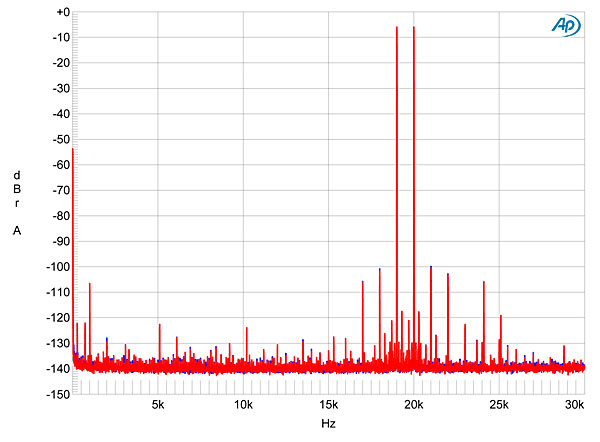
At high levels, the Essence One featured very low distortion from its unbalanced and balanced outputs, even into a very low 600 ohm load (fig.12). The third harmonic at –96dB (0.0015%) was the highest in both channels with a full-scale 50Hz tone, but the second harmonic was almost as high in the right channel only (red trace). The third harmonic didn't rise with the headphone output driving 300 ohms at maximum level, but now the second harmonic was the highest in level, at a still-low –86dB (0.005%, fig.13). Intermodulation distortion without oversampling was very low (fig.14), though switching in oversampling with these 44.1kHz-sampled data (fig.15) rolled off the primary tones, as anticipated from fig.7. Comparing figs. 10 and 11, you can see that the inband noiseshaping with oversampling engaged drops the noise floor below 10kHz by 10dB.
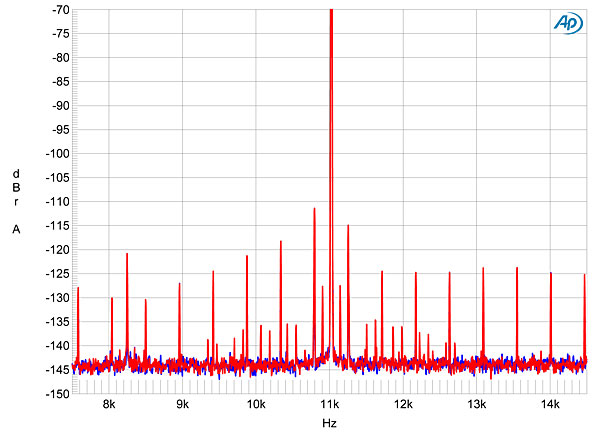
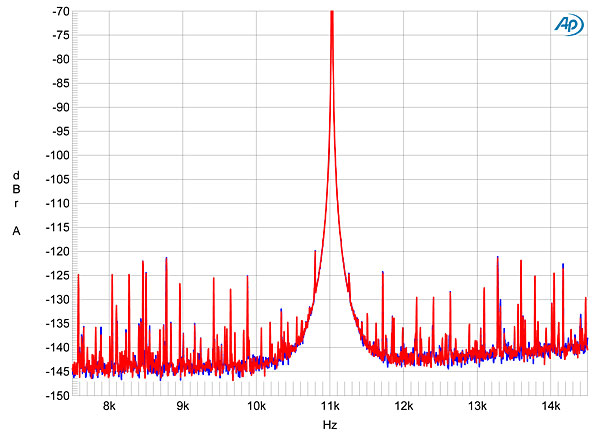
Fed, via TosLink, 16-bit S/PDIF data representing the Miller-Dunn J-Test signal, the Xonar DAC wasn't very effective at rejecting word-clock jitter. Fig.16 shows that there is some emphasis of the data-related sidebands at ±229Hz, as well as a pair of lower-level sidebands at ±120Hz. (Given the very low level of 120Hz in the analog out signal, these sidebands may well arise from some power-supply–related interference on the DAC chip's voltage-reference pin.) With USB data, the spectral spike that represents the high-level tone at one-quarter the sample rate acquires wide "skirts." Though these skirts, which suggest the presence of random low-frequency jitter, were reduced a little with oversampling (fig.17), the noise floor with USB data was not as clean as it had been with TosLink data.— John Atkinson