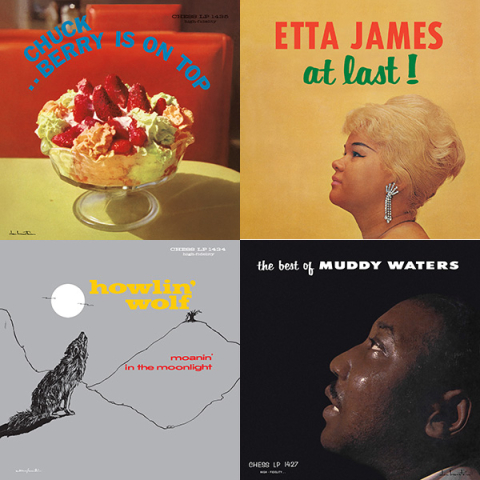
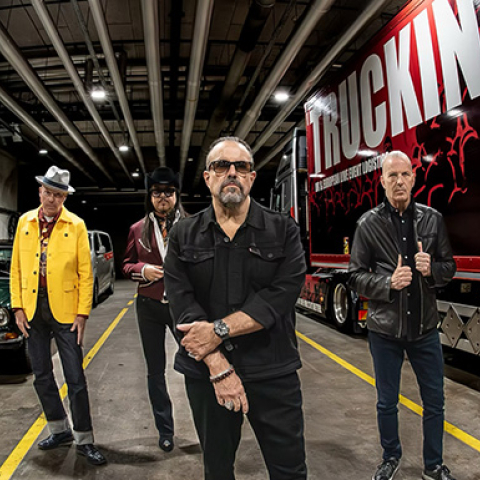
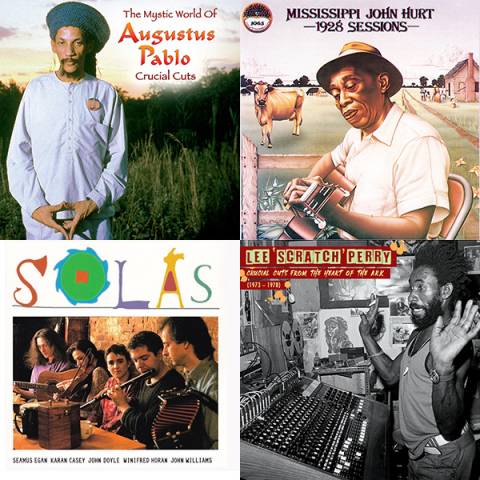
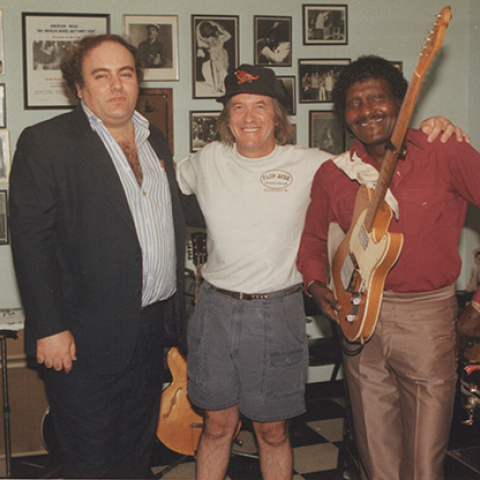
Left to right: Clifford Antone, Doug Sahm, Albert Collins. (Photo Courtesy of Susan Antone.)
There have been venue owners who have been larger than life—Hilly Kristal (CBGB) and Doug Weston (Troubadour) come to mind—but few live-music club owners have ever lived in and for the music the way that Clifford Antone has. He also lived a life of extremes. Once, I was escorted into his office and found that almost the entire room was taken up by a sea of electric guitars on stands. During a South by Southwest Conference in Austin, Texas, in the early aughts, I was flabbergasted when I walked into a favorite Tex-Mex restaurant and found Antone greeting customers and playing host as a condition of his parole.
Raised in Houston, the nephew of the Lebanese/Syrian family member who invented the Houston Po' Boy sandwich, Clifford Antone arrived in Austin in 1969 when the music-going public was a mix of hippies, country music fans, and college kids. In 1975, he opened the first Antone's on the corner of Sixth Street and Brazos in downtown Austin with a show by zydeco great Clifton Chenier.
Forced out of downtown when the building housing the venue was torn down for a parking garage, the club eventually settled, in 1982, at a former Shakey's Pizza on Guadalupe Street just north of the University of Texas. In the liner notes for a new boxed set on the New West Records label, noted Texas writer Joe Nick Patoski calls the club "a genuine hot spot." An expert house band emerged, hardened by many nights backing legendary figures such as Otis Rush, Muddy Waters, and Buddy Guy. Celebrities including RNC chairman Lee Atwater, actors Bruce Willis and Dennis Quaid, and UT sports figures like coach Darrell Royal and running back Earl Campbell came by to watch or sit in. According to the liner notes, when Bono and Edge of U2 sat in one night after a nearby arena show, house band bassist Sarah Brown's response was, "We were unimpressed, but we were pretty practiced at being unimpressed. It was half 'this is pretty cool,' and half rolling your eyes."
The club's colorful founder died in 2006, but the club he founded is back in downtown Austin, mere blocks from its original location. Zach Ernst, who has been booking the club for the past decade, is also the driving force behind the aforementioned boxed set, the exceptionally well-done, limited-edition
Antone's 50th Allstars - 50 Years of the Blues.

Among its four LPs and 41 tracks is
Tell Me One More Time, a compilation derived from the output of the Antone's record label (1987–2000) including cuts by Lazy Lester, Doug Sahm, and the great trio of Austin women Lou Ann Barton, Marcia Ball, and Angela Strehli. Strehli was instrumental in establishing both the club and the label. Another vinyl long player,
We Went Live in '75 , is a compilation of live performances recorded at the club. It features new discoveries and tracks from 10th (1987) and 20th (1997) anniversary collections previously released on Antone's Records.
"We got this giant cache of live recordings from the club's engineer in the '90s and early 2000s," Ernst told me over the phone from Austin. "We found this board tape of Gary [Clark Jr.] playing when he was 20. Clifford did this great onstage intro of him. In some ways, these are the best-sounding things that ever came out on Antone's Records, because they're just so raw and the band is so good."
A multicolored 7" single of Los Lobos performing Howlin' Wolf 's "300 Pounds of Joy" is also included in the box, along with a pair of books, one of photos and liner notes by Joe Nick Patoski and another that reproduces
Picture the Blues, a chronicle of the club written in 1986 by Susan Antone, Clifford's sister.
Ernst, who grew up in College Station, Texas, and had family in Austin, first set foot in the club in 2002. During his freshman year at UT, he signed up for a course that Antone taught—
Blues According to Clifford Antone—and the two bonded. "He was very generous with his time," Ernst explained. "Any time I wanted to go down to the club, he would meet me down there, or if it was a big show—Irma Thomas was one I remember—he introduced me to her husband and her manager. He'd kinda say, 'Hey, this is a kid who cares about this stuff.' He would recommend stuff to go get at Antone's Record Shop (located across the street from the club) and let me borrow CDs from his car. Anyone who was young and showed an interest, he was always very open and giving."
The centerpiece of the new box is the 18-track LP
The Last Real Texas Blues Album, a collection of newly recorded tracks done in Austin at Arlyn Studios and at Chicago's Electrical Audio, most famous as the longtime studio home of the late Steve Albini. "What got me really excited, what was important to me, was doing the new recordings," Ernst continued. "That ended up being 18 songs, 68 minutes of what I would say are the best artists carrying this thing on 50 years into the dream.
The Last Real Texas Blues Album will also be released as a stand-alone LP.
"I was inspired by this thing on the Beatles' SiriusXM channel, which is called
Magical Mini Concert," Ernst said. "They'll take a live Beatles thing from the '60s and mix it with Paul live and weave it together like it's one concert. We took some liberties with the fades and the crowd noise to make each side sound like one big jam. I thought it helped tell the story and show players like Kim Wilson and The Fabulous Thunderbirds, Lurrie Bell, and Lavelle White kicking ass in their prime."

Lavelle White. (Photo Courtesy of The Antone Collection and Susan Antone.)
In a genuinely brilliant touch, Ernst came up with the idea of adding previously recorded, spoken-word intros by Clifford Antone between each track. Ernst says he was inspired by a release on the International Anthem label documenting the work of the late producer/keyboardist/vibes player Charles Stepney, which includes between-song intros by his daughters.
"I knew there were a lot of Clifford interviews, and I know how he sounded when he talked about [Lazy] Lester or Doyle [Bramhall]. So I thought, if I could kind of line 'em up, it will have an emotional impact. Just making a straight compilation, exactly like what's available on streamers, wasn't interesting, so I was like, let's kind of have him guide people through this."
The sessions for
The Last Real Texas Blues Album were all recorded by Jacob Sciba, who won a Grammy in 2020 as producer of Gary Clark Jr.'s album
This Land.
"The name of the game was put the players you want on the floor and then get out of the way. One hundred percent, they're whole takes," Sciba told me from Austin during a recent interview. "I don't know that we ever did more than two or three of each. I'm a firm believer in warts and all. It's one thing when there's a major boo boo, but if it's a debatable thing, especially in the blues and jazz, well... ."
The LPs for this set were mastered at Third Man Records in Detroit and pressed at GZ in the Czech Republic. While I only heard WAV files before writing, the sonics of the old and new recordings are impressive. Sciba chose Third Man to master the LPs on the strength of their work on desert blues albums by guitarist Mdou Moctar.
Sciba explained, "You have to ask, 'Do you get the ethos of what we are trying to do?' And soundwise, this is not a country radio record that needs to be slammed; it's a delicate thing. I think, when you're doing the style of blues that we were trying to reach, that limits, in my opinion, a lot of professional mastering houses."
Antone's 50th Allstars - 50 Years of the Blues is a telling portrait of Clifford Antone and his vision for his club and record label and its success. Guitarist Derek O'Brien, a longtime member of the Antone's house band who also produced many of the records on the Antone's label, had a ringside seat for many years. "He just wanted to get these guys in the studio any way he could. He didn't say, 'Let's get that Chess Records sound,' or 'Let's get that Duke Records sound.' He just wanted a great performance," O'Brien told me from his home in Austin. "He brought a fanatical love for blues. Albert Collins knew how much Clifford appreciated him. Buddy Guy knew. The more famous, the less famous, it didn't matter. In every way, the blues is done by people who are real, and Clifford appreciated what they were doing."
Over the course of our long phone call, Zach Ernst succeeded in convincing me that he's not only a knowledgeable music fan, blues included, but more importantly that he gets what made Clifford Antone tick. Ernst seconds the notion that presenting and recording what he deemed "real" was Antone's primary motivation.
"Clifford liked anything that had feeling," Ernst stressed. "So he had a very unique and clear view of what he liked. We actually purchased a big swath of his record collection, which we are archiving and organizing for the museum that will open next year above the club.
"I wanna know what was in Jerry Wexler's record collection or Ahmet Ertegun's, and Clifford is one of those guys. The way he knew every name on the labels and would devour the liner notes, he really got into the nitty gritty of learning all that stuff. He was a real expert.

Clifford Antone and Muddy Waters. (Photo Courtesy of The Antone Collection and Susan Antone.)
"Treating musicians well, treating overlooked musicians well, taking care of them. It was a very pure and childlike thing at the beginning. It was like, we're gonna build a club and build a stage, and we're gonna bring in Muddy Waters. And then there were all these great young musicians around who became the house band and played with all these guys, and they were able to propel the whole thing forward. There's no way he could have predicted what it would turn into," Ernst concluded. "It kind of snowballed. It's just amazing."