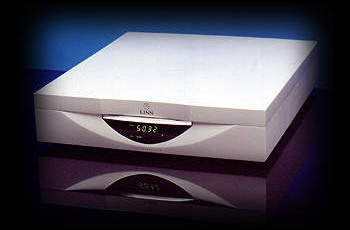
A funny thing happened to Linn Product's Brian Morris when he attempted to bring Linn's new Sondek CD12 through Customs as hand-luggage: Customs agent: "What's in the box, sir?" Brian: "A CD player." Customs agent: "Value?" Brian: "$20,000." Customs agent: "Who are you trying to kid? I know what CD players are worth—I've got one. Go stand over there until we sort this out." It took a whole day, Linn's customs broker, and a flurry of phone calls, but eventually Brian did bring the CD12 into this country and deliver it to me in Santa Fe. But the customs agent's question was actually a good one. CD technology is now fairly mature. In fact, some might argue that, with the increased data-storage capacity of the DVD, not to mention the impending DVD-Audio standard, the CD might even be entering its twilight phase. Who on earth would bring a $20,000 CD player to market now?
 Linn Products, obviously. As a company, Linn has always gone its own way—at its own pace—and if the idea of producing a no-holds-barred CD player at this particular moment strikes some people as foolhardy, the folks at Linn just don't care. They point out that there are millions and millions of CDs out there that will benefit from a player like the Sondek CD12, and that it will be years before there's anything like that selection on DVD, or whatever the next digital music medium will be. Besides, they point out, the typical Linn customer already has a substantial investment in software and is anxious to extract from it as much musical pleasure as possible, even if that means spending an amount less obsessed observers would label ludicrous. If this argument sounds familiar, it's because Linn has said the same thing before—specifically, 17 years ago, when, in the pre-dawn of the CD age, people were predicting the demise of the turntable and the vinyl disc. Here we are, nearly two decades into the digital era, and there are more high-end turntables for sale than there ever were during the analog era. No, the LP hasn't exactly triumphed, but there are still a lot of music lovers out there who love their records and are willing to spend "ludicrous" amounts to hear them played properly.
Linn Products, obviously. As a company, Linn has always gone its own way—at its own pace—and if the idea of producing a no-holds-barred CD player at this particular moment strikes some people as foolhardy, the folks at Linn just don't care. They point out that there are millions and millions of CDs out there that will benefit from a player like the Sondek CD12, and that it will be years before there's anything like that selection on DVD, or whatever the next digital music medium will be. Besides, they point out, the typical Linn customer already has a substantial investment in software and is anxious to extract from it as much musical pleasure as possible, even if that means spending an amount less obsessed observers would label ludicrous. If this argument sounds familiar, it's because Linn has said the same thing before—specifically, 17 years ago, when, in the pre-dawn of the CD age, people were predicting the demise of the turntable and the vinyl disc. Here we are, nearly two decades into the digital era, and there are more high-end turntables for sale than there ever were during the analog era. No, the LP hasn't exactly triumphed, but there are still a lot of music lovers out there who love their records and are willing to spend "ludicrous" amounts to hear them played properly.