My next-door neighbor bought a late-'70s Porsche 924 last week, and I'm really glad he did. For one thing, it adds a little class to the 'hood—my 1984 Grand Wagoneer's peeling "wood paneling" is far more typical of the vehicles in my part of town. And Eric is just so obviously thrilled to own a piece of the legend—a real Teutonic driving machine. 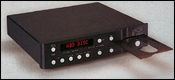 "The 924 is a baby Porsche," pooh-poohed John Atkinson when I told him about Eric's new ride. And he's right—it's not a racing machine. The 924 was designed to appeal to a new Porsche customer—one who couldn't afford their "grown-up" cars, or perhaps one who wanted a slightly less challenging drive. But Eric doesn't care about that. He's got a Porsche, and he obviously feels it lives up to its patrimony. He loves its zippy handling, the effortless way it settles into a speed-limit-annihilating cruising speed, and even (as he pointed out to me while drying it off with a chamois) the unexpected little flares that grace its bodywork. He might drive a truck to work, but after 5:00, he's cruising in his own piece of the dream. I know exactly how he feels. After countless hours spent salivating over the sound of JA's Mark Levinson Nos.31.5/'30.5 digital front-end and, more recently, Tom Norton's Nos.36/37 combo, I've finally taken home a Mark Levinson digital product for my own use: the single-chassis No.39 CD player/processor. At $5995, the '39 costs a fifth of the price of a '30.5/'31.5 combo, yet the piece is pure Mark Levinson: built so solidly that it appears armor-clad, partaking of the same contemporary industrial design as its more expensive brethren, and brimming over with performance and convenience features that make sense. A "baby" Madrigal? In price, maybe, but while using it I certainly feel as if I finally have hold of my own piece of the dream.
"Music...results from ecstasies of logic"—Alban Berg (1885-1935)
"The 924 is a baby Porsche," pooh-poohed John Atkinson when I told him about Eric's new ride. And he's right—it's not a racing machine. The 924 was designed to appeal to a new Porsche customer—one who couldn't afford their "grown-up" cars, or perhaps one who wanted a slightly less challenging drive. But Eric doesn't care about that. He's got a Porsche, and he obviously feels it lives up to its patrimony. He loves its zippy handling, the effortless way it settles into a speed-limit-annihilating cruising speed, and even (as he pointed out to me while drying it off with a chamois) the unexpected little flares that grace its bodywork. He might drive a truck to work, but after 5:00, he's cruising in his own piece of the dream. I know exactly how he feels. After countless hours spent salivating over the sound of JA's Mark Levinson Nos.31.5/'30.5 digital front-end and, more recently, Tom Norton's Nos.36/37 combo, I've finally taken home a Mark Levinson digital product for my own use: the single-chassis No.39 CD player/processor. At $5995, the '39 costs a fifth of the price of a '30.5/'31.5 combo, yet the piece is pure Mark Levinson: built so solidly that it appears armor-clad, partaking of the same contemporary industrial design as its more expensive brethren, and brimming over with performance and convenience features that make sense. A "baby" Madrigal? In price, maybe, but while using it I certainly feel as if I finally have hold of my own piece of the dream.
"Music...results from ecstasies of logic"—Alban Berg (1885-1935)
To think of the No.39 as a single-box CD player is to miss a lot of Madrigal's thrust in designing it. It is, of course, a one-box player utilizing a tremendous amount of the technology developed for the Nos.36 and '37 separates, but the company didn't just build a pared-down version of its most commercially successful processor and transport. Madrigal speculated that there might be another type of audiophile out there—one seeking high-quality sound but unwilling to have his or her listening room disappear under an avalanche of boxes. Thus flexibility became the hallmark of the No.39 project. Madrigal's formal name for the piece, "CD player/processor," hints at it. Madrigal included two digital inputs on the unit: one coaxial input, through a standard RCA jack; the other a TosLink optical input. "TosLink?" I hear you gasp. "Why such a crappy connection?" Essentially to broaden the types of input devices the '39 can accommodate, Madrigal's Jon Herron explained. Laserdisc players seldom have any other digital out, so the TosLink input allows the '39 to serve as a superior processor in AV systems. Or for DSS control boxes with digital out. Or for any other digital source, for that matter. Of course, the No.39 also serves as a switching unit between digital sources. And its volume and balance controls, which operate in the analog domain, also allow it to be plugged directly into power amplifiers. In fact, Madrigal claims that the No.39 is essentially a No.37 transport with key elements of the No.36 processor and the No.380 preamp added—but its performance as a transport, they claim, is identical to that of the No.37.
"The 924 is a baby Porsche," pooh-poohed John Atkinson when I told him about Eric's new ride. And he's right—it's not a racing machine. The 924 was designed to appeal to a new Porsche customer—one who couldn't afford their "grown-up" cars, or perhaps one who wanted a slightly less challenging drive. But Eric doesn't care about that. He's got a Porsche, and he obviously feels it lives up to its patrimony. He loves its zippy handling, the effortless way it settles into a speed-limit-annihilating cruising speed, and even (as he pointed out to me while drying it off with a chamois) the unexpected little flares that grace its bodywork. He might drive a truck to work, but after 5:00, he's cruising in his own piece of the dream. I know exactly how he feels. After countless hours spent salivating over the sound of JA's Mark Levinson Nos.31.5/'30.5 digital front-end and, more recently, Tom Norton's Nos.36/37 combo, I've finally taken home a Mark Levinson digital product for my own use: the single-chassis No.39 CD player/processor. At $5995, the '39 costs a fifth of the price of a '30.5/'31.5 combo, yet the piece is pure Mark Levinson: built so solidly that it appears armor-clad, partaking of the same contemporary industrial design as its more expensive brethren, and brimming over with performance and convenience features that make sense. A "baby" Madrigal? In price, maybe, but while using it I certainly feel as if I finally have hold of my own piece of the dream. To think of the No.39 as a single-box CD player is to miss a lot of Madrigal's thrust in designing it. It is, of course, a one-box player utilizing a tremendous amount of the technology developed for the Nos.36 and '37 separates, but the company didn't just build a pared-down version of its most commercially successful processor and transport. Madrigal speculated that there might be another type of audiophile out there—one seeking high-quality sound but unwilling to have his or her listening room disappear under an avalanche of boxes. Thus flexibility became the hallmark of the No.39 project. Madrigal's formal name for the piece, "CD player/processor," hints at it. Madrigal included two digital inputs on the unit: one coaxial input, through a standard RCA jack; the other a TosLink optical input. "TosLink?" I hear you gasp. "Why such a crappy connection?" Essentially to broaden the types of input devices the '39 can accommodate, Madrigal's Jon Herron explained. Laserdisc players seldom have any other digital out, so the TosLink input allows the '39 to serve as a superior processor in AV systems. Or for DSS control boxes with digital out. Or for any other digital source, for that matter. Of course, the No.39 also serves as a switching unit between digital sources. And its volume and balance controls, which operate in the analog domain, also allow it to be plugged directly into power amplifiers. In fact, Madrigal claims that the No.39 is essentially a No.37 transport with key elements of the No.36 processor and the No.380 preamp added—but its performance as a transport, they claim, is identical to that of the No.37.