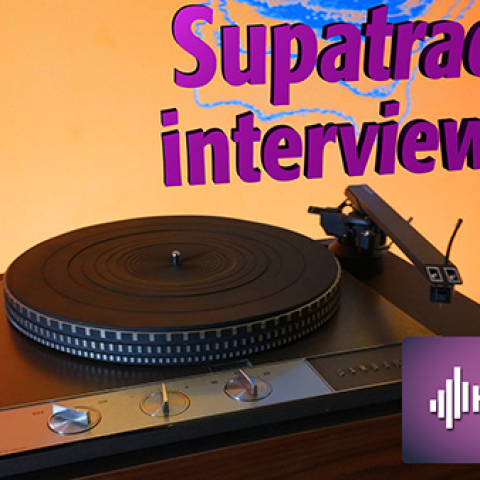
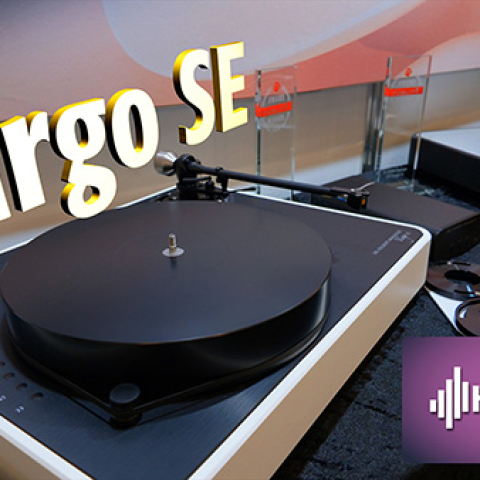
There is something vaguely disturbing about the idea of an $8000 turntable and arm combination. That's more money than a lot of audiophiles have invested in records through the years. Total overkill! Or so it might seem. But the entire history of analog disc reproduction, from the first LP to the present, has been one of seemingly open-ended discoveries—of subtleties nobody ever imagined were frozen in those tiny grooves, of levels of quality no one ever guessed the medium was capable of. Yes, newer LPs are a lot better than the first ones, but that is only to be expected in any technologically advancing field. What is amazing about the LP is that, 40 years after its introduction, we are still finding out that all of them, from the first to the latest, are better than anyone could have imagined. An improved phono unit doesn't just make the latest release from Wilson Audio or Reference Recordings sound better, it does the same for every LP you own! Contrary to a widely held and fondly nurtured belief, there is no such thing as a record player that is "too good for your records." Record quality is not a threshold, requiring a certain level of player quality to reveal it in all its splendor. It is, rather, a sliding scale across which all LPs are affected equally by any given quality of record player. Just as the sound of the best records will be degraded by a mediocre phono, the sound of the worst is improved by a better phono. I'll say one thing for the Versa Dynamics 2.0: It sure looks expensive. Both turntable and tonearm have the appearance of precision industrial machine tools, of the kind the Pentagon delights in lavishing our tax dollars on. The arm assembly weighs about 6 lbs, which evokes memories of the first Dynavector behemoth. In the Dynavector, though, a lot of that weight represented lateral mass for the cartridge, giving it the lowest LF resonance of any consumer arm ever made since the advent of LP. (Off-center discs used to generate humongous, woofer-pumping pulses at about half a cycle per second!) The Versa Dynamics arm's mass is much lower than that Dynavector's, but is still quite high. The manufacturer specs it at 57 grams laterally and 10 to 18 vertically, but it never caused any woofer pumping during my tests, even with discs that gave the Dynavector hysterics.
The Versa Dynamics 2.0 system is the brainchild of John Bicht, an American design engineer whose name last appeared in a hi-fi context in the late 1970s as the designer of the original Mission 774 tonearm. John took a five-year sabbatical from hi-fi, working as a consulting engineer in the US designing electronic manufacturing equipment—his 1981 Die Attach machine, used in the manufacture of IC chips, was faster than anything else previously made—but, as so many before him have found, the lure of the High End proved impossible to resist. He and his partner, Bob Schmidt, sunk their savings into a new company, Versa Dynamics—the Versa Dynamics 2.0 is their first product. It consists of three units: the turntable/arm/base, a controller, and a pump module. The turntable's main platform consists of two aluminum/balsa sandwiches, each a five-layer affair alternating three 0.02" sheets of aluminum with two ¾" sheets of balsa; the upper sandwich is structural, the lower for damping. Additional areas of damped mass are attached to strategic spots underneath. This is suspended above the base by four spring-loaded feet, whose height is adjustable for leveling purposes. (Spring tension is unaffected by the adjustment.) System resonance is around 2.5Hz, which is generally considered to offer the best compromise between stability and vibration isolation. The platter, also a composite but this time of metal and plastic sheets, rides on a combined thrust and radial bearing using high air pressure, with a vacuum applied to the top surface of the cylinder and pressure applied to its bottom surface. This way, the burden of suspending the platter's not-insubstantial weight is shared by both of the pumps. The drive motor, rigidly affixed to the base, is a 200-position stepper type, driven at 1460Hz by a frequency-stabilized oscillator and a small power amplifier in the controller box. Isolated coupling to the platter is via a light polyurethane belt.
The tonearm is a straight-line-tracking air-bearing type, similar in principle to the Maplenoll and Eminent Technology designs reviewed in previous issues (Vol.9 No.2, Vol.8 No.7). Unlike those arms, though, the Versa's carriage-travel rod is not fixed in position at one side of the platter, but swings over it in cantilever fashion from a heavy base pivot at one end. To play a disc, you swing the arm over the disc until it comes to a stop, then use a cueing lever to lower the cartridge. To remove the disc, you have to swing it back to the side.
Versa Dynamics 2.0 LP player

Company Info
ARTICLE CONTENTS
- Log in or register to post comments