You can read all about an automobile, check its gear ratios, and ponder the engine's horsepower all you want—but until you put yourself in the driver's seat and take that baby out for a spin, you have no idea whether or not it's going to be fun to drive.
The search for signal transparency has led to much experiment and debate concerning losses in fidelity that can be traced to the preamplifier or—as it's more often and awkwardly called these days when the phono stage is omitted—the "line controller."
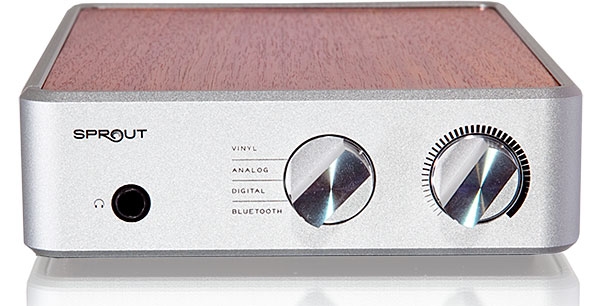
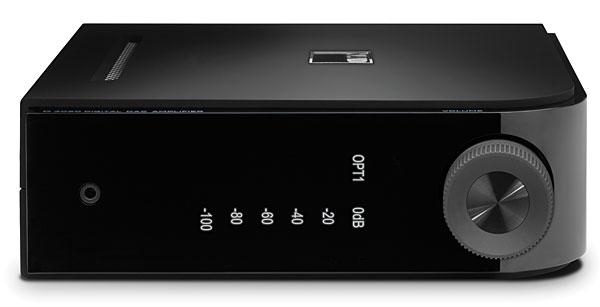
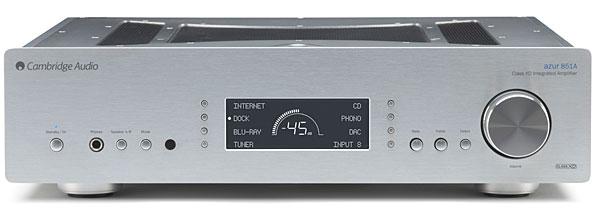
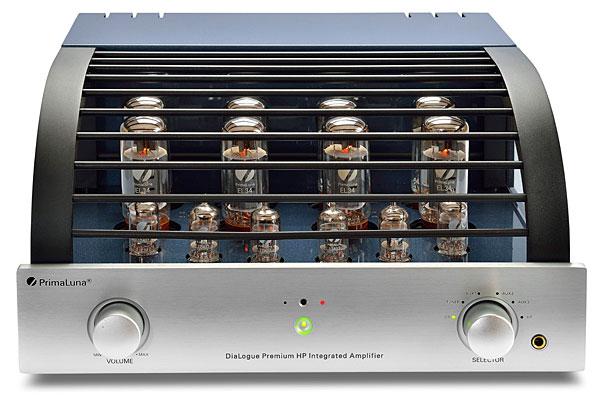
With the price of high-end audio increasingly reaching for the stratosphere, audiophiles appear to becoming much more value-conscious. This trend is reflected in the recent popularity of CD players over separate transports and processors, and particularly in the sudden resurgence in integrated amplifiers. An integrated amplifier makes a lot of sense: the buyer saves the cost of two chassis, two power cords, two owner's manuals, and an extra pair of interconnects. You also get a simpler system.
Bryston is one of North America's most established hi-fi makers. Based not far from Toronto in Peterborough, Ontario, Bryston has been in business since 1962.
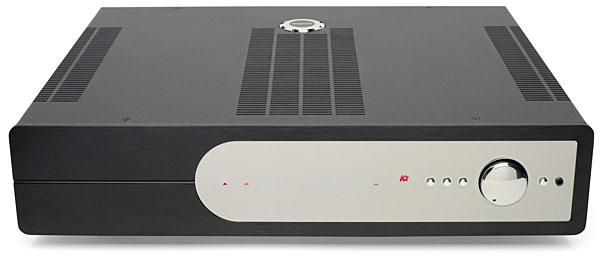
Is Krell risking its reputation? With the KAV-300i, an integrated amplifier that was originally envisaged as an export model, but for which home demand is clearly increasing, the Connecticut-based amplifier manufacturer is dabbling in low-cost territory. Previous Krell amplifiers have been known for their prodigious drive capability. Time and time again, it is found that the true measure of the bass performance of a big speaker isn't realized until a Krell power amplifier is brought into service. But how could an amplifier with a meaty 150Wpc specification and full remote control be built to sell for just $2350.
What, I hear you asking, is an integrated drive? The MID is part of McCormack's much lauded "Micro" series (see my review of their Micro Line Drive in Vol.18 No.6), which are designed to offer the same dedication to quality as McCormack's full-size components, but at a lower price (and in a smaller package). The MID was initially the Micro Headphone Drive, sporting two ½" stereo phone-jacks on the front panel, a two-position input switch, and a volume control. The rear boasted two inputs and an output (controlled by the volume pot). It was designed to be a high-quality headphone amp and a minimalist preamp. In this configuration, I ran into it at the 1995 WCES where—almost as a gag—Steve McCormack had made up a few ½" stereo phone-plug to 5-way binding post connectors. He could, he explained, run small speakers from the headphone outputs. There was a serious purpose behind the joke, of course. Showing that the MHD could drive speakers spoke volumes for its ability to drive headphones.
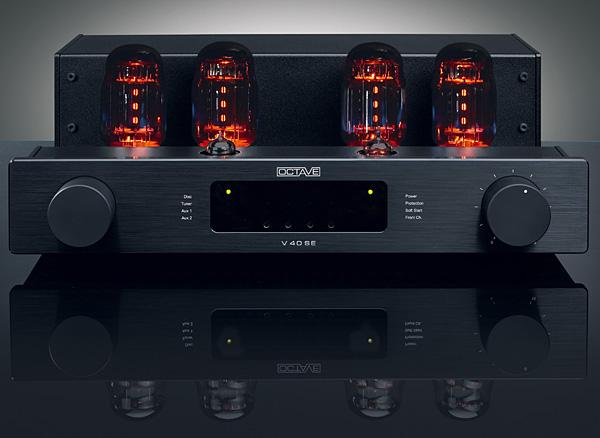
As strongly as I believe that the listening experience is the most reliable method of judging the quality of audio equipment, I've been biased against single-ended tube amplifiers because of their quirky measured performances. Without having heard single-ended under good conditions—much less living with an SE amplifier—I had concluded that many listeners must like them because they're euphonically colored by large amounts of low-order distortion and impedance interactions with the loudspeakers. SE amplifiers seem to be a departure from the goal of making the electronics transparent. Moreover, the range of loudspeakers suitable for SE amplifiers is so restrictive that I wondered why anyone would bother with these underpowered distortion-generators. I had fallen into a trap that I've repeatedly railed against: drawing conclusions without firsthand listening experience (footnote 1).
Psst! Got a minute? I'd like to bend your ears a bit and tell you about a component that'll lift you from the doldrums of audio angst and transport you to the relaxing calm induced through the enjoyment of music. That's what it's done for me, and I'm so excited about it I can't wait to tell you.
Since its founding just over ten years ago, Mission Electronics has grown to become one of the largest "real" hi-fi companies in the UK. Although their product line originally consisted of three relatively conventional loudspeakers, it rapidly grew to encompass high-end pre- and power amplifiers, cartridges, tonearms, and turntables, and, in the mid 1980s, a system concept based on CD replay and relatively inexpensive electronics: the Cyrus amplifiers and tuner.
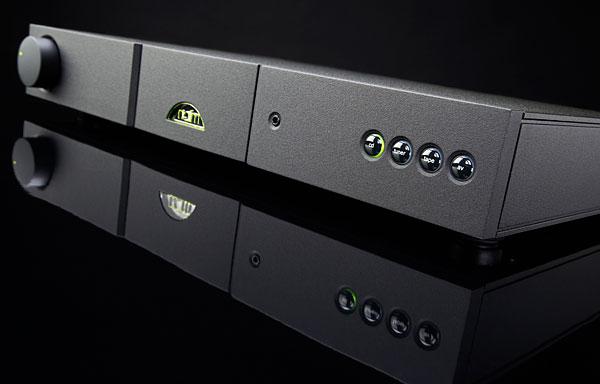
The $395 NAIT, rated at 20Wpc, is a good-sounding little amp. It's very open and spacious-sounding, but, like the $250 Rotel RA-820BX, sometimes sounds a little hard in the upper registers.