The guitarist John Fahey was born on February 28, 1939, and died just days before what would have been his 62nd birthday, on February 22, 2001. Like so many other beautiful things that continue to have enormous impact on my life, Fahey’s music was introduced to me by
Michelle. The album was 1997’s
City of Refuge. We were in our second year at Fairleigh Dickinson University, in the second year of our relationship. Michelle had claimed the album from our campus radio station and brought it back to our dorm room and played it for me.
City of Refuge was John Fahey’s “comeback” album, his first proper album of non-Christmas material since 1990’s
Old Girlfriends and Other Horrible Memories. For me, however, it was not a comeback at all; it was a debut, it was an epiphany. I had never heard of Fahey; I had no idea where he had been or where he was coming from, but this strange music tied together everything I loved. It was the bridge connecting the Delta blues to John Cage to Sonic Youth. It was everything. What else could there be?
Writing for another publication,
Stereophile’s Fred Mills discussed John Fahey’s
City of Refuge:
Several songs do spotlight Fahey’s undiminished finger-picking talents, but even his breathtaking melodies and thinking-out-loud rhythmic twists bear a measure of sorrow and loss that suggest this admittedly compelling record is best cherished in private.
Michelle and I cherished it together, and we cherished it apart. When the school year was coming to an end, and Michelle was set to return to her parents’ home in California for the long summer, I asked her if I could hold onto the album. She refused. She couldn’t part with it. I don’t blame her, now. Weeks later, on a whim, I purchased my own copy of Fahey’s
America. Having only
City of Refuge as a reference,
America was not what I expected. But there was something about it that I couldn’t escape. It tugged at me and made me feel strange, sad things. I played the album incessantly, committed it to memory, devised my own alternate tunings and chord progressions, and tried my best to imitate John Fahey’s playing style.
In the fall, when we returned to campus, I auditioned a few of my most recent songs for Michelle. “Maybe I should have let you keep the Fahey album,” she said.
Triumph, I felt.
For 12 years, I carried
America with me wherever I went: Across the ocean to England, Scotland, and Spain, back to New Jersey, to different towns and apartments and flooded basements. For 12 years, I listened to the songs and strained my eyes while poring over the compact disc’s tiny liner notes and inscrutable images.
As originally imagined,
America would contain 13 tracks, necessitating a double LP, but because Fahey feared a double album wouldn’t sell, nine of the 13 tracks were omitted. (It’s crazy to think that even the album’s title track—and possibly the only recording of Fahey playing a 12-string—was sacrificed!) For 27 years,
America remained incomplete. The 1998 compact disc reissue marked the first time that the entire album could be heard and enjoyed. I got lucky.
Late last year, I got lucky again:
4 Men With Beards released John Fahey’s
America, in its entirety, for the first time ever
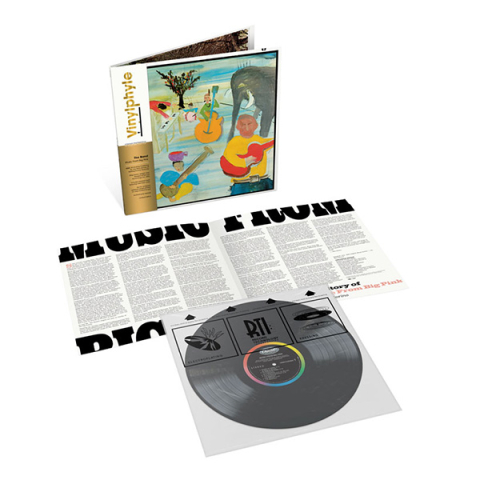
on vinyl. Vinyl enthusiasts can now hear Fahey’s slow-churning “Jesus Is A Dying Bedmaker”; a potent vision of “Amazing Grace”; the rollicking “Song #3”; a brilliant rendition of Skip James’ “Special Rider Blues”; an enchanting setting of the third movement of Dvorak’s Eighth Symphony; and, of course, the delicate and determined “America.” More: The package is exquisite, recreating Fahey’s original album art at its intended scale, illuminating detail and depth that had been lost to owners of the well-meaning compact disc. Vinyl and jacket are thick, heavy, and lust-worthy. The release is limited to 3000 hand-numbered copies.
My favorite tracks remain “Mark 1:15” and “Voice of the Turtle.” There is a holiness to Fahey’s music, an undeniable sacredness, as if the steely notes and chords came shimmering down from God in heaven. The way Fahey moves between joy and sorrow—seamlessly, simply, sincerely—is what thrills, inspires, and hurts the most. There are times when I can barely stand it. I remember
the skies over my little cabin in Big Sur: forever shifting, the clouds and sun forever at play, coloring the restless ocean and the rugged land in so many shades of blue and green and gray and gold—to look one moment was to witness a miracle, to look the next was to catch something entirely different but no less glorious. That’s what Fahey’s music is like. It is the
deepest music I’ve ever heard.
I have Michelle to thank first for introducing me to it, and then I can thank 4 Men With Beards for allowing me to hear it on my favorite music format, and finally I thank my lucky stars I’m able to share it with you.