The last few years at our annual Home Entertainment Show, many readers have come up to me and asked: "How do you select which speakers to review?" In my case, most candidates are either new products that have impressed me when demonstrated at our HE Shows, or new products from manufacturers whose designs have impressed me in the past. Occasionally, editor John Atkinson gets wind of a speaker and asks if I'd like to review it. But once in a while, a manufacturer reads a rave review of a competing product that makes his or her blood boil.
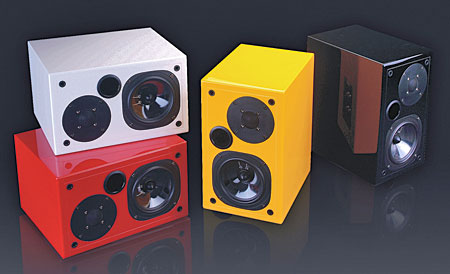 That's what happened with Usher Audio Technology's S-520 bookshelf speaker. Earlier this year I received an e-mail from Stan Tracht, of Thee High End, Usher's US distributor: "I read your review of the Epos M5 in [the April 2005 issue] Stereophile. I concur, the Epos is a good little speaker. However, Usher makes a little monitor, the S-520, that is beyond belief in terms of performance, construction, quality, and price. The Usher S-520s are selling as fast as we can import them. Retail price is $375–$400, depending upon finish." As I had enjoyed reviewing the S-520's bigger brother, the Compass X-719, for the May 2004 Stereophile, I thought I'd give this little new guy a whirl.
A marriage of Chinese and American design
That's what happened with Usher Audio Technology's S-520 bookshelf speaker. Earlier this year I received an e-mail from Stan Tracht, of Thee High End, Usher's US distributor: "I read your review of the Epos M5 in [the April 2005 issue] Stereophile. I concur, the Epos is a good little speaker. However, Usher makes a little monitor, the S-520, that is beyond belief in terms of performance, construction, quality, and price. The Usher S-520s are selling as fast as we can import them. Retail price is $375–$400, depending upon finish." As I had enjoyed reviewing the S-520's bigger brother, the Compass X-719, for the May 2004 Stereophile, I thought I'd give this little new guy a whirl.
A marriage of Chinese and American design
The S-520 is the entry-level two-channel bookshelf speaker from Usher Audio Technology, a Taiwanese company that manufactures more than two dozen two-channel speakers (not counting their home-theater models), all designed by Dr. Joseph D'Appolito in the US and, in Taiwan, Usher's Tsai Lien-Shui. The two-way, front-ported S-520 has a 1" silk-dome tweeter and a 5" polypropylene mid-bass cone. It also employs a proprietary technology that Usher calls Symme-Motion, which consists of several magnetic and moving systems designed to ensure that the diaphragm's forward and backward motions are symmetrical. The suspension system of driver surround and spider, as well as such construction details as how the glue is applied, are all part of the Symme-Motion approach. The crossover uses low-loss, audiophile-grade polypropylene capacitors and air-core inductors, as well as internal wiring of high-purity OFC. The crossover itself is a low-loss, low-phase-shift circuit said to be highly efficient.
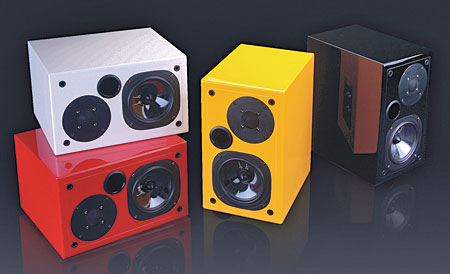
The smallish S-520 is available in a standard birch finish; matte black or glossy black or white finishes cost $25/pair extra. I was a bit partial to the glossy white samples I received, though they made me hungry. They reminded me of Eskimo Pies with the chocolate coatings removed—a compliment.
Set-up
As usual, I auditioned the Ushers on my Celestion Si stands, loaded with sand and lead shot. I always listen to speakers with their grilles (if any) both on and off, and ask the manufacturer or distributor what they recommend. Stan Tracht was adamant: The S-520s must be listened to with their grilles off, otherwise there would be measurable and audible diffraction problems. Usually, removing a speaker's grille results in slightly more detail; sometimes there's also a slight shift in tonal balance, with more emphasis on the high frequencies. Still, I wasn't prepared for what happened when I removed the S-520s' grilles. The highs became sweeter, more laid-back and natural, and the aural images were much more coherent. I don't understand how removing the grilles could make such a difference; perhaps JA's measurements will reveal something. In any event, I agreed with Tracht; the S-520s' grilles remained off for the balance of my listening sessions.
Listening
I was immediately taken by the Usher S-520's midrange and high-frequency resolution. The sound was detailed and natural throughout the midrange, with a degree of low-level dynamic articulation unusually realistic for such a low-priced speaker. The highs were also detailed and uncolored, though I noticed a slight highlighting of the lower highs (2—4kHz)with certain recordings. This could by no means be called "brightness" or "hardness," but when listening to recordings with significant energy in this region, I found it easy to follow instrumental details in this range. Although the highs were extended, I also noticed that the Usher didn't retrieve as much top-octave "air" or room ambience as I've heard other speakers do. At no time, however, did the S-520 sound dark or "hooded." Every recording of the female voice sounded extraordinary through the Usher. Cassandra Wilson's New Moon Daughter (2 LPs, Blue Note 8 37183 1) was supple and seductive. On "Hey, Sweet Man," from Madeline Peyroux's Dreamland (CD, Atlantic 82946-2), her voice was rich, silky, and holographic. Mark Ribot's dobro exhibited perfectly natural transients and excellent low-level dynamic articulation, though the sliding of his fingers on the strings (round-wound, I presume) was a touch highlighted. The S-520 was a particularly natural reproducer of percussion. Steve Nelson's vibes solo on "The Mooche," from the Jerome Harris Quintet's contribution to John Atkinson's Editor's Choice (CD, Stereophile STPH016-2), was natural, detailed and uncolored. I was mesmerized by Jack DeJohnette's delicate hi-hat and ride-cymbal work on "Melting," from Bill Connors' Of Mist and Melting (LP, ECM 1-1120)—the only recorded pairing, I think, of my favorite guitarist and favorite drummer. Moreover, on this track, Jan Garbarek's alto sax was "floating, rich, and detailed," according to my listening notes. For some free-jazz improvisation I turned to the Tertiary Trio's Title Goes Here (CD, Rent Controlled RCRCD 009) and found myself fixated on the delicate, rolling groove drummer Paul Corio sets up on "Brushes with Death."
The little S-520's bass response was quite interesting. The midbass was very neutral, but seemed a tad warm with certain recordings. Ray Brown's double-bass solo on "I'm an Old Cowhand," from Sonny Rollins' Way Out West (CD, JVC VICJ 60083), sounded as natural as any bass solo on any jazz recording I've heard. And I'm curious to hear what JA concludes about the Usher's low-bass extension. With most recordings, the S-520 didn't call attention to its low-bass capabilities (or lack of them). However, whenever an instrument with considerable low-bass energy appeared, the Usher surprised me with its realism, especially with classical music. My notes are filled with such comments as "Wow, nice timpani!" and "Bass drum very realistic but not quite room-shaking."
The Usher's impressive bass was not limited to classical recordings, however. I cranked up the volume on "Dazed and Confused," from Classic Records' vinyl edition of Led Zeppelin's eponymous first album (Atlantic/Classic SD 19126). John Paul Jones' bass blasts were "perfect," according to my notes. Continuing to test the S-520's ability to realistically render rock music, I cranked the volume higher for Ultra High Frequency's Sun Never Sets in Dramaville (CD, Mugshot MUG 0001) and noted that the Usher could party loud—no matter how loud the guitars thrashed, the vocals were detailed and natural.
My most memorable experience with the Usher S-520 was with Kraftwerk's new live album, Minimum Maximum (CD, EMI ASW 60611 26). I inserted the CD, turned up the Creek 5350SE integrated amp to "11" (I'd guess about 98dB), and stood unable to move, transfixed by the opening strains of "Mensch Machine," which has very deep electronic bass and intricate dynamics. Chills ran through my body as I was transported back to the Kraftwerk concert I'd seen earlier in the summer, which the band had opened with this very tune (footnote 1).
The only aspect of the Usher that approached a coloration was that, whenever I loudly played any passage with highly modulated upper-midrange and lower-high-frequency energy, the sound had a slightly forward tenseness. This occurred during the fortissimo tuttis of Stravinsky's The Firebird, as performed by Antal Dorati and the London Symphony (CD, Mercury Living Presence/Classic 90226), as well as during the bombastic bridge of Aimee Mann's "How Am I Different?," from Bachelor No. 2 or The Last Remains of the Dodo (CD, Super Ego SE 002). However, at no time was there any sense of strain, coagulation, or compression during these passages—rather, it was just a temporary shift in tonal balance.
Comparisons
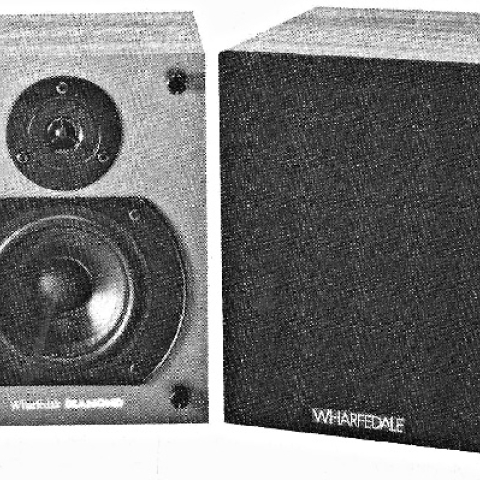
I compared the Usher S-520 ($375/pair) with the Infinity Primus 150 ($198/pair), the Wharfedale Diamond 9.1 ($350/pair), and the Epos ELS 3 ($350/pair). (Although my Epos M5 review inspired this one, I felt it fairer to compare the Usher S-520 with the Epos ELS 3, which is much closer in price.) The Infinity Primus 150 was warmer and more romantic than the Usher, with equally excellent low-level dynamic articulation. However, the Infinity's bass did not go as deep, and its high-level dynamics were inferior, compressing a bit during very loud passages. The Wharfedale Diamond 9.1 was more detailed in the midrange, with more delicate and sophisticated high frequencies. Overall, the Wharfedale's dynamic performance was equal to the Usher's, but its mid and upper bass were warmer and thicker.
The Epos ELS 3 was more detailed and delicate in the midrange and highs than the Usher S-520, and far better at revealing ambience and hall sound. The Epos's midbass was clean and articulate and slightly less warm than the Usher's, though about as extended. The Epos compressed a bit on high-level dynamic passages; the Usher did not.
Payoff
I'm glad I had a chance to experience Usher Audio Technology's S-520. Over a wide range of music, the Usher S-520 satisfied me during the many weeks it visited my system, and I found its modern white cabinet attractive. The Usher S-520 is an excellent value with many strengths and negligible shortcomings, and should find a home in many an affordable system. Thanks for giving me the heads up on this one, Stan. Footnote 1: That New York City concert moved me more than any other rock concert in two decades—yes, JA, even more than Cream's reunion concert in London. When the lights dimmed, the four gentlemen of Kraftwerk emerged onstage wearing identical gray suits and launched into two hours of updated arrangements of their best work of the last 30 years, performed on four laptop computers with MIDI controllers. The music was amplified to earsplitting volumes but with no trace of distortion, against a backdrop of elaborate, perfectly synchronized video graphics and vintage film clips.
That's what happened with Usher Audio Technology's S-520 bookshelf speaker. Earlier this year I received an e-mail from Stan Tracht, of Thee High End, Usher's US distributor: "I read your review of the Epos M5 in [the April 2005 issue] Stereophile. I concur, the Epos is a good little speaker. However, Usher makes a little monitor, the S-520, that is beyond belief in terms of performance, construction, quality, and price. The Usher S-520s are selling as fast as we can import them. Retail price is $375–$400, depending upon finish." As I had enjoyed reviewing the S-520's bigger brother, the Compass X-719, for the May 2004 Stereophile, I thought I'd give this little new guy a whirl.
A marriage of Chinese and American design
The S-520 is the entry-level two-channel bookshelf speaker from Usher Audio Technology, a Taiwanese company that manufactures more than two dozen two-channel speakers (not counting their home-theater models), all designed by Dr. Joseph D'Appolito in the US and, in Taiwan, Usher's Tsai Lien-Shui. The two-way, front-ported S-520 has a 1" silk-dome tweeter and a 5" polypropylene mid-bass cone. It also employs a proprietary technology that Usher calls Symme-Motion, which consists of several magnetic and moving systems designed to ensure that the diaphragm's forward and backward motions are symmetrical. The suspension system of driver surround and spider, as well as such construction details as how the glue is applied, are all part of the Symme-Motion approach. The crossover uses low-loss, audiophile-grade polypropylene capacitors and air-core inductors, as well as internal wiring of high-purity OFC. The crossover itself is a low-loss, low-phase-shift circuit said to be highly efficient.
As usual, I auditioned the Ushers on my Celestion Si stands, loaded with sand and lead shot. I always listen to speakers with their grilles (if any) both on and off, and ask the manufacturer or distributor what they recommend. Stan Tracht was adamant: The S-520s must be listened to with their grilles off, otherwise there would be measurable and audible diffraction problems. Usually, removing a speaker's grille results in slightly more detail; sometimes there's also a slight shift in tonal balance, with more emphasis on the high frequencies. Still, I wasn't prepared for what happened when I removed the S-520s' grilles. The highs became sweeter, more laid-back and natural, and the aural images were much more coherent. I don't understand how removing the grilles could make such a difference; perhaps JA's measurements will reveal something. In any event, I agreed with Tracht; the S-520s' grilles remained off for the balance of my listening sessions.
I was immediately taken by the Usher S-520's midrange and high-frequency resolution. The sound was detailed and natural throughout the midrange, with a degree of low-level dynamic articulation unusually realistic for such a low-priced speaker. The highs were also detailed and uncolored, though I noticed a slight highlighting of the lower highs (2—4kHz)with certain recordings. This could by no means be called "brightness" or "hardness," but when listening to recordings with significant energy in this region, I found it easy to follow instrumental details in this range. Although the highs were extended, I also noticed that the Usher didn't retrieve as much top-octave "air" or room ambience as I've heard other speakers do. At no time, however, did the S-520 sound dark or "hooded." Every recording of the female voice sounded extraordinary through the Usher. Cassandra Wilson's New Moon Daughter (2 LPs, Blue Note 8 37183 1) was supple and seductive. On "Hey, Sweet Man," from Madeline Peyroux's Dreamland (CD, Atlantic 82946-2), her voice was rich, silky, and holographic. Mark Ribot's dobro exhibited perfectly natural transients and excellent low-level dynamic articulation, though the sliding of his fingers on the strings (round-wound, I presume) was a touch highlighted. The S-520 was a particularly natural reproducer of percussion. Steve Nelson's vibes solo on "The Mooche," from the Jerome Harris Quintet's contribution to John Atkinson's Editor's Choice (CD, Stereophile STPH016-2), was natural, detailed and uncolored. I was mesmerized by Jack DeJohnette's delicate hi-hat and ride-cymbal work on "Melting," from Bill Connors' Of Mist and Melting (LP, ECM 1-1120)—the only recorded pairing, I think, of my favorite guitarist and favorite drummer. Moreover, on this track, Jan Garbarek's alto sax was "floating, rich, and detailed," according to my listening notes. For some free-jazz improvisation I turned to the Tertiary Trio's Title Goes Here (CD, Rent Controlled RCRCD 009) and found myself fixated on the delicate, rolling groove drummer Paul Corio sets up on "Brushes with Death."
I compared the Usher S-520 ($375/pair) with the Infinity Primus 150 ($198/pair), the Wharfedale Diamond 9.1 ($350/pair), and the Epos ELS 3 ($350/pair). (Although my Epos M5 review inspired this one, I felt it fairer to compare the Usher S-520 with the Epos ELS 3, which is much closer in price.) The Infinity Primus 150 was warmer and more romantic than the Usher, with equally excellent low-level dynamic articulation. However, the Infinity's bass did not go as deep, and its high-level dynamics were inferior, compressing a bit during very loud passages. The Wharfedale Diamond 9.1 was more detailed in the midrange, with more delicate and sophisticated high frequencies. Overall, the Wharfedale's dynamic performance was equal to the Usher's, but its mid and upper bass were warmer and thicker.
I'm glad I had a chance to experience Usher Audio Technology's S-520. Over a wide range of music, the Usher S-520 satisfied me during the many weeks it visited my system, and I found its modern white cabinet attractive. The Usher S-520 is an excellent value with many strengths and negligible shortcomings, and should find a home in many an affordable system. Thanks for giving me the heads up on this one, Stan. Footnote 1: That New York City concert moved me more than any other rock concert in two decades—yes, JA, even more than Cream's reunion concert in London. When the lights dimmed, the four gentlemen of Kraftwerk emerged onstage wearing identical gray suits and launched into two hours of updated arrangements of their best work of the last 30 years, performed on four laptop computers with MIDI controllers. The music was amplified to earsplitting volumes but with no trace of distortion, against a backdrop of elaborate, perfectly synchronized video graphics and vintage film clips.