Sam Tellig:
I have a way of grating on people's nerves. Ask Marina, my wife. She calls it my "mean streak." I can't help it. I take perverse pleasure in slowly tormenting someone whom I sense is unsure and insecure. Especially about hi-fi. This took place more than 20 years ago. An audiophile friend had purchased a pair of KEF 104 speakers for a song. He did so at a bank auction following the demise of an area hi-fi shop.
 "You bought the speakers. Now you have to drive them," I laughed. "What do you mean? I have separate components. My power amplifier is bigger than your little Advent 300 receiver. My amp is rated at more than 100 watts per channel. It got a rave review in Stereo Review. I should be just fine." But he wasn't. "What's wrong?" my friend asked, after I'd auditioned his system." "Oh, nothing. But I wonder if your components are up to getting the most from your splendid KEF speakers. The bass sounds a little...tentative." (I knew that the adjective would slay him.) "The dynamics seem compressed. Might be a good idea to try another amp—not my 15W Advent 300 receiver, obviously." "Your receiver is risible," he said, responding valiantly in the war of adjectives. Slowly but surely, I got to him—I practically had him roasting him on a spit. His "highly reviewed" power amplifier was not delivering the goods—which is to say, the current—and my friend knew it. I knew it. The Germans call this schadenfreude—pleasure derived from other people's pain.
"Your KEFs may be a difficult load," I suggested. "Perhaps the amplifier can't cope with the impedance drops. More likely, the 12" woofer needs actual current." Another stinging adjective. "Actually, you are a difficult load," my friend shot back. I laughed my evil laugh. Meanwhile, a mutual friend had purchased a PS Audio Elite integrated amplifier. My KEF-owning friend initially scoffed, but he borrowed it and gave it a try. "I can't get over it," he marveled. "It's day and night. I have bass. The speakers have balls."
He purchased PS Audio separates and was quite pleased. "Do you know what 'PS Audio' stands for?" he giggled, some weeks later, after phoning the factory about some small matter. "No, I don't." "It stands for Paul and Stan, who started the company. I just talked with Paul. Get this. They're in their 20s. They're kids—younger than we are." Baby-boomers Paul McGowan and Stan Warren launched PS Audio in 1973. Their early gear looked like kits but sounded great—powerful, dynamic, detailed. Stan left in the early 1980s to found Superphon and produce what was may have been the best "cheapskate" preamp of all time, the Superphon Revelation Basic.
Paul lives and breathes circuits and topologies. I can picture him wearing a beanie with a propeller on top. Later-generation geeks went into computers, draining talent away from hi-fi and sucking the lifeblood from our industry for 20 years now. Thankfully, in 1973, there was no personal computer industry. I wish there still weren't; I was happy with telephone and typewriter. Paul recalls when he and Stan Warren were working on a preamp. According to Paul, Stan was short on parts, so he borrowed a power-supply transformer that was designed—and specified—for a power amp. Lo and behold, this oversized transformer made the sound bigger, too. The transformer transformed the preamp. "That shouldn't make a difference!" Paul exclaimed. But it did. Both he and Stan heard it. Other designers caught on to much the same thing—including, notably, the late Julian Vereker, of Naim Audio. You could take a Naim preamp or power amp, add an optional power-supply upgrade, and literally transform the sound.
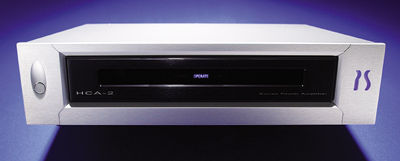
Paul McGowan stayed at the helm of PS Audio until 1990, and returned in 1998 to take charge once again. If you're new to hi-fi, you probably know PSA for their Power Plant P-300 and P-600 power conditioners, or their Ultimate Outlet—worthy products. But I wanted the real stuff—products like the ones that put PS Audio on the map in the first place. Preamps, power amps, maybe an outboard DAC. (PSA produced one of the first US-made outboard digital processors.)
"You bought the speakers. Now you have to drive them," I laughed. "What do you mean? I have separate components. My power amplifier is bigger than your little Advent 300 receiver. My amp is rated at more than 100 watts per channel. It got a rave review in Stereo Review. I should be just fine." But he wasn't. "What's wrong?" my friend asked, after I'd auditioned his system." "Oh, nothing. But I wonder if your components are up to getting the most from your splendid KEF speakers. The bass sounds a little...tentative." (I knew that the adjective would slay him.) "The dynamics seem compressed. Might be a good idea to try another amp—not my 15W Advent 300 receiver, obviously." "Your receiver is risible," he said, responding valiantly in the war of adjectives. Slowly but surely, I got to him—I practically had him roasting him on a spit. His "highly reviewed" power amplifier was not delivering the goods—which is to say, the current—and my friend knew it. I knew it. The Germans call this schadenfreude—pleasure derived from other people's pain.
"Your KEFs may be a difficult load," I suggested. "Perhaps the amplifier can't cope with the impedance drops. More likely, the 12" woofer needs actual current." Another stinging adjective. "Actually, you are a difficult load," my friend shot back. I laughed my evil laugh. Meanwhile, a mutual friend had purchased a PS Audio Elite integrated amplifier. My KEF-owning friend initially scoffed, but he borrowed it and gave it a try. "I can't get over it," he marveled. "It's day and night. I have bass. The speakers have balls."
He purchased PS Audio separates and was quite pleased. "Do you know what 'PS Audio' stands for?" he giggled, some weeks later, after phoning the factory about some small matter. "No, I don't." "It stands for Paul and Stan, who started the company. I just talked with Paul. Get this. They're in their 20s. They're kids—younger than we are." Baby-boomers Paul McGowan and Stan Warren launched PS Audio in 1973. Their early gear looked like kits but sounded great—powerful, dynamic, detailed. Stan left in the early 1980s to found Superphon and produce what was may have been the best "cheapskate" preamp of all time, the Superphon Revelation Basic.
Paul lives and breathes circuits and topologies. I can picture him wearing a beanie with a propeller on top. Later-generation geeks went into computers, draining talent away from hi-fi and sucking the lifeblood from our industry for 20 years now. Thankfully, in 1973, there was no personal computer industry. I wish there still weren't; I was happy with telephone and typewriter. Paul recalls when he and Stan Warren were working on a preamp. According to Paul, Stan was short on parts, so he borrowed a power-supply transformer that was designed—and specified—for a power amp. Lo and behold, this oversized transformer made the sound bigger, too. The transformer transformed the preamp. "That shouldn't make a difference!" Paul exclaimed. But it did. Both he and Stan heard it. Other designers caught on to much the same thing—including, notably, the late Julian Vereker, of Naim Audio. You could take a Naim preamp or power amp, add an optional power-supply upgrade, and literally transform the sound.
Paul McGowan stayed at the helm of PS Audio until 1990, and returned in 1998 to take charge once again. If you're new to hi-fi, you probably know PSA for their Power Plant P-300 and P-600 power conditioners, or their Ultimate Outlet—worthy products. But I wanted the real stuff—products like the ones that put PS Audio on the map in the first place. Preamps, power amps, maybe an outboard DAC. (PSA produced one of the first US-made outboard digital processors.)
I have a way of grating on people's nerves. Ask Marina, my wife. She calls it my "mean streak." I can't help it. I take perverse pleasure in slowly tormenting someone whom I sense is unsure and insecure. Especially about hi-fi. This took place more than 20 years ago. An audiophile friend had purchased a pair of KEF 104 speakers for a song. He did so at a bank auction following the demise of an area hi-fi shop.
"You bought the speakers. Now you have to drive them," I laughed. "What do you mean? I have separate components. My power amplifier is bigger than your little Advent 300 receiver. My amp is rated at more than 100 watts per channel. It got a rave review in Stereo Review. I should be just fine." But he wasn't. "What's wrong?" my friend asked, after I'd auditioned his system." "Oh, nothing. But I wonder if your components are up to getting the most from your splendid KEF speakers. The bass sounds a little...tentative." (I knew that the adjective would slay him.) "The dynamics seem compressed. Might be a good idea to try another amp—not my 15W Advent 300 receiver, obviously." "Your receiver is risible," he said, responding valiantly in the war of adjectives. Slowly but surely, I got to him—I practically had him roasting him on a spit. His "highly reviewed" power amplifier was not delivering the goods—which is to say, the current—and my friend knew it. I knew it. The Germans call this schadenfreude—pleasure derived from other people's pain.