|
Recent Additions
Budget Components Audacious Audio
Loudspeakers
Amplification
Digital Sources
Analog Sources
Accessories Listening / Art Dudley The Fifth Element / John Marks Music in the Round / Kal Rubinson Fine Tunes / Jonathan Scull Special Features Reference Interviews Think Pieces Historical Recording of the Month Records 2 Die 4 Music/Recordings Stephen Mejias Robert Baird Fred Kaplan Wes Phillips Audio News Past eNewsletters FSI 2008 CES 2008 RMAF 2007 CEDIA 2007 HE 2007 FSI 2007 CES 2007 China 2006 RMAF 2006 HFN 2006 CEDIA 2006 HE 2006 FSI 2006 CES 2006 Forums Galleries Vote Previous Votes Dealer Locator AV Links Audiophile Societies Contact Us Customer Service New Subscription Digital Subscription Renew Give a Gift Sub Services Recordings Backissues More . . . Phono Preamp Hi-Fi Phono Cartridge Amplifiers Stereo Speakers |
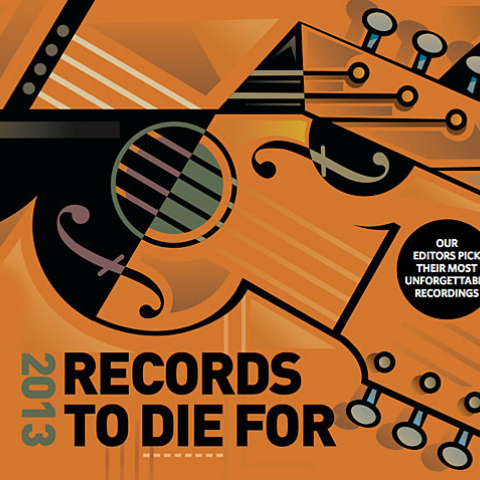
1999 Records To Die For:
Bob Gulla THE INTERPRETERS: Back in the USSA RCA 67753-2 (CD). 1998. Ron A. Shaffer, The Interpreters, prods., engs. AAD? TT: 40:35 This English trio thumbs its nose at current trends, choosing to pattern itself after the blustery melodic punk of bands like the Buzzcocks and Stiff Little Fingers, as well as angular cynics like the Jam and Gang of Four. On their American debut, the Interpreters' attack comes complete with harmony vocalizing, vaguely political lyrics, and enough raspy guitars to put a smile on the face of any early Who fan. If the current crop of British bands has you disillusioned with the state of pop rock, the Interpreters will surely lead you back to more optimistic times. FRANK SINATRA: September of My Years Reprise 46946-2 (CD). 1965/1990. Sonny Burke, prod.; Lowell Franl, eng.; Gregg Geller, reissue prod. AAD? TT: 44:37 Sinatra's epic ode to aging is not only one of the classic concept albums of all time, but a culmination in the evolution of interpreting words set to music. Arranged and conducted by the talented Gordon Jenkins, this Grammy Award-winning album captures Frank on the backside of his peak yearsa perfect time to address the idea of growing old. And while he knew his voice had begun to ebb, and his career had begun to sag (again), this is still the one Reprise release that measures up to his outstanding Capitol catalog. The real question is, will anyone ever sing like this again? DANIELPOUR: Concerto for Orchestra David Zinman, Pittsburgh Symphony Orchestra Sony Classical SK 62822 (CD). 1997. Steven Epstein, prod.; Charles Harbutt, eng. DDD. TT: 56:18 Richard Danielpour's music is an antidote to the age of atonality, a foil to the monotony of minimalism. His is a vigorous, robust voice, at times brassy and boldly rhythmic, at times reflective and seductive. This Concerto for Orchestra is the finest realization of his aesthetic that I have heard, and it is a work vibrant and compelling in spirit. Danielpour's palette has never been more brilliant, with crashing percussion, blaring brass, and whispering strings, all held together with a logic that is at once subtle and clearly intelligible. This work may well live to be deemed a masterpiece of our era. And you can add the name of Charles Harbutt to the short list of today's superstar engineers that includes John Eargle, Tony Faulkner, Jack Renner, Max Wilcox, and a very few others. The sound is simply stunning, including that rarity of all rarities, natural violin timbre. (XX-10) BRUCH: Scottish Fantasy Akiko Suwanai, violin; Sir Neville Marriner, Academy of St. Martin-in-the-Fields Philips 454 180-2 (CD). 1997. Hein Dekker, prod.; Jean-Marie Geijsen, Nico de Koning, Leendert van Zanten, engs. DDD. TT: 52:59 A sentimental favorite of mine that is too rarely recorded, Bruch's Scottish Fantasy may have broken no new ground in its time, but it makes the old ground seem worthy of hallowing. This is a rather effusive work, and Akiko Suwanai makes it easy to nearly forget her extraordinary technique and concentrate on the emotions. Her expression and control of tone are remarkable, and help make for an inspired performance. Marriner's orchestral forces may seem a bit stodgy and foursquare in the finale, but overall this is a very sympathetic collaboration. Other than the violin being just a bit too prominent, the sound quality is excellent, both rich and detailed. COLDCUT: Let Us Play Ninja Tune 30 (CD, CD-ROM). 1997. Coldcut, prods.; Andy Thomas, Luke Gordon, engs. DDD? TT: 74:52 Even though I can never resist taking a listen, I admit to getting bored with a lot of the new, trendy music these days. Seems that any kid lucky enough to have a computer that can program an appropriately contemporary drumbeat instantly gains street cred. But, as in any new musical form, some artists will always stand out. Here's my pick for the choicest cutting-edge, sampled-to-death, beat-it-with-a-CPU-till-it's-new disc from the last couple of years. As a bonus, a CD-ROM packed with very clever videos is included at no chargethe only place where you'll see bugs tapping their butts on the ground to the thump of a beatbox. "Next generational beatnological manipulation," they call it. Audiophile-friendly as well. NILS PETTER MOLVAER: Khmer Nils Petter Molvaer, trumpet, guitar, bass guitar, percussion, samples; Eivind Aarset, guitars, treatments, talk box; Morten Molster, guitar; Roger Ludvigsen, guitar, percussion, dulcimer; Rune Arnesen, drums; Ulf W. Holand, samples; Reidar Skår, sound treatment ECM 1560 (78118-21560-2, CD). 1997. Manfred Eicher, prod.; Ulf W. Holand, prod., eng. DDD. TT: 42:52 (plus bonus remix CD, 19:56) I'm a sucker for any ECM recording that attempts to combine fresh aural textures with contemporary jazz/rock/ambient/world composition and excellent musicianship. Khmer is a favorite not only for its sonic breadth (amp-fuse-blowing bass), but for cannily layering iridescent Miles-like trumpet stabs onto an earthy, pulsing electronic core. The sound suffers from digititis at times (ECM discs can often have a bleached, buffed quality), but the point here is to create an evocative landscape not normally possible with an acoustic performance. Great snatches of cranky guitar, plus a bonus CD of remixes.
Article Continues: Page 9 »
|
|
|||||||||||||||||||||||||||||||||||||||||||||||||||||||||||||||||||||||||