The original plan, back in mid-2004, was to audition an entire Ensemble system and then review the individual components over the next two years. Most audio companies produce lines of matching products, but Ensemble takes it a bit further, with a modular approach and extensive commonality of everything from chassis to circuit boards. They firmly believe that everything affects sonic performance, and their approach helps ensure a consistent sound throughout their line.
 Ensemble and its then importer, Ray Lombardi of Ray of Sound, note that the individual components stand on their own, but maintain that the only way to fully appreciate what designer Urs Wagner intended is to hear the full setup. This is so important, says Lombardi, because Ensemble doesn't consider any particular aspect of reproduced music—dynamics, tonal balance, transparency, you name it—more important than any other. Their overriding goal is balance. As a result, when you install an Ensemble component in an alien system, Ensemble claims that it can sonically disappear, whatever sound it has dominated by other components that have more focused design goals and thus more overt personalities.
Like so many ambitious plans, that of reviewing a complete Ensemble system didn't pan out (footnote 1). I ended up with only two components, the Dirondo CD player (reviewed in the March 2005 Stereophile, Vol.28 No.3) and the Fonobrio phono stage. The Dirondo was an excellent performer, but it didn't stand out in any particular way, merely disappearing into my system's sound—not surprising, given Ensemble's philosophy. It didn't always match up to its competition in terms of a particular sonic characteristic, but CDs always sounded great when it was in the system.
Balance: What does it take in a phono stage?
Ensemble and its then importer, Ray Lombardi of Ray of Sound, note that the individual components stand on their own, but maintain that the only way to fully appreciate what designer Urs Wagner intended is to hear the full setup. This is so important, says Lombardi, because Ensemble doesn't consider any particular aspect of reproduced music—dynamics, tonal balance, transparency, you name it—more important than any other. Their overriding goal is balance. As a result, when you install an Ensemble component in an alien system, Ensemble claims that it can sonically disappear, whatever sound it has dominated by other components that have more focused design goals and thus more overt personalities.
Like so many ambitious plans, that of reviewing a complete Ensemble system didn't pan out (footnote 1). I ended up with only two components, the Dirondo CD player (reviewed in the March 2005 Stereophile, Vol.28 No.3) and the Fonobrio phono stage. The Dirondo was an excellent performer, but it didn't stand out in any particular way, merely disappearing into my system's sound—not surprising, given Ensemble's philosophy. It didn't always match up to its competition in terms of a particular sonic characteristic, but CDs always sounded great when it was in the system.
Balance: What does it take in a phono stage?
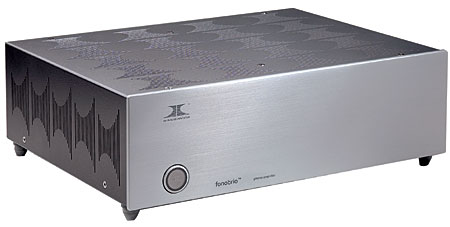
One theme I noticed in the Fonobrio's design were the measures Ensemble has taken to minimize noise. The Fonobrio evinces the same modular approach used in the Dirondo: its circuit modules are suspended on elastomer mounts to decouple them from the main chassis and are shielded from each other as well. One of the two modules holds the identical, vertically stacked left- and right-channel circuit boards, and the other houses an even larger power supply than was in the Dirondo. To further reduce noise, the Fonobrio's power-supply board is suspended within its module, and its "medical class IEC II" transformer and stainless-steel enclosure are suspended above the board. The large power-supply capacitors even have damping pads affixed to their tops. Ensemble has also taken particular care to minimize hum, ripple, and noise in the power-conditioning circuitry, which they couple to the phono stage via a low-impedance output section. The phono stage is actually "three discrete, mirror-symmetrical, ultra-linear class-A stages," says Ensemble. The first, the moving-magnet (MM) stage, accomplishes RIAA equalization via a mix of active and passive sections and supplies 44dB of voltage gain. For moving-coil (MC) cartridges, the Fonobrio simply adds one or both of the other two stages to supply an additional 24dB or 30dB of gain. According to Ensemble, "discrete ultra-low noise transistors" and "0.1% precision, military grade low-noise resistors" are used at critical locations throughout. Similarly, there are "custom-made 1% polystyrene capacitors, ultra-low impedance electrolytics, and silver leaded Ensemble PROCAP coupling capacitors" and "Ensemble Film Shield screened internal wiring." Toggle switches on the rear panel select between the MM and MC inputs (each a pair of unbalanced RCA jacks), and between 24dB and 30dB of additional gain for MC cartridges. The impedance for the MM inputs is fixed at 47k ohms, in parallel with 220pF of capacitance. For MCs, four DIP switches on the rear panel are used to select values from 51.7 ohms to 1k ohm, in parallel with 2300pF. Other, nonstandard loads within this range can be created by plugging resistors into sockets on the circuit boards. The Fonobrio's maximum output is stated to be 9.5V, but this can be reduced by 25% or 50% via internal switches. An On/Off button on the front panel and a standard, removable power cord complete the package.
Use, listening...balance?
For the first few months with the Fonobrio, I kept Ensemble's goal of balance in mind while resolutely avoiding slipping into reviewer mode. Instead of dissecting the sound, I made it a point to relax, open up, and see where the music took me. I thought more about the experience than the dynamics or transparency; instead of wondering about the accuracy of a clarinet's tonal balance, I thought about my reaction to its song. Whatever the music, I found myself swept up in its currents. I tapped my foot along with Louis Armstrong and Ella Fitzgerald, and felt a party to their warm, intimate banter. With the Chicago Symphony Orchestra and Mussorgsky, I was intimidated and awed. Bruce Springsteen's "Badlands" and "Born to Run" made me recall being 16, frustrated, and trapped. Live Rust reminded me of what it felt like to stand on my Row 2 chair at a Neil Young concert. And when I stayed up too late listening to an entire opera, I was taken back to the first time I'd seen La Traviata and had been so enchanted by the pageant and spectacle. During these listening sessions, the Fonobrio—in fact, my entire system—didn't seem to exist. When the performance called for a detailed, three-dimensional soundstage, it was there. If a work relied on the delicate interplay of solo instruments' textures and phrasing, these flowed out perfectly and wound around each other. Whether it was powerful dynamics, dense tonal colors, or tension caused by unexpected tempo changes, the Ensemble Fonobrio let the music shine through.
But you're not paid to listen to music...
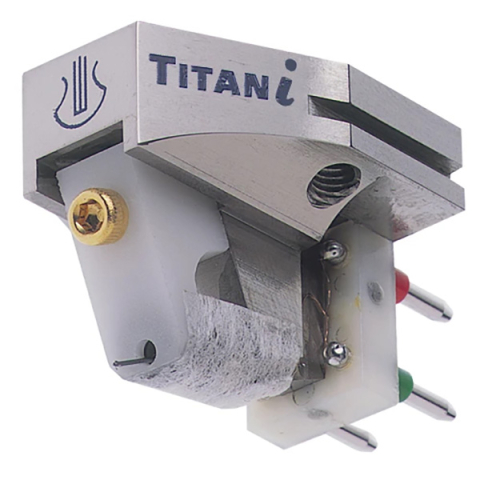
Using a Lyra Titan MC phono cartridge—I didn't test the MM input—I compared the Ensemble Fonobrio to SACDs and to four other phono stages: the Sutherland PhD, which I discussed in the May 2005 Stereophile; the Whest Audio PhonoStage.20, the phono stage of my longtime reference preamp, a VAC CPA1 Mk.III; and the phono stage of the Halcro dm10 preamp, which had so impressed Paul Bolin and John Atkinson back in the April 2004 issue.
Footnote 1: Stereophile's policy is not to review complete systems from a single manufacturer.—Ed.
Ensemble and its then importer, Ray Lombardi of Ray of Sound, note that the individual components stand on their own, but maintain that the only way to fully appreciate what designer Urs Wagner intended is to hear the full setup. This is so important, says Lombardi, because Ensemble doesn't consider any particular aspect of reproduced music—dynamics, tonal balance, transparency, you name it—more important than any other. Their overriding goal is balance. As a result, when you install an Ensemble component in an alien system, Ensemble claims that it can sonically disappear, whatever sound it has dominated by other components that have more focused design goals and thus more overt personalities.
Like so many ambitious plans, that of reviewing a complete Ensemble system didn't pan out (footnote 1). I ended up with only two components, the Dirondo CD player (reviewed in the March 2005 Stereophile, Vol.28 No.3) and the Fonobrio phono stage. The Dirondo was an excellent performer, but it didn't stand out in any particular way, merely disappearing into my system's sound—not surprising, given Ensemble's philosophy. It didn't always match up to its competition in terms of a particular sonic characteristic, but CDs always sounded great when it was in the system.
One theme I noticed in the Fonobrio's design were the measures Ensemble has taken to minimize noise. The Fonobrio evinces the same modular approach used in the Dirondo: its circuit modules are suspended on elastomer mounts to decouple them from the main chassis and are shielded from each other as well. One of the two modules holds the identical, vertically stacked left- and right-channel circuit boards, and the other houses an even larger power supply than was in the Dirondo. To further reduce noise, the Fonobrio's power-supply board is suspended within its module, and its "medical class IEC II" transformer and stainless-steel enclosure are suspended above the board. The large power-supply capacitors even have damping pads affixed to their tops. Ensemble has also taken particular care to minimize hum, ripple, and noise in the power-conditioning circuitry, which they couple to the phono stage via a low-impedance output section. The phono stage is actually "three discrete, mirror-symmetrical, ultra-linear class-A stages," says Ensemble. The first, the moving-magnet (MM) stage, accomplishes RIAA equalization via a mix of active and passive sections and supplies 44dB of voltage gain. For moving-coil (MC) cartridges, the Fonobrio simply adds one or both of the other two stages to supply an additional 24dB or 30dB of gain. According to Ensemble, "discrete ultra-low noise transistors" and "0.1% precision, military grade low-noise resistors" are used at critical locations throughout. Similarly, there are "custom-made 1% polystyrene capacitors, ultra-low impedance electrolytics, and silver leaded Ensemble PROCAP coupling capacitors" and "Ensemble Film Shield screened internal wiring." Toggle switches on the rear panel select between the MM and MC inputs (each a pair of unbalanced RCA jacks), and between 24dB and 30dB of additional gain for MC cartridges. The impedance for the MM inputs is fixed at 47k ohms, in parallel with 220pF of capacitance. For MCs, four DIP switches on the rear panel are used to select values from 51.7 ohms to 1k ohm, in parallel with 2300pF. Other, nonstandard loads within this range can be created by plugging resistors into sockets on the circuit boards. The Fonobrio's maximum output is stated to be 9.5V, but this can be reduced by 25% or 50% via internal switches. An On/Off button on the front panel and a standard, removable power cord complete the package.
For the first few months with the Fonobrio, I kept Ensemble's goal of balance in mind while resolutely avoiding slipping into reviewer mode. Instead of dissecting the sound, I made it a point to relax, open up, and see where the music took me. I thought more about the experience than the dynamics or transparency; instead of wondering about the accuracy of a clarinet's tonal balance, I thought about my reaction to its song. Whatever the music, I found myself swept up in its currents. I tapped my foot along with Louis Armstrong and Ella Fitzgerald, and felt a party to their warm, intimate banter. With the Chicago Symphony Orchestra and Mussorgsky, I was intimidated and awed. Bruce Springsteen's "Badlands" and "Born to Run" made me recall being 16, frustrated, and trapped. Live Rust reminded me of what it felt like to stand on my Row 2 chair at a Neil Young concert. And when I stayed up too late listening to an entire opera, I was taken back to the first time I'd seen La Traviata and had been so enchanted by the pageant and spectacle. During these listening sessions, the Fonobrio—in fact, my entire system—didn't seem to exist. When the performance called for a detailed, three-dimensional soundstage, it was there. If a work relied on the delicate interplay of solo instruments' textures and phrasing, these flowed out perfectly and wound around each other. Whether it was powerful dynamics, dense tonal colors, or tension caused by unexpected tempo changes, the Ensemble Fonobrio let the music shine through.
Using a Lyra Titan MC phono cartridge—I didn't test the MM input—I compared the Ensemble Fonobrio to SACDs and to four other phono stages: the Sutherland PhD, which I discussed in the May 2005 Stereophile; the Whest Audio PhonoStage.20, the phono stage of my longtime reference preamp, a VAC CPA1 Mk.III; and the phono stage of the Halcro dm10 preamp, which had so impressed Paul Bolin and John Atkinson back in the April 2004 issue.
Footnote 1: Stereophile's policy is not to review complete systems from a single manufacturer.—Ed.