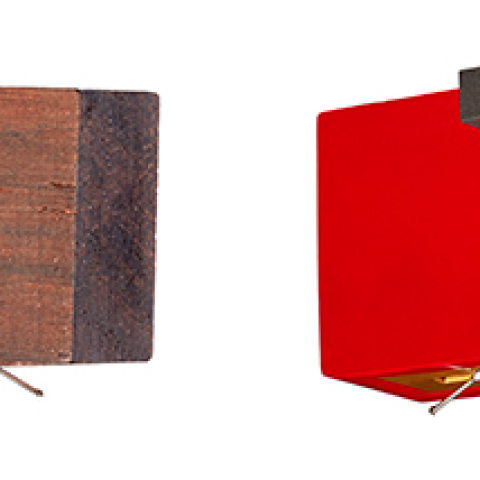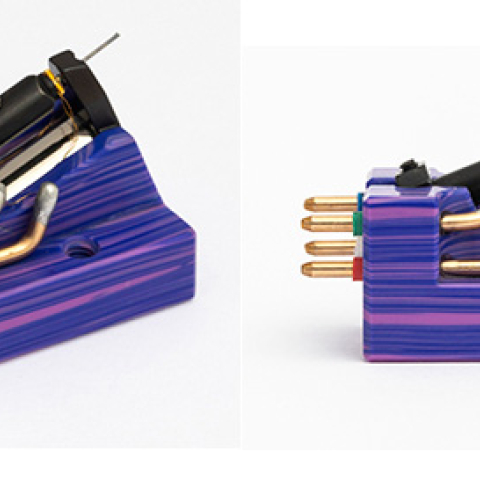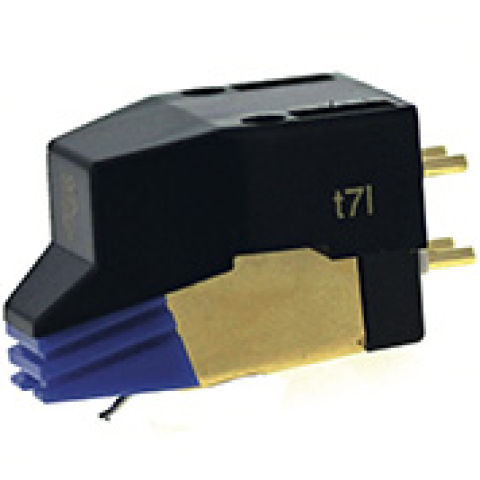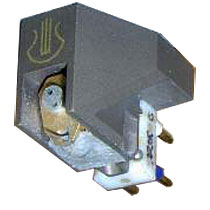
Scan-Tech builds low-output moving-coil cartridges for a number of companies, including AudioQuest, Linn, and Spectral (footnote 1). It also markets its own line, under the Lyra brand name (Lydian, Clavis, Parnassus), which is imported and distributed by Immedia out of Berkeley, CA.
I spoke with Scan-Tech's Jonathan Carr about cartridge design choices and tradeoffs, sonic expectations, and consumer demands. When I was finished I came to a singular conclusion: What's amazing is not that there are outstanding sounding $2000 cartridges, but that there are good-sounding $200 ones (and there are).
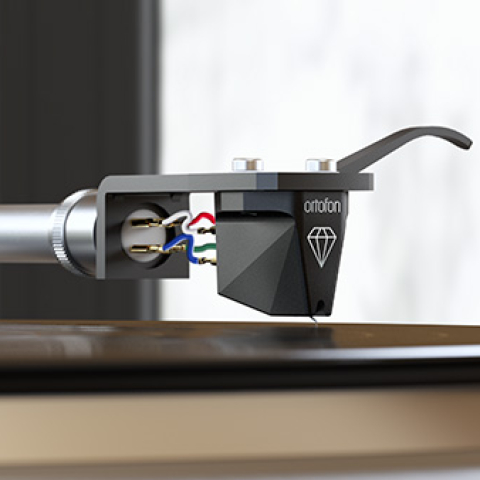
 A cartridge is essentially a precision-made, subminiature electrical generator. As in a generator, there is a coil, generally mounted on an iron armature/core, and a gap in a magnet/pole-piece assembly in which the coil/core assembly is centered. Movement of the coil in that gap, due to groove undulations, generates a minute electrical signal which is carried via microscopically thin wires to the output pins. A cartridge is essentially the inverse of a moving-coil loudspeaker.
The differences in sound you hear among cartridges are determined by the choice of diamond stylus shape; the cantilever material and its length and diameter; the core and coil materials and their configuration; the magnet material and its physical configuration; the choice of suspension material and its tuning; the damping material; and the body construction.
Most cartridges consist of three basic subassemblies: the diamond tip/cantilever/coil/core/suspension wire/stopper pipe; the magnet/pole-piece assembly; and the body. There are, however, many variations on the theme, and here we'll be whistling Scan-Tech's basic tune. But keep in mind that the Clavis Da Capo's design differs radically both from that of the basic model.
Let's look at the subassemblies one at a time. The cantilever can be solid or hollow, and can be fabricated from a variety of materials. The Lyra Da Capo uses a "Ceralloy" composite cantilever. (Ceralloy is a metal reinforced with ceramic "whiskers," which Carr tells me are stronger than carbon fiber.)
The cartridge uses a highly polished Ogura PA line-contact diamond stylus. The diamond's short, square shank is precision mounted and glued into the cantilever via a laser-cut square hole claimed to be the world's smallest. (It measures just 60 microns by 60 microns.) The result is said to be the lowest-mass tip in the world.
The stylus profile is not as radical as that of a MicroRidge tip, but it is "friendlier," Carr told me, to set-up inaccuracies and won't chew up records. In fact, I found that with both cartridges, the tip contacted virgin areas of the groove, thus reducing wear noise on many of my older records—a definite plus.
However, the tip dug dirt from record grooves I thought were clean, a minus. For some reason, the Clavis was more prone to sludge build-up than, for example, the Scan-tech sourced AudioQuest 7000Fe5, though I have no explanation as to why. The solution, of course, is to play cleaner records; neither of these cartridges, nor any other premium priced unit, should be used with dirty records. In fact dirty records shouldn't be played with any cartridge!
In the general model, the cartidge cantilever is bonded to an aluminum pipe which is fitted with a brass or aluminum end-piece with a small hole drilled into its center. A tiny piece of wire is passed through the hole and crimped on the other side in the space between it and the end of the cantilever, thus locking it in place.
The wire can be any kind of spring material: piano wire, beryllium/copper, phosphate/bronze (like a guitar string). It can be solid or stranded. Solid wire tends to be more springy, stranded more compliant. In the original Dynavector Ruby—a classic hi-tech cartridge of the late '70s/early '80s—a piece of nylon was used instead of wire. The material used in this critical part of the design affects both the compliance of the cartridge and its final sound. This is, as Carr told me "a designer's choice."
The ultra-thin wire is then threaded through a tiny hole in the all-important core/coil combination, which then mounts flush with the back of the aluminum pipe. The wire is threaded through another pipe, called the "stopper pipe" by Scan-Tech, and then it's crimped on the other end.
There is a space between the two pipes where the wire is free to flex. That, believe it or not, is the pivot point around which the whole shebang moves. Thus, when you lower the stylus into the groove and you see the cantilever "give," it is the wire which is flexing. In order for this single-point suspension system to work optimally, the stopper pipe must not allowed to move.
The core itself can either be square, as it is in the Scan-Tech designs (two millimeters square), or it can be an X, a cross, or even a V shape. The X shape can offer somewhat greater channel separation, but because there is less core material, the cartridge has a lower electrical output. Again, this is a design choice: the highly regarded Benz line uses the X core, for example.
The core can be iron, or carbon fiber, or other materials. According to Carr, the Clavis DC's core is gold-plated "five nines" (99.999%) chemically pure iron. A pair of crossed wire coils are wound around the square cores: the Clavis uses "six nines," high-purity, stress-free copper.
The cantilever/core/coil subassembly is fitted through a cone-shaped hole drilled in the pole-piece, a hole you can see when you look down the barrel of the cantilever of most cartridges. Usually, there is also a hole drilled into the rear pole piece, into which the stopper pipe fits. Yet another hole is drilled into the rear pole-piece, but at a 45° angle to the first hole. This one is tapped for a set screw, which is used to firmly anchor the stopper pipe.
Consider the miniature size of all of this, and the precision with which it all must be machined and assembled. and you begin to appreciate the difficulties involved in cartridge manufacture.
The space between the core and the rear pole-piece is where disc-shaped rubber dampers are fitted, threaded over the stopper pipe before it's inserted into the rear pole-piece. Usually there's a large damper to control bass frequencies, and smaller ones to deal with high-frequency resonances. The wire is the suspension "spring," the dampers are the "shock absorbers" of the system. On the Clavis DC, an additional rubber "donut" fits over the entire core/damper assembly—an Ortofon innovation (used originally on its MC-20) which Scan-Tech uses with permission.
Whether butyl rubber, silicone rubber, or just plain natural rubber is used as the damper is a design choice which, according to Carr, probably has the "single biggest effect on the final sound—that and the cantilever material itself."
The pinch test
A cartridge is essentially a precision-made, subminiature electrical generator. As in a generator, there is a coil, generally mounted on an iron armature/core, and a gap in a magnet/pole-piece assembly in which the coil/core assembly is centered. Movement of the coil in that gap, due to groove undulations, generates a minute electrical signal which is carried via microscopically thin wires to the output pins. A cartridge is essentially the inverse of a moving-coil loudspeaker.
The differences in sound you hear among cartridges are determined by the choice of diamond stylus shape; the cantilever material and its length and diameter; the core and coil materials and their configuration; the magnet material and its physical configuration; the choice of suspension material and its tuning; the damping material; and the body construction.
Most cartridges consist of three basic subassemblies: the diamond tip/cantilever/coil/core/suspension wire/stopper pipe; the magnet/pole-piece assembly; and the body. There are, however, many variations on the theme, and here we'll be whistling Scan-Tech's basic tune. But keep in mind that the Clavis Da Capo's design differs radically both from that of the basic model.
Let's look at the subassemblies one at a time. The cantilever can be solid or hollow, and can be fabricated from a variety of materials. The Lyra Da Capo uses a "Ceralloy" composite cantilever. (Ceralloy is a metal reinforced with ceramic "whiskers," which Carr tells me are stronger than carbon fiber.)
The cartridge uses a highly polished Ogura PA line-contact diamond stylus. The diamond's short, square shank is precision mounted and glued into the cantilever via a laser-cut square hole claimed to be the world's smallest. (It measures just 60 microns by 60 microns.) The result is said to be the lowest-mass tip in the world.
The stylus profile is not as radical as that of a MicroRidge tip, but it is "friendlier," Carr told me, to set-up inaccuracies and won't chew up records. In fact, I found that with both cartridges, the tip contacted virgin areas of the groove, thus reducing wear noise on many of my older records—a definite plus.
However, the tip dug dirt from record grooves I thought were clean, a minus. For some reason, the Clavis was more prone to sludge build-up than, for example, the Scan-tech sourced AudioQuest 7000Fe5, though I have no explanation as to why. The solution, of course, is to play cleaner records; neither of these cartridges, nor any other premium priced unit, should be used with dirty records. In fact dirty records shouldn't be played with any cartridge!
In the general model, the cartidge cantilever is bonded to an aluminum pipe which is fitted with a brass or aluminum end-piece with a small hole drilled into its center. A tiny piece of wire is passed through the hole and crimped on the other side in the space between it and the end of the cantilever, thus locking it in place.
The wire can be any kind of spring material: piano wire, beryllium/copper, phosphate/bronze (like a guitar string). It can be solid or stranded. Solid wire tends to be more springy, stranded more compliant. In the original Dynavector Ruby—a classic hi-tech cartridge of the late '70s/early '80s—a piece of nylon was used instead of wire. The material used in this critical part of the design affects both the compliance of the cartridge and its final sound. This is, as Carr told me "a designer's choice."
The ultra-thin wire is then threaded through a tiny hole in the all-important core/coil combination, which then mounts flush with the back of the aluminum pipe. The wire is threaded through another pipe, called the "stopper pipe" by Scan-Tech, and then it's crimped on the other end.
There is a space between the two pipes where the wire is free to flex. That, believe it or not, is the pivot point around which the whole shebang moves. Thus, when you lower the stylus into the groove and you see the cantilever "give," it is the wire which is flexing. In order for this single-point suspension system to work optimally, the stopper pipe must not allowed to move.
The core itself can either be square, as it is in the Scan-Tech designs (two millimeters square), or it can be an X, a cross, or even a V shape. The X shape can offer somewhat greater channel separation, but because there is less core material, the cartridge has a lower electrical output. Again, this is a design choice: the highly regarded Benz line uses the X core, for example.
The core can be iron, or carbon fiber, or other materials. According to Carr, the Clavis DC's core is gold-plated "five nines" (99.999%) chemically pure iron. A pair of crossed wire coils are wound around the square cores: the Clavis uses "six nines," high-purity, stress-free copper.
The cantilever/core/coil subassembly is fitted through a cone-shaped hole drilled in the pole-piece, a hole you can see when you look down the barrel of the cantilever of most cartridges. Usually, there is also a hole drilled into the rear pole piece, into which the stopper pipe fits. Yet another hole is drilled into the rear pole-piece, but at a 45° angle to the first hole. This one is tapped for a set screw, which is used to firmly anchor the stopper pipe.
Consider the miniature size of all of this, and the precision with which it all must be machined and assembled. and you begin to appreciate the difficulties involved in cartridge manufacture.
The space between the core and the rear pole-piece is where disc-shaped rubber dampers are fitted, threaded over the stopper pipe before it's inserted into the rear pole-piece. Usually there's a large damper to control bass frequencies, and smaller ones to deal with high-frequency resonances. The wire is the suspension "spring," the dampers are the "shock absorbers" of the system. On the Clavis DC, an additional rubber "donut" fits over the entire core/damper assembly—an Ortofon innovation (used originally on its MC-20) which Scan-Tech uses with permission.
Whether butyl rubber, silicone rubber, or just plain natural rubber is used as the damper is a design choice which, according to Carr, probably has the "single biggest effect on the final sound—that and the cantilever material itself."
The pinch test
This rubber material is what analog devotees are talking about when they say the "suspension" has dried up and a cartridge no longer sounds good. How long it takes for that to happen depends on the material used, and the smog/ozone condition where the cartridge is used. According to Carr, pure organic rubber can last longer than carbon-impregnated rubber, where the additives can attack the rubber from within. One way to illustrate graphically what happens to the rubber as it ages is to do "the pinch test" on the back of your own hand. Grab the skin in the middle of the back of your hand with the thumb and index finger of your other hand. Pull up and then let go. If you're in your twenties or even thirties, your skin's "settling time" is probably instantaneous. The older you get, the longer it takes for your skin to snap back, and the longer you'll be able to see the ridge of skin you've pinched.
Footnote 1: John Atkinson reviewed the Linn Arkiv in November 1993, Vol.16 No.11; Arnie Balgalvis reviewed the Spectral MCR-1 in July '89, Vol.12 No.7.
A cartridge is essentially a precision-made, subminiature electrical generator. As in a generator, there is a coil, generally mounted on an iron armature/core, and a gap in a magnet/pole-piece assembly in which the coil/core assembly is centered. Movement of the coil in that gap, due to groove undulations, generates a minute electrical signal which is carried via microscopically thin wires to the output pins. A cartridge is essentially the inverse of a moving-coil loudspeaker.
The differences in sound you hear among cartridges are determined by the choice of diamond stylus shape; the cantilever material and its length and diameter; the core and coil materials and their configuration; the magnet material and its physical configuration; the choice of suspension material and its tuning; the damping material; and the body construction.
This rubber material is what analog devotees are talking about when they say the "suspension" has dried up and a cartridge no longer sounds good. How long it takes for that to happen depends on the material used, and the smog/ozone condition where the cartridge is used. According to Carr, pure organic rubber can last longer than carbon-impregnated rubber, where the additives can attack the rubber from within. One way to illustrate graphically what happens to the rubber as it ages is to do "the pinch test" on the back of your own hand. Grab the skin in the middle of the back of your hand with the thumb and index finger of your other hand. Pull up and then let go. If you're in your twenties or even thirties, your skin's "settling time" is probably instantaneous. The older you get, the longer it takes for your skin to snap back, and the longer you'll be able to see the ridge of skin you've pinched.
Footnote 1: John Atkinson reviewed the Linn Arkiv in November 1993, Vol.16 No.11; Arnie Balgalvis reviewed the Spectral MCR-1 in July '89, Vol.12 No.7.