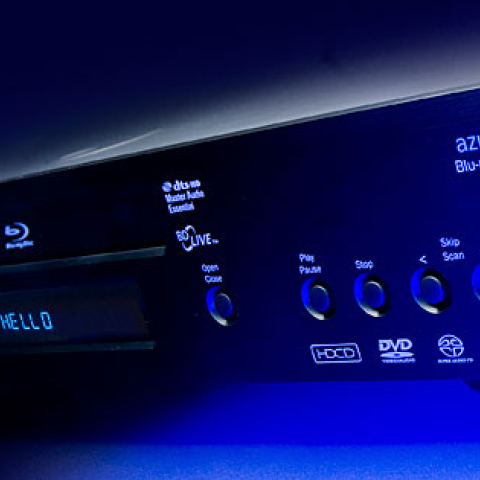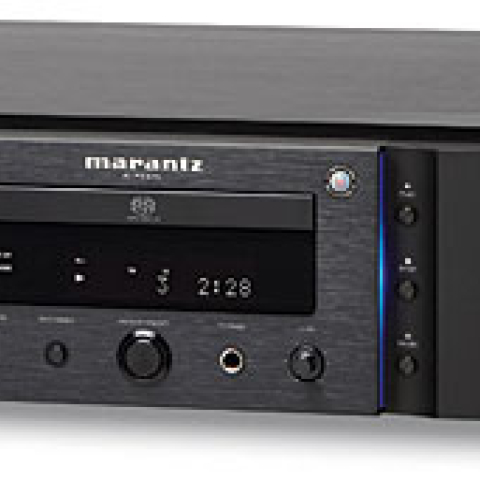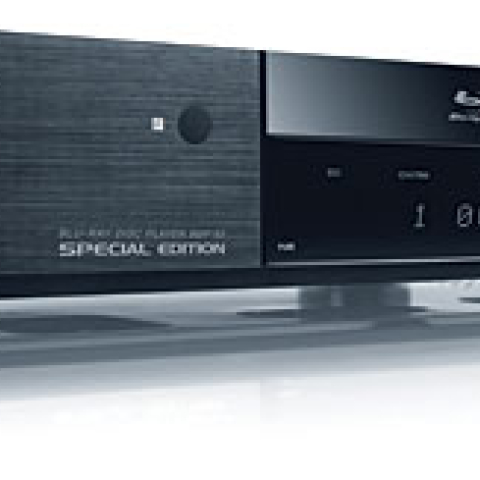
What? Ain't that a video interface? Sure, but HDMI can also handle multiple channels of audio in all current high-resolution formats, including DSD and uncompressed PCM. Everywhere I went at the Denver Convention Center, manufacturers were shouting that their players had HDMI outputs and their pre-pros and AVRs had multiple HDMI inputs, although what they do with the video and audio varied a lot.
HDMI for video has become more and more prevalent. Now, with HDMI 1.1a handling multichannel PCM and HDMI 1.2+ handling DSD, the HDMI hardware's audio capabilities are catching up to what was promised in the original HDMI specification. In fact, the NHT Controller, my review of which was published in this space exactly a year ago, was capable of only DD, DTS, and stereo PCM via HDMI. Now, HDMI 1.3 adds decoding ability for the new lossless hi-def audio codecs, Dolby True-HD and DTS-HD Master Audio. Also beginning to appear now are players that can actually output these formats. Of course, since these players can also transcode the new formats into PCM, it would seem that HDMI v1.2 would be all you need for any hi-def audio format that has appeared so far.
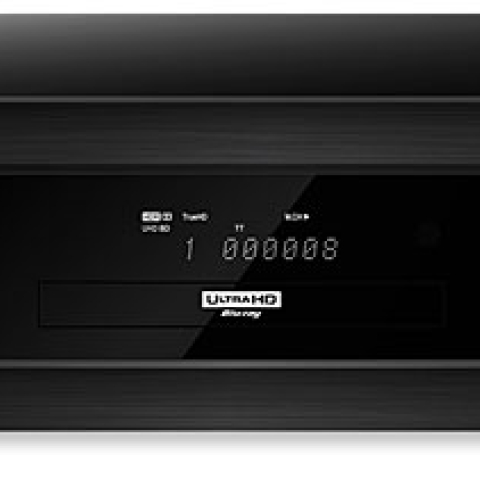
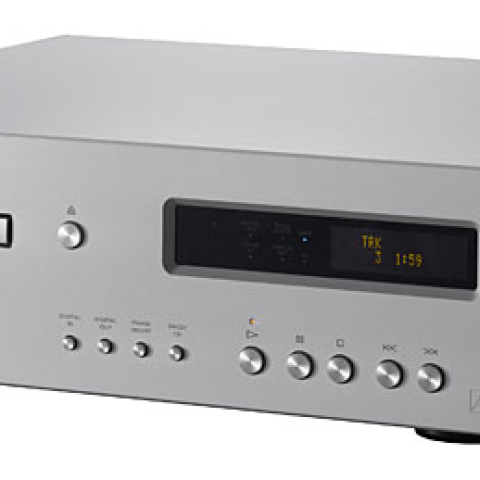
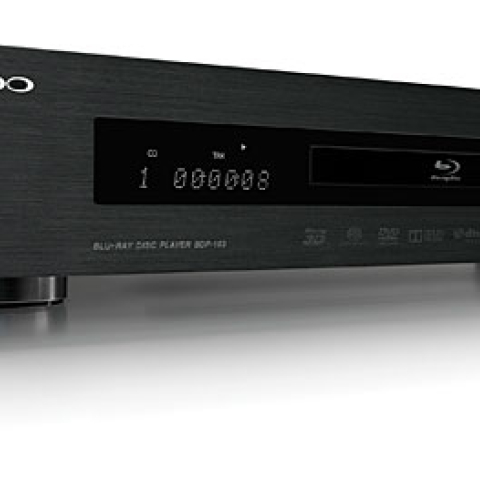
Considering the situation for music only, though, I see a split in the market. Hi-def video players are hugely limited in the older music formats they can play: CD? SACD? Even DVD-Audio? This means that, for music, we must hold on to our current audio players until a new generation of players appears or there is a reformulation of what constitutes a "universal" player. The Oppo DV-980H, reviewed below, is one example of what sort of player that might be.
This is critical. Vinyl aside, these days virtually all recordings—whether in a physical medium, broadcast, or downloaded—come to us in digital format. It is important to keep those recordings in the digital domain for as long as possible in the playback system before making that final, single conversion to analog. In my opinion, one of the major impediments to the success of multichannel SACD and DVD-A was the requirement that the encoded data not be output as an unencrypted digital signal, to protect the copyright holders. As a result, we had to snake six analog cables from player to preamp, and submit the signal to redundant A/D and D/A conversions if we needed any reasonably sophisticated processing, such as bass management or channel-delay control, to say nothing of EQ.
However, HDMI is not as reliable a connection as I would like, for several reasons.
First, to keep the copyright holders and their attorneys happy, HDMI's high-bandwidth digital-content protection (HDCP) requires a handshake between the sending and receiving devices. There are many horror stories about lapses in communication between these devices, such as when the audio is blocked if the video display is turned off, and switching devices not recognized as valid. Such problems are fading as the firmware grows more robust, but a thriving cottage industry still makes gadgets to fix them.
Second, the tiny HDMI connector itself is less secure and robust than an audiophile's RCA plug. An HDMI plug contains 19 connectors in a fitting measuring only 13.9mm by 4.45mm, and it's secured to the jack with only a friction fit. The weight of the cable itself can tilt the plug in the jack far enough to compromise communication; thus, the dressing and support of the cable can't be ignored. In addition, you can't just lop off a failed HDMI connector and solder on a new one (and I already have a dead HDMI cable routed inside my wall).
Third, some believe that HDMI is more susceptible to jitter than other digital transmission formats.
Still, HDMI gives us a single cable and connector for all digital audio and video, and, unlike iLink, D-link, etc., it has been adopted across the industry. And at the 2007 CEDIA Expo, that was good news indeed.
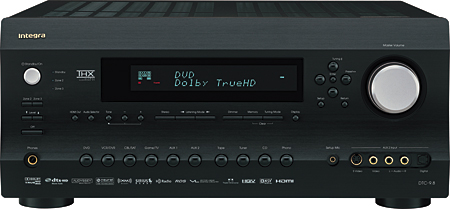
Integra DTC-9.8 preamplifier-processor
The Integra DTC-9.8 preamplifier-processor is an example of the technological changes currently taking place. Its appearance is timely and exciting for music lovers because it: 1) decodes and processes all current digital music formats, including DSD, Dolby True-HD, and DTS-HD Master Audio; 2) can apply bass and channel management and room equalization to all formats without redundant A/D/A conversions; 3) has a 7.1-channel analog pass-through with volume control; 4) has both RCA and XLR outputs; and 5) even has a phono input. It handles every major modern medium, audio and video. At $1600, the DTC-9.8 has become a prized commodity, as Integra scrambles to ramp up production to meet demand. An Integra rep at CEDIA who extolled its virtues assured me that I would get one for review as soon as they could spare it (footnote 1). (I already had one.) See Integra's website for all the details of this formidable box.
The DTC-9.8's front and rear panels are typical of modern A/V components: the former is studded with buttons and a large volume knob, the latter bristles with input jacks. The black-on-black faceplate is a bit difficult to use in dim lighting, though I've learned how to find the first four input-selector buttons and the volume control. But no matter: It's easier to use the illuminated remote control. The user manual is as good as I've seen for such a complex device, although newcomers still may find it heavy sledding.
Footnote 1: A near-clone of the DTC-9.8 is offered as the Onkyo Pro PR-SC885P ($1800), which seems to differ from the DTC-9.8 only in the addition of rack-mount ears.