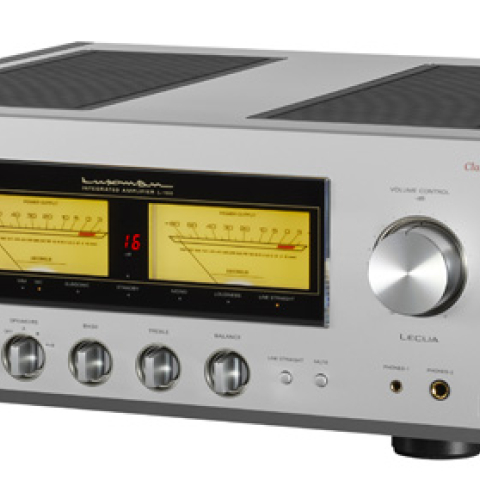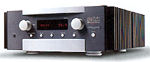
When I learned that Madrigal Audio Labs was marketing their first integrated amplifier, the Mark Levinson No.383, I felt this was a big change for the Connecticut company. Mark Levinson literally started the high-end marketing revolution back in the early 1970s by manufacturing cost-no-object separate amplifiers and preamplifiers. The purist designs had one overriding rule: employ the simplest circuit path possible. Each amplifier or preamplifier used only individual circuit-board components (no integrated circuits) and had a minimal number of controls, eschewing elaborate switches and tone controls. Mark Levinson Audio Systems and its successor, Madrigal Audio Laboratories, has continued this philosophy of separate components for the past 25 years.  But the integrated amplifier—preamplifier and two-channel amplifier built on the same chassis—has recently become a hot item in the High End. Just read Sam Tellig, who's been turning in raves about integrateds: the Bel Canto SETi40 (Vol.22 No.3), the Bryston B-60 (Vol.20 No.5), the Conrad-Johnson CAV-50 (Vol.21 No.8), the Jadis Orchestra (Vol.20 No.1), the Pathos Acoustics Twin Towers (Vol.22 No.1), and the YBA Integré DR (Vol.19 No.12). Chip Stern, the magazine's eminent jazz expert and all-around music-lover, has been doing his own integrated thing, praising the EAR V20 (Vol.22 No.10), the Manley Stingray (Vol.22 No.12), the Mesa Tigris (Vol.22 No.8), and the VAC Avatar (Vol.23 No.4). As a result, the "Integrated Amplifiers" section of Stereophile's "Recommended Components" (RC) listings has swollen to six Class A and 11 Class B amplifiers.
Why have two-channel integrated amplifiers taken the High End by storm, when the rest of the massmarket industry is obsessed with 5.1-channel A/V receivers? Three little words say it all: price, price, and price. The Class A integrateds in RC are priced from $2395 to $5200, just a fraction of the cost of a comparable combo of separate, top-quality power amplifier, preamplifier, and interconnects.
But the integrated amplifier—preamplifier and two-channel amplifier built on the same chassis—has recently become a hot item in the High End. Just read Sam Tellig, who's been turning in raves about integrateds: the Bel Canto SETi40 (Vol.22 No.3), the Bryston B-60 (Vol.20 No.5), the Conrad-Johnson CAV-50 (Vol.21 No.8), the Jadis Orchestra (Vol.20 No.1), the Pathos Acoustics Twin Towers (Vol.22 No.1), and the YBA Integré DR (Vol.19 No.12). Chip Stern, the magazine's eminent jazz expert and all-around music-lover, has been doing his own integrated thing, praising the EAR V20 (Vol.22 No.10), the Manley Stingray (Vol.22 No.12), the Mesa Tigris (Vol.22 No.8), and the VAC Avatar (Vol.23 No.4). As a result, the "Integrated Amplifiers" section of Stereophile's "Recommended Components" (RC) listings has swollen to six Class A and 11 Class B amplifiers.
Why have two-channel integrated amplifiers taken the High End by storm, when the rest of the massmarket industry is obsessed with 5.1-channel A/V receivers? Three little words say it all: price, price, and price. The Class A integrateds in RC are priced from $2395 to $5200, just a fraction of the cost of a comparable combo of separate, top-quality power amplifier, preamplifier, and interconnects.  Why is the integrated more economical? It's less expensive to build, having just one chassis and shipping carton compared with up to four of each for high-end separates, such as the combination of a Mark Levinson No.32 preamplifier (control chassis and preamplifier chassis) and two No.33H monoblocks. Each chassis and its carton add greatly to the cost. Current integrated designs get rid of internal phono stages and achieve further savings with a closed design that doesn't interface with other amplifiers or preamplifiers. This eliminates the circuits for a preamplifier output buffer and power-amp input buffer. There are other savings. Packing a stereo preamplifier and two amplifier channels into one chassis saves space. Hum is reduced because amplifier and preamplifier now share exactly the same ground voltage, so less shielding is required. And an integrated weighs less—when did you last own a basic amplifier that fit on a shelf, or, for that matter, could even be lifted by one person? No more tripping over massive, sharp-finned amplifiers in the dark. Equipment clutter goes down, and the spouse acceptance factor goes up. This "sweet spot" of compact size and affordability keeps the integrated alive. All this contributed to my surprise and glee when I first read about the No.383. I wasn't alone. Jon Herron, manager of product development at Madrigal, was beaming (I could tell, even over the telephone) about the new No.383's economics, ergonomics, build quality, and user-friendliness. "Sonically, it's as close as we could make it to the performance of a No.334 driven by a No.380 preamplifier," he said. "And if you fail to use the best interconnect, a No.383 will be better. Its repeatable gain settings and user-friendliness also make it an excellent reviewer's tool." User-friendly and a better reviewer's tool? I couldn't wait.
But the integrated amplifier—preamplifier and two-channel amplifier built on the same chassis—has recently become a hot item in the High End. Just read Sam Tellig, who's been turning in raves about integrateds: the Bel Canto SETi40 (Vol.22 No.3), the Bryston B-60 (Vol.20 No.5), the Conrad-Johnson CAV-50 (Vol.21 No.8), the Jadis Orchestra (Vol.20 No.1), the Pathos Acoustics Twin Towers (Vol.22 No.1), and the YBA Integré DR (Vol.19 No.12). Chip Stern, the magazine's eminent jazz expert and all-around music-lover, has been doing his own integrated thing, praising the EAR V20 (Vol.22 No.10), the Manley Stingray (Vol.22 No.12), the Mesa Tigris (Vol.22 No.8), and the VAC Avatar (Vol.23 No.4). As a result, the "Integrated Amplifiers" section of Stereophile's "Recommended Components" (RC) listings has swollen to six Class A and 11 Class B amplifiers. Why is the integrated more economical? It's less expensive to build, having just one chassis and shipping carton compared with up to four of each for high-end separates, such as the combination of a Mark Levinson No.32 preamplifier (control chassis and preamplifier chassis) and two No.33H monoblocks. Each chassis and its carton add greatly to the cost. Current integrated designs get rid of internal phono stages and achieve further savings with a closed design that doesn't interface with other amplifiers or preamplifiers. This eliminates the circuits for a preamplifier output buffer and power-amp input buffer. There are other savings. Packing a stereo preamplifier and two amplifier channels into one chassis saves space. Hum is reduced because amplifier and preamplifier now share exactly the same ground voltage, so less shielding is required. And an integrated weighs less—when did you last own a basic amplifier that fit on a shelf, or, for that matter, could even be lifted by one person? No more tripping over massive, sharp-finned amplifiers in the dark. Equipment clutter goes down, and the spouse acceptance factor goes up. This "sweet spot" of compact size and affordability keeps the integrated alive. All this contributed to my surprise and glee when I first read about the No.383. I wasn't alone. Jon Herron, manager of product development at Madrigal, was beaming (I could tell, even over the telephone) about the new No.383's economics, ergonomics, build quality, and user-friendliness. "Sonically, it's as close as we could make it to the performance of a No.334 driven by a No.380 preamplifier," he said. "And if you fail to use the best interconnect, a No.383 will be better. Its repeatable gain settings and user-friendliness also make it an excellent reviewer's tool." User-friendly and a better reviewer's tool? I couldn't wait.