At the extreme high end—Halcro, VTL, Boulder, etc.—reviewers gush about a lack of character. If you're paying $20,000, you want a preamplifier or power amp to disappear. At those price points we also want extreme, unfatiguing resolution, and noise that's well below what most people would consider audible. But at those prices, an absence of character is definitely something most people aspire to.
 Oddly, a lot of people think it's a good thing when a less expensive amplifier has character. We're generally tolerant of noise and limited resolution in cheaper gear, as long as a component is easy on the ears—but character is a selling point. So what are we to do with an $899 integrated amplifier that aspires to, and substantially achieves, bleeding-edge virtues? Does that make it boring—or an outstanding value? Or both?
Not just another pretty face
Oddly, a lot of people think it's a good thing when a less expensive amplifier has character. We're generally tolerant of noise and limited resolution in cheaper gear, as long as a component is easy on the ears—but character is a selling point. So what are we to do with an $899 integrated amplifier that aspires to, and substantially achieves, bleeding-edge virtues? Does that make it boring—or an outstanding value? Or both?
Not just another pretty face
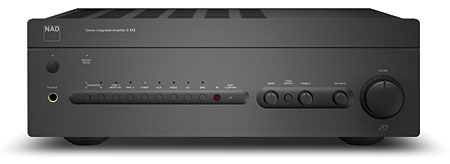
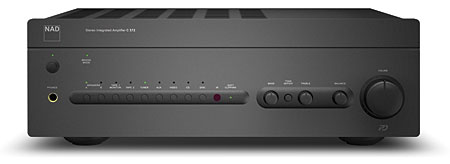
The NAD C 372 isn't flashy. On the shelf just below my Marantz SA-15 SACD player, with its blue lights and scrolling text, it looks rather plain. It's handsome enough, but no one who's used to the look of more expensive gear is likely to buy the C 372 for its looks. Still, there's an integrity to its design that is appealing: it looks like what it is.
The C 372 succeeds the C 370, which received a lot of good press, including a favorable review by Chip Stern in the January 2002 Stereophile; he called it "an exceptionally solid, versatile, musical performer." The C 370 also won the Amplifier of the Year award from the European Imaging and Sound Association, and was, for a while, a Stereophile "Recommended Component."
For the C 372, NAD beefed up and refined the C 370 formula. They upgraded the power supply with a larger transformer and better capacitors, which made it possible to up the power from 120W to 150W. They improved the preamp and driver-stage modules (both of which are claimed to be pure class-A), improved the tone-control circuit, and revised the layout of the circuit boards to further reduce the C 370's already low distortion. The remote was upgraded and the cosmetics were changed. Voilà—the C 372.
For a feature-rich amp, the C 372's front panel is exceptionally simple and clean. There's a Power button, separate buttons for each of two sets of speakers, and buttons for the seven line-level inputs—including two tape loops. The Bass and Treble controls can be bypassed for a shorter circuit path via a front-panel switch. There is also a Balance control and, of course, a Volume knob. Everything but the tone and balance controls can be adjusted from the remote.
Around back, NAD's designers went for flexibility, not minimalism. The rear panel contains seven line inputs, two sets of speaker outputs, and two preamp outputs, one of which has a volume control. That volume control allows you to use any amplifier, regardless of gain, to biamp your speakers, if you're so inclined. One of the pre-outs can also be connected to a powered subwoofer or two. There is also a power-amp input, which allows insertion of a parametric equalizer or a high-pass filter, such as the one required by Vandersteen's 2Wq subwoofer. All inputs and outputs (except, of course, for the speaker binding posts) are unbalanced RCA.
The amplifier section can be bridged via a rear-panel switch to create a single 300W monoblock. The rear panel also contains a switch to defeat NAD's Soft Clipping feature, which, though it might be very useful in a less powerful amplifier, wasn't needed in my relatively small living room, where clipping is unlikely to occur at the levels at which I listen. I thought—I wouldn't swear to it—that I perceived a slight loss of resolution when Soft Clipping was engaged, so I turned it off for most of my listening.
The C 372 doesn't have a phono stage; it does, however, have a headphone amplifier with a single ¼" connector on the front panel, the volume controlled, as usual, by the preamp section's volume knob. Speaker outputs don't automatically mute when headphones are inserted, but speakers can be turned off at the front panel or with the remote.
Another NAD feature that merits a mention is what the company calls PowerDrive. This, apparently, senses the load impedance and compensates by adding a second high-voltage rail to the power supply to increase the available power in the short term (see Sidebar).
Logistics
Despite the flexibility that the C 372 allows, its operation was intuitive; the front-panel layout is simple and elegant, and everything works the way you'd expect it to. With 12 sets of RCA inputs and outputs and two sets of speaker terminals, the rear of the amp is busy for a two-channel amplifier, though very simple compared to any home-theater component you'll ever see. If you intend to connect two pairs of speaker cables, banana plugs would be easiest; if you insist on using spades, those will work too.
Oddly, a lot of people think it's a good thing when a less expensive amplifier has character. We're generally tolerant of noise and limited resolution in cheaper gear, as long as a component is easy on the ears—but character is a selling point. So what are we to do with an $899 integrated amplifier that aspires to, and substantially achieves, bleeding-edge virtues? Does that make it boring—or an outstanding value? Or both?
Not just another pretty face
The NAD C 372 isn't flashy. On the shelf just below my Marantz SA-15 SACD player, with its blue lights and scrolling text, it looks rather plain. It's handsome enough, but no one who's used to the look of more expensive gear is likely to buy the C 372 for its looks. Still, there's an integrity to its design that is appealing: it looks like what it is.
Despite the flexibility that the C 372 allows, its operation was intuitive; the front-panel layout is simple and elegant, and everything works the way you'd expect it to. With 12 sets of RCA inputs and outputs and two sets of speaker terminals, the rear of the amp is busy for a two-channel amplifier, though very simple compared to any home-theater component you'll ever see. If you intend to connect two pairs of speaker cables, banana plugs would be easiest; if you insist on using spades, those will work too.