On the occasion of a recent major birthday, my significant other, Bonnie, gave herself a "mid-life crisis" present—a beautifully restored, bright yellow Porsche 911. She'd spent the previous several weeks wading through reference books to figure out exactly which year and model she wanted, and each night we'd discuss the pros and cons of various models, options, and points in the 911's +30-year evolution. Bonnie explained to me that, throughout its production run, the 911 maintained the same basic design and a consistent set of engineering goals, but was continually updated and refined. In her mind, the 1973 Targa was the one to have, the last and fastest of the lightweight 2.4-liter models. 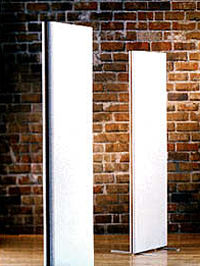 It struck me that the Thiel CS2.3 and Magneplanar MG1.6/R are both kind of like Bonnie's 911. Each has grown out of the vision of a single, brilliant designer. Each reflects the long, steady evolution of a basic design, and the consistent focus on a core set of engineering criteria. Parallels can even be drawn between the car's and the speakers' performance characteristics. Adjectives like "crisp," "precise," and "fast" come to mind, either behind the wheel of Bonnie's 911 or in front of a Thiel loudspeaker. On the other hand, Magnepan has used their unusual planar magnetic design to produce a coherent sound that's far greater than the sum of its parts—not unlike how Porsche's rear-engine design, air-cooled boxer engine, and odd ergonomics came together in one of the most coherent high-performance packages in auto history. Thiel and Magnepan have been intertwined throughout my personal audio history as well. I alternated between Magnepan MG1s and Thiel 03As for years, torn between the Maggies' coherence and soundstage and the Thiels' detail and dynamics. I repeated the scenario a decade later with the Magnepan MG3.5/R and Thiel CS3.6. Both were dramatically better than their predecessors, but the essences of their personalities—and the tradeoffs—remained. The Thiel CS2.3 and Magnepan MG1.6/QR are the natural candidates with which to continue these comparisons. Each incorporates its designer's latest thoughts and newest driver technology. Both are medium-sized floorstanding systems aimed at the serious-but-not-stratospheric heart of the market. Even their specs—frequency response, sensitivity, power requirements, impedance—are remarkably similar.
Magnepan Magneplanar MG1.6/QR: $1475/pair
It struck me that the Thiel CS2.3 and Magneplanar MG1.6/R are both kind of like Bonnie's 911. Each has grown out of the vision of a single, brilliant designer. Each reflects the long, steady evolution of a basic design, and the consistent focus on a core set of engineering criteria. Parallels can even be drawn between the car's and the speakers' performance characteristics. Adjectives like "crisp," "precise," and "fast" come to mind, either behind the wheel of Bonnie's 911 or in front of a Thiel loudspeaker. On the other hand, Magnepan has used their unusual planar magnetic design to produce a coherent sound that's far greater than the sum of its parts—not unlike how Porsche's rear-engine design, air-cooled boxer engine, and odd ergonomics came together in one of the most coherent high-performance packages in auto history. Thiel and Magnepan have been intertwined throughout my personal audio history as well. I alternated between Magnepan MG1s and Thiel 03As for years, torn between the Maggies' coherence and soundstage and the Thiels' detail and dynamics. I repeated the scenario a decade later with the Magnepan MG3.5/R and Thiel CS3.6. Both were dramatically better than their predecessors, but the essences of their personalities—and the tradeoffs—remained. The Thiel CS2.3 and Magnepan MG1.6/QR are the natural candidates with which to continue these comparisons. Each incorporates its designer's latest thoughts and newest driver technology. Both are medium-sized floorstanding systems aimed at the serious-but-not-stratospheric heart of the market. Even their specs—frequency response, sensitivity, power requirements, impedance—are remarkably similar.
Magnepan Magneplanar MG1.6/QR: $1475/pair
I begin every Audiophiles Anonymous meeting with "My name is Brian and I'm a Magnepan kind of guy." I've been a Maggie fan ever since I heard my first pair in the late 1970s. My first real high-end speakers were Magnepan's MG1 Improved, and I even took a pair of Maggies when I spent a year in Australia. The unique strengths of the large panel/dipole radiator concept—their coherence and soundstage reproduction—have always worked for me, and outweighed their shortcomings in low-level detail and dynamics. I couldn't help wishing, however, for the magic combination that would blend the planar's strengths with those of a topnotch dynamic system. In fact, my two long-term reference speakers, the Infinity RS-1B and the Audio Artistry Dvorak, are attempts at just such a blend, though each is as much a compromise as a combination of strengths. Designer Jim Winey and Magnepan have been addressing the same issues for the past two decades. Each succeeding generation of Magneplanars has been more dynamic, detailed, and articulate than the previous one, all the while maintaining and even refining Magnepan's wonderful, seamless sound. About two years ago I had their MG3.5/R in for review and was delighted and amazed by how successful the evolution and refinement has been. The '3.5/R is a sensational speaker, and, at $3150/pair, one of the High End's most spectacular bargains.
I first heard Jim Winey's latest creation, the $1475/pair MG1.6/QR, at the 1998 WCES, and was more than a little interested. When Magnepan's Marketing Manager, Wendell Diller, told me that the '1.6/QR improved on the '3.5/R in a number of ways, I was hooked.
It struck me that the Thiel CS2.3 and Magneplanar MG1.6/R are both kind of like Bonnie's 911. Each has grown out of the vision of a single, brilliant designer. Each reflects the long, steady evolution of a basic design, and the consistent focus on a core set of engineering criteria. Parallels can even be drawn between the car's and the speakers' performance characteristics. Adjectives like "crisp," "precise," and "fast" come to mind, either behind the wheel of Bonnie's 911 or in front of a Thiel loudspeaker. On the other hand, Magnepan has used their unusual planar magnetic design to produce a coherent sound that's far greater than the sum of its parts—not unlike how Porsche's rear-engine design, air-cooled boxer engine, and odd ergonomics came together in one of the most coherent high-performance packages in auto history. Thiel and Magnepan have been intertwined throughout my personal audio history as well. I alternated between Magnepan MG1s and Thiel 03As for years, torn between the Maggies' coherence and soundstage and the Thiels' detail and dynamics. I repeated the scenario a decade later with the Magnepan MG3.5/R and Thiel CS3.6. Both were dramatically better than their predecessors, but the essences of their personalities—and the tradeoffs—remained. The Thiel CS2.3 and Magnepan MG1.6/QR are the natural candidates with which to continue these comparisons. Each incorporates its designer's latest thoughts and newest driver technology. Both are medium-sized floorstanding systems aimed at the serious-but-not-stratospheric heart of the market. Even their specs—frequency response, sensitivity, power requirements, impedance—are remarkably similar. I begin every Audiophiles Anonymous meeting with "My name is Brian and I'm a Magnepan kind of guy." I've been a Maggie fan ever since I heard my first pair in the late 1970s. My first real high-end speakers were Magnepan's MG1 Improved, and I even took a pair of Maggies when I spent a year in Australia. The unique strengths of the large panel/dipole radiator concept—their coherence and soundstage reproduction—have always worked for me, and outweighed their shortcomings in low-level detail and dynamics. I couldn't help wishing, however, for the magic combination that would blend the planar's strengths with those of a topnotch dynamic system. In fact, my two long-term reference speakers, the Infinity RS-1B and the Audio Artistry Dvorak, are attempts at just such a blend, though each is as much a compromise as a combination of strengths. Designer Jim Winey and Magnepan have been addressing the same issues for the past two decades. Each succeeding generation of Magneplanars has been more dynamic, detailed, and articulate than the previous one, all the while maintaining and even refining Magnepan's wonderful, seamless sound. About two years ago I had their MG3.5/R in for review and was delighted and amazed by how successful the evolution and refinement has been. The '3.5/R is a sensational speaker, and, at $3150/pair, one of the High End's most spectacular bargains.