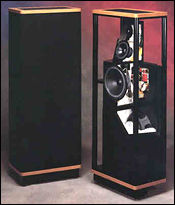
Eighty thousand pairs. According to Vandersteen Audio, that's the number of Vandersteen 2s of various generations which have been sold since the loudspeaker—and company—first saw the light of day in 1977. The 2 has been continually refined along the way—a new driver here, a new crossover change there, heavy-duty stands—more changes, in fact, than the occasional changes in model designation would indicate. The 2's main calling card has always been a high perceived value for money. If anything, this calling card has only been enhanced over the years as its price remained remarkably stable while the cost of high-end audio in general was perceived—rightly or wrongly—as being on a dizzying upward spiral. 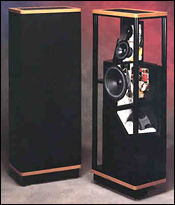 While not all critics fell in love with the Vandersteen 2, none could deny that it was a must-audition in its price range. In a market segment dominated by minimonitors long on refinement and imaging finesse but often short of convincing dynamics and low-end heft, the Vandersteens could always be counted on to remind the listener that full-bodied sound does not have to mean a lean wallet (footnote 1). When a non-audiophile friend of mine from the San Francisco area came to Stereophile's 1989 High End Hi-Fi Show and asked me to recommend a pair of loudspeakers, the Vandersteens were the first to come to mind. In 1991 the 2C underwent its most extensive metamorphosis to date, the first real change in the loudspeaker's external appearance since its inception. It grew several inches taller. A taller cabinet is a larger cabinet, making possible a small but worthwhile extension in low-frequency response. The small resulting increase in cost was largely countered by the fact that a full stand was no longer required. While the 2Ce can be used without any stand, the small vestigial stand (more of a bracket than a stand, really) is a strongly recommended option. Stand and loudspeaker together retail for $1420. For my friend from the Hi-Fi show—and most other non-audiophiles with comfortable but not outrageous incomes—this makes an expensive though not out-of-reach loudspeaker. In the High End, however, it would be considered almost entry-level. It is also, arguably, close to the point at which design compromises—facts of life in any piece of audio gear—become less onerous for both the designer and the eventual owner. While subtly different in appearance from its predecessor, the 2Ci, the 2Ce remains much the same basic design. It is actually composed of a stack of separate cabinets. The largest holds an 8" woofer and a rear-facing 10" "Active Acoustic Coupler." The function of the latter appears to be to both to control the bass loading of the system and, below 45Hz, extend its bottom-end response. It is actively driven, and the loading is said to perform as a sealed box. It is not, however, nor is it claimed to be, an integral subwoofer.
Footnote 1: Or perhaps we just haven't been watching closely enough. Our next loudspeaker group encounter session, scheduled for publication in late summer or early fall, will move up a notch to the $1000-$1600/pair price range. Most of the candidates will be floor-standing designs.
While not all critics fell in love with the Vandersteen 2, none could deny that it was a must-audition in its price range. In a market segment dominated by minimonitors long on refinement and imaging finesse but often short of convincing dynamics and low-end heft, the Vandersteens could always be counted on to remind the listener that full-bodied sound does not have to mean a lean wallet (footnote 1). When a non-audiophile friend of mine from the San Francisco area came to Stereophile's 1989 High End Hi-Fi Show and asked me to recommend a pair of loudspeakers, the Vandersteens were the first to come to mind. In 1991 the 2C underwent its most extensive metamorphosis to date, the first real change in the loudspeaker's external appearance since its inception. It grew several inches taller. A taller cabinet is a larger cabinet, making possible a small but worthwhile extension in low-frequency response. The small resulting increase in cost was largely countered by the fact that a full stand was no longer required. While the 2Ce can be used without any stand, the small vestigial stand (more of a bracket than a stand, really) is a strongly recommended option. Stand and loudspeaker together retail for $1420. For my friend from the Hi-Fi show—and most other non-audiophiles with comfortable but not outrageous incomes—this makes an expensive though not out-of-reach loudspeaker. In the High End, however, it would be considered almost entry-level. It is also, arguably, close to the point at which design compromises—facts of life in any piece of audio gear—become less onerous for both the designer and the eventual owner. While subtly different in appearance from its predecessor, the 2Ci, the 2Ce remains much the same basic design. It is actually composed of a stack of separate cabinets. The largest holds an 8" woofer and a rear-facing 10" "Active Acoustic Coupler." The function of the latter appears to be to both to control the bass loading of the system and, below 45Hz, extend its bottom-end response. It is actively driven, and the loading is said to perform as a sealed box. It is not, however, nor is it claimed to be, an integral subwoofer. Footnote 1: Or perhaps we just haven't been watching closely enough. Our next loudspeaker group encounter session, scheduled for publication in late summer or early fall, will move up a notch to the $1000-$1600/pair price range. Most of the candidates will be floor-standing designs.