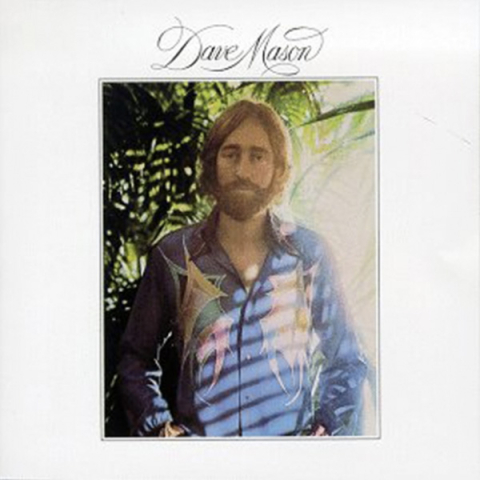
In 1979, I was the road drummer for Boston singer-songwriter Andy Pratt, a local celebrity known both for his musical talent—showcased on his 1973 Columbia album Andy Pratt—and for being the great-grandson of Charles Pratt of Pratt Institute and Standard Oil fame. I was part of the touring band for Pratt's Motives album, performing regional hits like "That's When Miracles Occur," a standout track from his 1976 breakthrough, Resolution. Rolling Stone's Stephen Holden considered Resolution revolutionary: "By reviving the dream of rock as an art and then reinventing it, Pratt has forever changed the face of rock." Resolution and Andy Pratt rank among my all-time favorite rock albums.
Pratt's first album featured the single "Avenging Annie," a mini–rock opera about an extraordinary femme fatale. It charted nationally back when that meant something. Roger Daltrey later covered it on One of the Boys. Pratt's original1 was featured in the 1998 film Velvet Goldmine with Ewan McGregor.
"Avenging Annie" was the hardest song I'd ever played: relentless dynamics, tornado drum fills, and a whirlwind, circuitous beat. Of course fans expected us to play it at every show.
For four shows, we opened for Robert Palmer, who was already a US chart presence with "Every Kind of People" and "Bad Case of Loving You (Doctor, Doctor)," which was charting at the time. This was years ahead of his global dominance with super-group Power Station.
We were playing at some midsized venue when, before soundcheck, Palmer asked me if he could use my drums. He sat down and tapped around a bit. I stuck around to catch his soundcheck because I knew his drummer, Dony Wynn, from his solo work. The other members of the band—guitarist, keyboardist, bassist—were unfamiliar. They were all decked out in loud polyester shirts and slacks.
When the band kicked in, my jaw hit the floor. At that point I'd seen ZZ Top, the Allmans, and the Mahavishnu Orchestra, but I'd never experienced a groove like this, a steel tsunami of syncopated funk, a spiderweb of New Orleans rhythm so deep it cut right through me.
That band was The Meters, or part of it. George Porter Jr. played bass. Leo Nocentelli played guitar. Dony Wynn—not Zigaboo Modeliste—played drums. In my mind's eye, Art Neville was there on keys, though he and brother Cyrille had left the band a year or two earlier, so I'm not sure.
The Meters started out as the backing band to famous hits by Lee Dorsey, Dr. John, and Allen Toussaint. They were Robert Palmer's band, alongside Lowell George, for his first album, Sneakin' Sally Through the Alley. Their music has provided samples to such hip-hop luminaries as Big Daddy Kane, Run-DMC, N.W.A, Ice Cube, Public Enemy, A Tribe Called Quest, and Beastie Boys. The Meters are as much a part of the fabric of American music as Gershwin or Elvis (Presley, not that British dude). For many they remain an underground secret, but they are legendary as funk's co-architects, alongside James Brown and Sly Stone.
That sound: body-scratching grooves, syncopated second-line rhythms, bass, guitar, and keyboard lines so deep they seemed to bubble up from the earth beneath New Orleans.
When I returned to North Carolina after the Pratt tour, I went on a hunt. In a decrepit record store, I found The Meters, the band's first album, recorded in 1969, and their second album, Look-Ka Py Py. (I also found a rare copy of Maceo Parker's Maceo and All the King's Men that day, but that's a story for another time.)
Jackpot Records, the Portland, Oregon, record store and music label, has reissued the Meters' first three albums, remastered from the original tapes by Kevin Gray at Cohearent Audio. All three are available on colored vinyl: "Apple Red" for The Meters, "Spring Green" for the Look-Ka Py Py, and "Blue Jay" for Struttin'. Artwork is faithfully reproduced. All three albums are also available in boring black vinyl.
All three records were produced by "Allen R. Toussaint and Marshall E. Sehorn for Sansu Enterprises, Inc."; Sansu Enterprises is the production company started and run by Sehorn and Toussaint.
My "limited apple red vinyl" copy of the Jackpot reissue of The Meters offers a more detailed and expansive view on the music than my original pressing. The highs are more prominent, allowing for more detail. When I listen to the original pressing, I feel like I'm sitting in front of Zigaboo Modeliste's drums. When I listen to the reissue, I feel like my head is jammed into the drum set, somewhere between the snare, the ride cymbal, and the mounted tom. There is more (better) instrumental sustain. On the classic tracks "Here Comes the Meter Man," "Cissy Strut," and "Cardova"—all group compositions, all R&B hits—bass is more prominent than on the original, which is typical of current vinyl reissues, but it is not overdone. It sounds natural. All in all, it's a more "hi-fi," better-resolved sound than the original pressing. It's about what you expect from a vinyl reissue circa now.
Jackpot's lime-green pressing of Look-Ka Py Py, including its blistering title track, is more faithful to the original recording. The sound is only tweaked a little, with a subtle boost in the treble and bass that enhances the album's already rich sonics.
For their third album, Struttin', The Meters mostly kept that raw, organic sound, but they traded some spontaneity for slicker production. The tracks feel less raw. The production is slightly less natural, but this is still a fine-sounding record. The reissue is true to the original.
All three reissues are a must for Meters devotees and highly recommended for the merely Meters-curious.
A reissue of Andy Pratt's profound debut album would be a welcome next step.