Salt Collective: A Brief History of Blindness
Propeller Sound Recordings LPPSR029 (LP). 2025. Chris Stamey, prod.; Stamey, Dave McNair, others, engs.
Performance ****
Sonics **** Formerly unknown French singer-songwriter Stéphane Schück is back with the second album from his Salt Collective. A lifelong fan of North Carolina power pop legends The dB's, Schück has teamed up with former dB's Chris Stamey (guitars/vocals) and Gene Holder (bass) and longtime North Carolina rock-pop kingpin Mitch Easter (keys/guitars). With basic tracks recorded in Easter's Fidelitorium studio in North Carolina, this sparkling collection of beautifully crafted, superbly arranged power pop numbers benefits from parts flown in from the US and UK. Mike Mills (R.E.M.), Aimee Mann ('Til Tuesday), and Matthew Caws (Nada Surf) all add vocals. Mann's singing on the cascading chords of "The Waiting Game" are a perfect match. Another well-known guest, Jason Falkner (Jellyfish, The Grays), turns in an awesome, urgent vocal performance on "Waiting for the End of Time." Lynn Blakey (Let's Active) turns in a strong vocal performance on the title track and a wonderful duet with Mills on "In the Shadow of the Moon," which is very reminiscent of the late great Austin, Texas, band The Reivers.
The big get here is a songwriting appearance by the reclusive Andy Partridge (XTC), who proves once again that he's an exceptionally gifted songwriter by cowriting the album's strongest tunes, "Waiting for the End of Time" (with Stamey and Schück) and "You Swallowed the Sun" (with Stamey). Both have melodic and lyrical turns that will be instantly familiar to XTC fans.
Cross-continent, cross-oceanic recording projects can end up sounding like a sonic Frankenstein, but here, with the backing tracks recorded live and Stamey's careful engineering, the sound is balanced and full. A truly super session by a once-in-a-lifetime gathering of sharp, accomplished talent.—Robert Baird
 Geese: Getting Killed
Partisan Records PTPS60LPX (LP). 2025. Kenneth Blume, prod.; Daniel McNeil, eng.
Performance *****
Sonics *****
With Getting Killed, Geese become the consummate New York City rock band they've long hinted at being. Getting Killed is eclectic, at times deliberately disjointed. At its center lives an agitated, razor's-edge take on rock that echoes the city's great lineage. Like The Strokes before them, Geese arrive with a fresh angle, exploring a jangling, groove-forward sound shaped by producer Kenneth Blume. The quartet leans into cyclical repetition rather than traditional hooks, punctuating tracks with ecstatic melodic bursts that swirl beneath Cameron Winter's vocals, delivered in a style that lands somewhere between David Byrne and a sleep-deprived preacher.
Lyrically, Getting Killed fixates on social despair and uncomfortable truths the band believes we're all avoiding. Lines loop and return, as if demanding "Are you hearing this?" Like most enduring protest music, the album's heavy message is wrapped in a visceral form of rock: raw, percussive; celebratory in its anxious, unpredictable way.
"100 Horses" is the standout track. Here, Geese synthesize themes of unrest, displacement, and reluctant sacrifice into their most direct statement. Winter repeatedly sings "times of war," suggesting that complacency is complicity and that accepting misery is a kind of consent. It's forceful, unsettling, and gripping.
The closer, "Long Island City Here I Come," is a fitting end to the protest. Biblical allusions live alongside pop-culture references and pieces of American mythology in a mix that has Winter determined yet unclear where he's headed. It's a proper stamp on a record that has much to say but knows when to wrap things up.
With Getting Killed, Geese sharpen their identity and expand their range. It's a restless, brilliantly abrasive record that cements the band as one of New York's most compelling voices.—Ray Chestowski
 Tame Impala: Deadbeat
Columbia Records 19802956001 (LP). 2025. Kevin Parker, prod.; Parker, Loren Humphrey, engs.
Performance ***
Sonics ***** Kevin Parker has spent more than a decade trying to define what Tame Impala is. The project emerged from Australia's psychedelic rock scene, at its best on Innerspeaker and Lonerism. Parker's studio wizardry and melodic ear made him impossible to ignore. But when his experiments didn't land, the missteps were large, making the next musical gamble seem riskier.
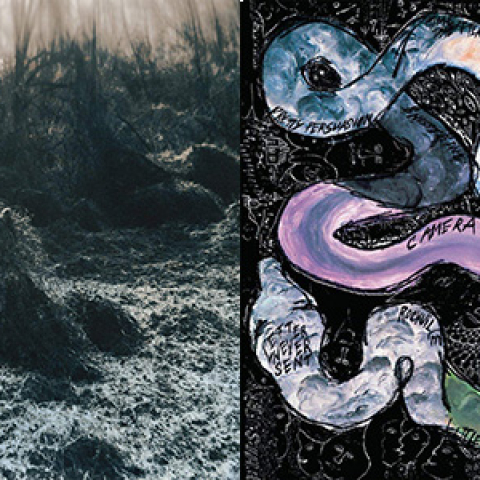
On this new album, Deadbeat, Parker seems to react by pulling back too far. The record is as muted as its cover art: slightly blurred, lacking color, unwilling to take chances. Leaning heavily into EDM and house textures, Deadbeat often feels monochromatic, its tracks blending into one another as though committed to an album construct that lacks imagination.
The opener, "My Old Ways," hints at a different direction. A crisp piano intro teases a move toward something more songwriter-driven, but within moments it collapses into a familiar four-on-the-floor pulse. This bait and switch sets a template for what follows: Clever ideas quickly surrender to a game plan with few sharp edges.
Most fans have already singled out "Dracula," easily the album's best moment. The lyrics are odd and playful, the bass line has real lift, and Parker layers in synth lines that feel clever and carefully crafted. It's the one track that reminds you how effortlessly he can fuse humor, groove, and sonic imagination when he's fully engaged. If only there was more.
Taken as a whole, Deadbeat lives up to the description some listeners have given it: "dance-music wallpaper." It fills space well enough—ideal, perhaps, for background ambience while tackling household chores—but there's little that invites deeper listening.
Given Parker's unpredictable career arc, the next record could land anywhere. One hopes it lands somewhere more vivid. We know he's capable of it.—Ray Chelstowski
 Tortoise: Touch
International Anthem IARC0099 (LP). 2025. Tortoise, prod., John McEntire, Dave Cooley, engs.
Performance *****
Sonics ***** What sets the new Tortoise album apart is that it isn't afraid to get greasy. Unlike some of their more refined releases, Touch embraces distortion, static, and other distressed textures, breaking up the band's familiar polish with some welcome grit.
That shift may stem from how the record was made. Once anchored in Chicago, the members now live in different cities. This is the first time they didn't record together in the same room. Touch was built long-distance, tracks passed back and forth, ideas reshaped across three studios. The result is arguably their most ambitious work yet.
Tortoise may be a seminal post-rock band, but Touch has a rock edge. The guitars feel more assertive than in their previous work. Yet the signature unpredictability remains. Rock riffs are wrapped in the layered sonics that have always been at the core of Tortoise's appeal. "Promenade à deux" comes closest to the group's classic sound, its drifting arrangement softened by viola and cello, lending the track a gentle, meditative glow. "A Title Comes," which anchors the album's second half, strikes a graceful balance between past and present, pairing vibraphone pulses with slowly blooming guitar lines that feel familiar yet newly energized.
The finale, "Night Gang," is the album's boldest statement. It opens like an abstract ballad, melodramatic and mysterious, then spirals with confident, anthemic synths and outsized surf-guitar parts. Just before the fadeout, the band delivers a full-out rock jam only to pull back at the last moment. It's an epic end to a great musical ride. When Tortoise emerged 30 years ago, their music was so hard to classify that they effectively became a genre unto themselves. Touch reaffirms why. Even after three decades, they still surprise, delight, and craft sounds that invite exploration, leading listeners to places they didn't know were there.—Ray Chelstowski
Propeller Sound Recordings LPPSR029 (LP). 2025. Chris Stamey, prod.; Stamey, Dave McNair, others, engs.
Performance ****
Sonics **** Formerly unknown French singer-songwriter Stéphane Schück is back with the second album from his Salt Collective. A lifelong fan of North Carolina power pop legends The dB's, Schück has teamed up with former dB's Chris Stamey (guitars/vocals) and Gene Holder (bass) and longtime North Carolina rock-pop kingpin Mitch Easter (keys/guitars). With basic tracks recorded in Easter's Fidelitorium studio in North Carolina, this sparkling collection of beautifully crafted, superbly arranged power pop numbers benefits from parts flown in from the US and UK. Mike Mills (R.E.M.), Aimee Mann ('Til Tuesday), and Matthew Caws (Nada Surf) all add vocals. Mann's singing on the cascading chords of "The Waiting Game" are a perfect match. Another well-known guest, Jason Falkner (Jellyfish, The Grays), turns in an awesome, urgent vocal performance on "Waiting for the End of Time." Lynn Blakey (Let's Active) turns in a strong vocal performance on the title track and a wonderful duet with Mills on "In the Shadow of the Moon," which is very reminiscent of the late great Austin, Texas, band The Reivers.
Geese: Getting KilledPartisan Records PTPS60LPX (LP). 2025. Kenneth Blume, prod.; Daniel McNeil, eng.
Performance *****
Sonics *****
Tame Impala: DeadbeatColumbia Records 19802956001 (LP). 2025. Kevin Parker, prod.; Parker, Loren Humphrey, engs.
Performance ***
Sonics ***** Kevin Parker has spent more than a decade trying to define what Tame Impala is. The project emerged from Australia's psychedelic rock scene, at its best on Innerspeaker and Lonerism. Parker's studio wizardry and melodic ear made him impossible to ignore. But when his experiments didn't land, the missteps were large, making the next musical gamble seem riskier.
Tortoise: TouchInternational Anthem IARC0099 (LP). 2025. Tortoise, prod., John McEntire, Dave Cooley, engs.
Performance *****
Sonics ***** What sets the new Tortoise album apart is that it isn't afraid to get greasy. Unlike some of their more refined releases, Touch embraces distortion, static, and other distressed textures, breaking up the band's familiar polish with some welcome grit.