That last recording, which sounds realistically direct through most good systems, provided a perfect example: The DeVores allowed the fiddle, acoustic guitar, mandolin, Dobro, and upright bass to sound tactile and well textured. And the speakers' overall tonal balance was superb: The bass had just the right amount of weight and timbral richness, while Grisman's mandolin—especially in the instrumental "Waiting on Vassar"—had a fine, woody timbre and percussive attack. I've heard all of the musicians on this record in live settings on countless occasions, and the DeVores honored their sounds and their styles.
Singing voices were clear and uncolored, if timbrally a shade richer than the mean. Dame Janet Baker's voice in Elgar's Sea Pictures, with Sir John Barbirolli and the London Symphony Orchestra (LP, EMI ASD 655), had its usual mettle, while the performance of fellow Brit Peter Pears in the definitive recording of Britten's Billy Budd, with the composer conducting the LSO (LP, London OSA 1390), was realistically warm and supple, with no hint of the slight cupped-hands coloration that dogs it through my Audio Notes. Commendably, the O/96 didn't break up under stress quite as soon as the AN-E/SPe HE, making for smoother, more pleasant listening to opera and very loud choral music.
Electric music was also well served by the DeVores. Led Zeppelin's drummer, the late John Bonham, sounded awesome: The O/96 communicated the force of his playing better than any non-horn loudspeaker with a 1" tweeter and a high-Q woofer has a right to. Bonham's entrance in Led Zep's "In My Time of Dying," from Physical Graffiti (LP, Swan Song/Classic SS 2 200 1198), was especially impactful—and, cliché though it may be, it startled the hell out of my dog. (I'm listening to it again as I write this, and she's moved to the next room, still barking.)
 Among the amplifiers I own, the 20Wpc Shindo Haut-Brion served the O/96 better than Shindo's 25Wpc Corton Charlemagne, pushing from it a tighter, more rhythmically engaging sound. But the 4Wpc Fi 421A also loved the DeVores, in a similarly distinctive way. The Fi-DeVore combination wasn't the last word in center-fill detail, but it produced the best and biggest sense of scale I heard from the O/96s. While Jascha Heifetz's violin, in his rightly famous recording of Bruch's Scottish Fantasy with the New Symphony Orchestra of London conducted by Sir Malcolm Sargent (LP, RCA Living Stereo LSC 2603), sounded a bit more recessed than usual, the Fi and DeVores gave an engagingly good sense of the orchestra's size in every dimension. (By contrast, the Quad ESLs do a somewhat better job of allowing solo instruments—and voices, too, as in the above-mentioned Sea Pictures—to stand proud of the rest of the mix.) Subtle details, from the "sound" of the room to the occasional foot-tap by, I assume, Heifetz or Sargent, were clear. Musical sounds through this combination were also wonderfully physical, as with the many pizzicato notes carried by the cellos about a third of the way through the Bruch. Harp arpeggios blossomed richly, and overall tonal balance was spot-on perfect. And, surprisingly, the modestly powered Fi never seemed to run out of steam in a harsh way; it just ceased to get louder at certain points.
Among the performance characteristics that are as difficult to describe as to quantify—and that, coincidentally, rise above others in distinguishing vintage from contemporary products—is a loudspeaker's ability to convey the substance of musical sound, rather than suggesting a pale if attractively pellucid sonic outline. The DeVore O/96 hit the latter goal more handily than most modern loudspeakers I've heard, and if it didn't go as far down that road as, say, a Western Electric 755A, the DeVore was nonetheless very satisfying. There's a great new reissue of Glenn Gould's recording, with Leonard Bernstein and the New York Philharmonic, of Beethoven's Piano Concerto 4 (LP, Columbia/Impex MS 6262); the O/96s played it with an exceptional sense of sonic flesh and blood. Just as remarkably, the Orangutans did that while conveying far more of the recording space around and behind the instruments than other speakers no less substantial. That, I think, will be heard by some as the O/96's unique strength.
The most inviting comparison was that between the O/96 and the outwardly similar Audio Note AN-E—inviting but not entirely straightforward, as the two speakers load the room in such different ways. The Audio Notes, with their corner placements, use the room corners for a bit of gain and, more significant, to enhance their own sense of scale: early reflections reach the ear in a manner that ultimately suggests size, and the effect can be lovely. On the other hand, the DeVores, which are notably more sensitive than the AN-Es, did seem to reach a little further into the bottom octaves (although a dip in the Audio Notes' "richness region" makes them sound as though they have punchier bass with some recordings). It also seemed that the DeVores' response was flatter, overall, in my room—and their ability to convey image specificity and stage depth with stereo recordings was markedly superior.
Among the amplifiers I own, the 20Wpc Shindo Haut-Brion served the O/96 better than Shindo's 25Wpc Corton Charlemagne, pushing from it a tighter, more rhythmically engaging sound. But the 4Wpc Fi 421A also loved the DeVores, in a similarly distinctive way. The Fi-DeVore combination wasn't the last word in center-fill detail, but it produced the best and biggest sense of scale I heard from the O/96s. While Jascha Heifetz's violin, in his rightly famous recording of Bruch's Scottish Fantasy with the New Symphony Orchestra of London conducted by Sir Malcolm Sargent (LP, RCA Living Stereo LSC 2603), sounded a bit more recessed than usual, the Fi and DeVores gave an engagingly good sense of the orchestra's size in every dimension. (By contrast, the Quad ESLs do a somewhat better job of allowing solo instruments—and voices, too, as in the above-mentioned Sea Pictures—to stand proud of the rest of the mix.) Subtle details, from the "sound" of the room to the occasional foot-tap by, I assume, Heifetz or Sargent, were clear. Musical sounds through this combination were also wonderfully physical, as with the many pizzicato notes carried by the cellos about a third of the way through the Bruch. Harp arpeggios blossomed richly, and overall tonal balance was spot-on perfect. And, surprisingly, the modestly powered Fi never seemed to run out of steam in a harsh way; it just ceased to get louder at certain points.
Among the performance characteristics that are as difficult to describe as to quantify—and that, coincidentally, rise above others in distinguishing vintage from contemporary products—is a loudspeaker's ability to convey the substance of musical sound, rather than suggesting a pale if attractively pellucid sonic outline. The DeVore O/96 hit the latter goal more handily than most modern loudspeakers I've heard, and if it didn't go as far down that road as, say, a Western Electric 755A, the DeVore was nonetheless very satisfying. There's a great new reissue of Glenn Gould's recording, with Leonard Bernstein and the New York Philharmonic, of Beethoven's Piano Concerto 4 (LP, Columbia/Impex MS 6262); the O/96s played it with an exceptional sense of sonic flesh and blood. Just as remarkably, the Orangutans did that while conveying far more of the recording space around and behind the instruments than other speakers no less substantial. That, I think, will be heard by some as the O/96's unique strength.
The most inviting comparison was that between the O/96 and the outwardly similar Audio Note AN-E—inviting but not entirely straightforward, as the two speakers load the room in such different ways. The Audio Notes, with their corner placements, use the room corners for a bit of gain and, more significant, to enhance their own sense of scale: early reflections reach the ear in a manner that ultimately suggests size, and the effect can be lovely. On the other hand, the DeVores, which are notably more sensitive than the AN-Es, did seem to reach a little further into the bottom octaves (although a dip in the Audio Notes' "richness region" makes them sound as though they have punchier bass with some recordings). It also seemed that the DeVores' response was flatter, overall, in my room—and their ability to convey image specificity and stage depth with stereo recordings was markedly superior.
 Conclusions
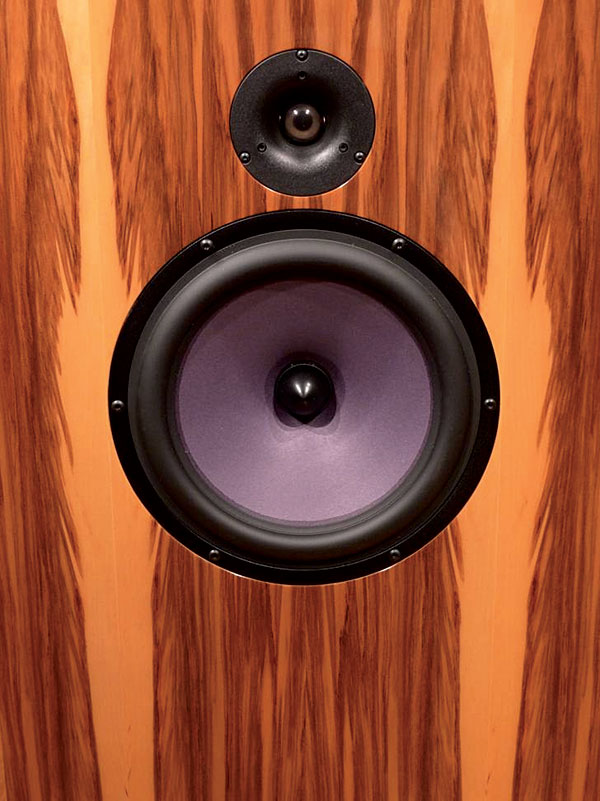
Although it sells for less than any of Stereophile's Class A full-range loudspeakers—and far less than most of them—the DeVore Orangutan O/96 is an expensive loudspeaker by the standards of average consumers and audio perfectionists alike. Given that the DeVore Fidelity line, as a whole, leans to the more affordable side of the fence, I wondered about the level of value provided by their newest entry. According to John DeVore, the O/96's bass driver is particularly expensive to make, as is the speaker's Brooklyn-built enclosure. "A speaker is a major decorative item in a system," he adds, "and, with these, I felt it was more important to achieve beauty than, say, for an amp. And getting end-grain plywood to look like glass is not easy!" My own view is simpler: The O/96 is neither a budget version nor a luxury version of anything else. It's an extremely well-crafted loudspeaker that achieves a combination of strengths that is, as far as I know, unique. The O/96 is distinctly easy to drive with low-power amplifiers, yet it's clearer, wider of bandwidth, and more spatially accomplished than most other high-sensitivity loudspeakers. Colorful yet uncolored, the DeVore Orangutan O/96 is the loudspeaker many of us have been waiting for. Yes, an old Western Electric horn or even an Altec Valencia has more punch and drama, and a Quad ESL has even more clarity and nuance of texture and timbre. But the O/96 gives a lot of everything and sacrifices little of anything. I'm thoroughly, giddily impressed.
Among the amplifiers I own, the 20Wpc Shindo Haut-Brion served the O/96 better than Shindo's 25Wpc Corton Charlemagne, pushing from it a tighter, more rhythmically engaging sound. But the 4Wpc Fi 421A also loved the DeVores, in a similarly distinctive way. The Fi-DeVore combination wasn't the last word in center-fill detail, but it produced the best and biggest sense of scale I heard from the O/96s. While Jascha Heifetz's violin, in his rightly famous recording of Bruch's Scottish Fantasy with the New Symphony Orchestra of London conducted by Sir Malcolm Sargent (LP, RCA Living Stereo LSC 2603), sounded a bit more recessed than usual, the Fi and DeVores gave an engagingly good sense of the orchestra's size in every dimension. (By contrast, the Quad ESLs do a somewhat better job of allowing solo instruments—and voices, too, as in the above-mentioned Sea Pictures—to stand proud of the rest of the mix.) Subtle details, from the "sound" of the room to the occasional foot-tap by, I assume, Heifetz or Sargent, were clear. Musical sounds through this combination were also wonderfully physical, as with the many pizzicato notes carried by the cellos about a third of the way through the Bruch. Harp arpeggios blossomed richly, and overall tonal balance was spot-on perfect. And, surprisingly, the modestly powered Fi never seemed to run out of steam in a harsh way; it just ceased to get louder at certain points.
Among the performance characteristics that are as difficult to describe as to quantify—and that, coincidentally, rise above others in distinguishing vintage from contemporary products—is a loudspeaker's ability to convey the substance of musical sound, rather than suggesting a pale if attractively pellucid sonic outline. The DeVore O/96 hit the latter goal more handily than most modern loudspeakers I've heard, and if it didn't go as far down that road as, say, a Western Electric 755A, the DeVore was nonetheless very satisfying. There's a great new reissue of Glenn Gould's recording, with Leonard Bernstein and the New York Philharmonic, of Beethoven's Piano Concerto 4 (LP, Columbia/Impex MS 6262); the O/96s played it with an exceptional sense of sonic flesh and blood. Just as remarkably, the Orangutans did that while conveying far more of the recording space around and behind the instruments than other speakers no less substantial. That, I think, will be heard by some as the O/96's unique strength.
The most inviting comparison was that between the O/96 and the outwardly similar Audio Note AN-E—inviting but not entirely straightforward, as the two speakers load the room in such different ways. The Audio Notes, with their corner placements, use the room corners for a bit of gain and, more significant, to enhance their own sense of scale: early reflections reach the ear in a manner that ultimately suggests size, and the effect can be lovely. On the other hand, the DeVores, which are notably more sensitive than the AN-Es, did seem to reach a little further into the bottom octaves (although a dip in the Audio Notes' "richness region" makes them sound as though they have punchier bass with some recordings). It also seemed that the DeVores' response was flatter, overall, in my room—and their ability to convey image specificity and stage depth with stereo recordings was markedly superior.
ConclusionsAlthough it sells for less than any of Stereophile's Class A full-range loudspeakers—and far less than most of them—the DeVore Orangutan O/96 is an expensive loudspeaker by the standards of average consumers and audio perfectionists alike. Given that the DeVore Fidelity line, as a whole, leans to the more affordable side of the fence, I wondered about the level of value provided by their newest entry. According to John DeVore, the O/96's bass driver is particularly expensive to make, as is the speaker's Brooklyn-built enclosure. "A speaker is a major decorative item in a system," he adds, "and, with these, I felt it was more important to achieve beauty than, say, for an amp. And getting end-grain plywood to look like glass is not easy!" My own view is simpler: The O/96 is neither a budget version nor a luxury version of anything else. It's an extremely well-crafted loudspeaker that achieves a combination of strengths that is, as far as I know, unique. The O/96 is distinctly easy to drive with low-power amplifiers, yet it's clearer, wider of bandwidth, and more spatially accomplished than most other high-sensitivity loudspeakers. Colorful yet uncolored, the DeVore Orangutan O/96 is the loudspeaker many of us have been waiting for. Yes, an old Western Electric horn or even an Altec Valencia has more punch and drama, and a Quad ESL has even more clarity and nuance of texture and timbre. But the O/96 gives a lot of everything and sacrifices little of anything. I'm thoroughly, giddily impressed.