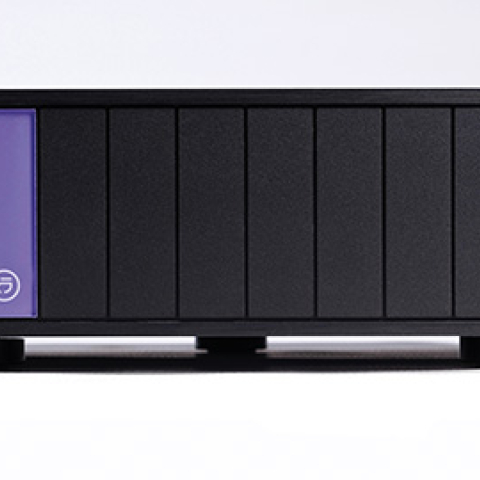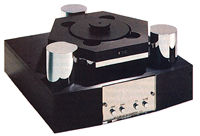
Fantasy review time. I first heard about the C.E.C. TL 0 in the May '94 Stereophile (Vol.17 No.5), in Audio Mogul Richard Schram's Manufacturer's Comment to my review of the C.E.C. TL 1. I wasn't sure if he was kidding when he threatened the world with a cost-no-object $17,500 CD transport. Just what we all need! 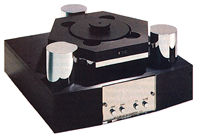 I nudged The Schram in my 1994 WCES Show report (Vol.17 No.4) when I mentioned that I was disappointed that he comped me a lens-cleaning disc rather than what I'd considered a Phigment of his Phertile Imagination, the TL 0. Imagine my surprise when I learned it was indeed a real product—limited production, to be sure, but in production nonetheless! And then, one summer day, a large, heavy box arrived with the instrument contained within. Kathleen and I unpacked this minimalist and striking ode to contemporary Japanese design and engineering, and set it up. It's hard to describe this unit's physical presence, which goes beyond mere looks, build quality, or charisma (all of which the TL 0 possesses in massive quantities). Suffice to say that grown men become incoherent and bug-eyed at first glance, pausing to stroke its elegant flanks while murmuring, "What is this?" In the fullness of time, this early production unit was exchanged for a more recent example, which had all three data outputs: coaxial and glass (ST) S/PDIF, and balanced AES/EBU. This second unit was employed in this evaluation, and in comparisons with the Jadis J1 Drive and Forsell Air Bearing CD transports.
Why they built it
I nudged The Schram in my 1994 WCES Show report (Vol.17 No.4) when I mentioned that I was disappointed that he comped me a lens-cleaning disc rather than what I'd considered a Phigment of his Phertile Imagination, the TL 0. Imagine my surprise when I learned it was indeed a real product—limited production, to be sure, but in production nonetheless! And then, one summer day, a large, heavy box arrived with the instrument contained within. Kathleen and I unpacked this minimalist and striking ode to contemporary Japanese design and engineering, and set it up. It's hard to describe this unit's physical presence, which goes beyond mere looks, build quality, or charisma (all of which the TL 0 possesses in massive quantities). Suffice to say that grown men become incoherent and bug-eyed at first glance, pausing to stroke its elegant flanks while murmuring, "What is this?" In the fullness of time, this early production unit was exchanged for a more recent example, which had all three data outputs: coaxial and glass (ST) S/PDIF, and balanced AES/EBU. This second unit was employed in this evaluation, and in comparisons with the Jadis J1 Drive and Forsell Air Bearing CD transports.
Why they built it
Chuo Denki Company (C.E.C.) spell out the design brief of the TL 0 in the text of an information sheet that's written sparely and elegantly, with such attention to meaning that I've brought you their exact words. Basically, I couldn't have said it better myself, so here it is (emphases theirs): "We have eliminated the minuscule rotational perturbations common to all other CD transports." [crash] [karump] [much banging of pots and pans as other high-end digital manufacturers fall willy-nilly out of their seats] "The distance the light beam travels from the laser source to the pits in the disc and back to its receiving lens amplifies even the slightest vibration in the reflective surface of the disc, scattering light and reducing the integrity of the digital data stream. "The TL 0 design is based on a revolutionary three-part chassis that suppresses these micro-vibrations and resonances, and in turn unwanted jitter in the digital data stream. The absence of jitter greatly reduces subsequent audible distortions that too often characterize CDs as digital rather than simply musical.
"We've achieved superior isolation of the TL 0 drive mechanism by suspending it from three rubber-damped spring assemblies. The three suspension towers extend to their tiptoe feet as unified assemblies to decouple resonances from either the drive mechanism chassis or the other two main chassis sections. "The upper drive mechanism chassis is a massive sandwich of nonmagnetic materials with dissimilar resonances: a 20mm thick aluminum plate plus a 10mm thick brass plate. To reduce susceptibility to airborne interference, it has been made as small as possible, only slightly wider than the compact disc it must hold. "To assure undisturbed operation of the laser pickup, all sources of electromagnetic interference are physically isolated. The massive power supply and filtering are housed in a separate chassis which may be separated up to 1.5 meters from the TL 0. The drive electronics are enclosed in a 20mm thick nonmagnetic aluminum chassis. The control circuits and display are in a chassis isolated from the main drive mechanism. Even the main drive motor and laser positioning motor are electrically, magnetically, and mechanically removed from the laser pickup, coupled only by two precision-ground drive belts.
"The disc drive motor is a new cog-free, low-torque design, in itself inherently free of vibration. The drive belt multiples the torque to spin the compact disc on a precision spindle/thrust bearing assembly, while supporting a 125mm diameter stabilizer clamp weighing 450 grams (a full pound). With its moment of inertia comparable to the most massive analog turntable, the flywheel effect of the TL 0 stabilizer achieves perfect rotational stability without the constant electronic servo corrections inevitable in all other CD transports. [Once again, the concurrent falling to Earth of several top-drawer digital designers can be heard. Flywheel, huh? It figures. I couldn't stay away from that flywheel effect even if I tried! It's my karma, baby.] "As a further benefit, the TL 0 stabilizer covers both the entire top and outer edge of the CD to prevent internal reflections and scattering of light."
I nudged The Schram in my 1994 WCES Show report (Vol.17 No.4) when I mentioned that I was disappointed that he comped me a lens-cleaning disc rather than what I'd considered a Phigment of his Phertile Imagination, the TL 0. Imagine my surprise when I learned it was indeed a real product—limited production, to be sure, but in production nonetheless! And then, one summer day, a large, heavy box arrived with the instrument contained within. Kathleen and I unpacked this minimalist and striking ode to contemporary Japanese design and engineering, and set it up. It's hard to describe this unit's physical presence, which goes beyond mere looks, build quality, or charisma (all of which the TL 0 possesses in massive quantities). Suffice to say that grown men become incoherent and bug-eyed at first glance, pausing to stroke its elegant flanks while murmuring, "What is this?" In the fullness of time, this early production unit was exchanged for a more recent example, which had all three data outputs: coaxial and glass (ST) S/PDIF, and balanced AES/EBU. This second unit was employed in this evaluation, and in comparisons with the Jadis J1 Drive and Forsell Air Bearing CD transports. Chuo Denki Company (C.E.C.) spell out the design brief of the TL 0 in the text of an information sheet that's written sparely and elegantly, with such attention to meaning that I've brought you their exact words. Basically, I couldn't have said it better myself, so here it is (emphases theirs): "We have eliminated the minuscule rotational perturbations common to all other CD transports." [crash] [karump] [much banging of pots and pans as other high-end digital manufacturers fall willy-nilly out of their seats] "The distance the light beam travels from the laser source to the pits in the disc and back to its receiving lens amplifies even the slightest vibration in the reflective surface of the disc, scattering light and reducing the integrity of the digital data stream. "The TL 0 design is based on a revolutionary three-part chassis that suppresses these micro-vibrations and resonances, and in turn unwanted jitter in the digital data stream. The absence of jitter greatly reduces subsequent audible distortions that too often characterize CDs as digital rather than simply musical.