In the September 2001 Stereophile (Vol.24 No.9), I wrote very favorably about Polk's RT25i loudspeaker ($319.90/pair). That bookshelf model impressed me with its open, neutral midrange; its pristine, extended high-frequency response; and its low-level dynamics. On the minus side, the RT25i was fairly limited in low-bass extension and high-level dynamic slam. At the time, I was seeking a new speaker for my home computer music-composition system, and I bought the review samples—the only time I've done that since I began to write for Stereophile some 20 speaker reviews ago.
 Shortly after that review was published, the RT25i was replaced by the RT28i, which Polk told me was a mostly cosmetic upgrade of the plain-Jane RT25i, with a redesigned and slightly smoother tweeter. I had originally planned to review the RT28i and compare it to my trusty RT25i, but toward the end of 2003, Polk advised me that the RT28i itself had been discontinued, to be replaced by the new RTi4 ($319.95/pair). I asked Polk's Paul DiComo why Polk reworks its product line so often. "We always feel the need to make product improvements in these times of rapid change and stiff competition," he said. "Speaker manufacturers can't sit still." DiComo claims that the RTi4 is a significant change from both the RT25i and the RT28i.
Describing
Shortly after that review was published, the RT25i was replaced by the RT28i, which Polk told me was a mostly cosmetic upgrade of the plain-Jane RT25i, with a redesigned and slightly smoother tweeter. I had originally planned to review the RT28i and compare it to my trusty RT25i, but toward the end of 2003, Polk advised me that the RT28i itself had been discontinued, to be replaced by the new RTi4 ($319.95/pair). I asked Polk's Paul DiComo why Polk reworks its product line so often. "We always feel the need to make product improvements in these times of rapid change and stiff competition," he said. "Speaker manufacturers can't sit still." DiComo claims that the RTi4 is a significant change from both the RT25i and the RT28i.
Describing
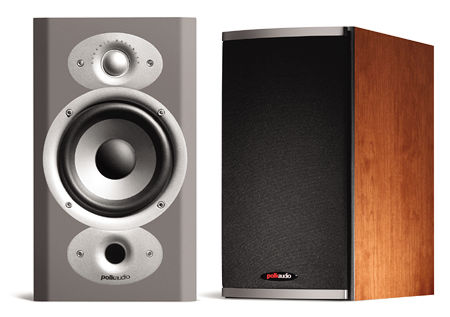
The RTi4 has an all-new 1" tweeter with a doped-silk dome that features a heatsink on its neodymium magnet for improved heat dissipation and power handling. Paul DiComo claims that, compared to the tweeters on the RT25i and RT28i, the RTi4's should produce a flatter, more extended frequency response. The RTi4's 5¼" mid/woofer driver, also all-new, is designed for smoother frequency response. There are ports on both the front and rear panels; the rear port has a flared end and a diffusor to minimize port noise. The enclosure of ¾" MDF has 10% more volume than the RT28i and 23% more than the RT25i. The modern and stylish cabinet has a black grille that floats in front of the drive-units, supported by four standoffs. However, the RTi4 is attractive with its grilles off, which, as Polk claims, slightly improved detail and transparency.
Listening
I biwired the RTi4s and set them on my usual 24" Celestion Si speaker stands, which are loaded with sand and lead shot. I was immediately taken by the Polk RTi4's detailed, natural, and delicate midrange. This, combined with unexaggerated articulation of low-level dynamics, enabled the speaker to reproduce well-recorded woodwinds with a level of realism unusual for a speaker at this price. Antony Michaelson's clarinet on K622, his recording of Mozart's Clarinet Concerto (CD, Musical Fidelity MF 017, footnote 1), was natural and velvety, with the requisite amount of woodiness; the subtle articulation of Michaelson's breathing technique was quite evident. Similarly, the diverse phrasing techniques of the soprano sax on George Crumb's Quest (CD, Bridge 9069) were reproduced without compression or blurring. The grand piano on "Some People's Lives," from Janis Ian's Breaking Silence (LP/CD, Analogue Productions CAPP 027), sounded mellow, rich, and uncolored, with natural attack and realistic decay. On all vocal recordings, male and female voices sounded rich, focused, immediate, and unveiled.
Further down the frequency spectrum, it was clear that the RTi4 significantly exceeded the low-bass extension and high-level dynamic capabilities of the RT25i. On all jazz and rock recordings, acoustic and electric basses were dramatically forceful and deep. My listening notes read: "I wonder how low these puppies go?" (John Atkinson's measurements will tell us.) And with electronic pop recordings, the RTi4 really rocked. On Sade's Love Deluxe (CD, Epic EK 53178), the bass synthesizer riffs gave the recording a sense of weight and drama without a trace of overhang and sluggishness. In the lower register of the midbass, however, I noticed a bit of warmth with all recordings. I wouldn't call the RTi4 overtly colored, but there was a ripeness that was a slight deviation from neutrality. On most recordings, this character was pleasing, adding a sense of weight and drama to the music.
The RTi4's high-frequency performance was detailed and extended with all recordings, but percussion fared particularly well. The cymbals' subtle dynamic shifts in pitch and dynamics in Crumb's Quest were clear and natural, and orchestral bells shimmered with natural attack and decay. I did notice, however, a slight prominence in the lower highs with all recordings. This was not a brightness per se, but added a touch of emphasis to sibilants on female vocals, and Fender guitars sounded a bit more "Stratty." Bruce Katz's Hammond B3 on Mighty Sam McClain's Give It Up to Love (CD, JVC JVXCD-0012-2) sounded as if he'd pulled the 1' and 2' drawbars out another notch.
On well-recorded classical discs such as Festival (CD, Stereophile STPH007-2), the overall high-frequency presentation was quite realistic. Flute passages were airy and detailed but not steely, and cellos and violin had the requisite balance of rosin, wood, and "sear." The marimba passages on this disc sounded fairly natural, but a touch more forward than I've heard from other speakers. In general, the combination of the RTi4's high-frequency and midbass characteristics gave an overall positive feel of a rather lively but well-balanced musical presentation. With all recordings, the bass, midrange, and high frequencies were well integrated.
In terms of range and continuity, the RTi4's dynamic capabilities were impressive at both ends of the spectrum. Even on small-group jazz recordings such as Jerome Harris' "The Mooche," from JA's Editor's Choice (CD, Stereophile STPH016-2), the integration of the alto sax, trombone, bass, and percussion, and the ability to effortlessly reproduce the high-level passages of this track without strain, revealed an unusually strong sense of musical drama for such a small speaker.
Large-scale orchestral works really let the RTi4s shine. On Messiaen's Turangalîla Symphony (LP, EMI SLS 5117), I could follow the technique of the delicate, fast, dynamic, vibrant piano, and could easily "read" the score's individual instrumental parts. My notes: "Damn, these transients and dynamics are perfect!"
The wide, deep stage and ambient hall sound shone through from Mercury Living Presence recordings, even during the most bombastic sections of Stravinsky's Firebird (LP, Mercury Living Presence/Classic SR 90226). Through just about every small bookshelf speaker I've tried with this recording, there has been a sense of compression on the fortissimo passages. Not so with the RTi4.
Comparing
I compared the Polk RTi4 ($319.95/pair) with my Polk RT25i ($319.90/pair when last offered), as well as with the Epos ELS-3 ($299/pair, reviewed in January 2004) and the Infinity Primus 150 ($198/pair, reviewed in April 2004). The RT25i had a rich, natural midrange, but was less dimensional than the RTi4. However, I found the RT25i's high frequencies to be very detailed, and even more delicate-sounding than the RTi4's. The lower-midrange and upper-bass performances of the two Polks were quite similar, but the RTi4 exceeded the RT25i in bass extension and high-level dynamics. The Epos ELS-3 had a more natural midbass than the RTi4, and equaled it in its natural, rich, holographic midrange. I also felt that the Epos' high frequencies were more delicate than the RTi4's. Although the Epos resolved as much inner detail overall as the RTi4, the new Polk was superior in bass extension and high-level dynamics. The Infinity Primus 150, although costing less than the three other speakers, fared quite well. Its midrange sounded rich and natural, but less detailed than the other three, and the imaging was not as holographic. However, the Infinity's high frequencies were delicate and airy. Its midbass showed a bit of warmth, even more so than the RTi4. The RTi4 also fared better at both dynamic extremes than the Infinity.
Concluding
Polk Audio is to be commended for an overall positive evolutionary change in its most affordable speaker line. In several aspects, the RTi4 exceeds the performance of my trusty RT25i, while costing not a dollar more at retail. Furthermore, unlike the RT25i, the RTi4's superior appearance seems to indicate a much more expensive speaker. In this price range, of course, there are always tradeoffs; shoppers should follow their own listening biases in selecting an affordable speaker. But the Polk RTi4 holds its own against all competition, and should be given careful consideration by anyone looking for speakers costing less than $500/pair.
Footnote 1: Antony Michaelson is the founder and managing director of Musical Fidelity, a company that designs and manufactures hi-fi equipment in the UK.—Robert J. Reina
Shortly after that review was published, the RT25i was replaced by the RT28i, which Polk told me was a mostly cosmetic upgrade of the plain-Jane RT25i, with a redesigned and slightly smoother tweeter. I had originally planned to review the RT28i and compare it to my trusty RT25i, but toward the end of 2003, Polk advised me that the RT28i itself had been discontinued, to be replaced by the new RTi4 ($319.95/pair). I asked Polk's Paul DiComo why Polk reworks its product line so often. "We always feel the need to make product improvements in these times of rapid change and stiff competition," he said. "Speaker manufacturers can't sit still." DiComo claims that the RTi4 is a significant change from both the RT25i and the RT28i.
Describing
The RTi4 has an all-new 1" tweeter with a doped-silk dome that features a heatsink on its neodymium magnet for improved heat dissipation and power handling. Paul DiComo claims that, compared to the tweeters on the RT25i and RT28i, the RTi4's should produce a flatter, more extended frequency response. The RTi4's 5¼" mid/woofer driver, also all-new, is designed for smoother frequency response. There are ports on both the front and rear panels; the rear port has a flared end and a diffusor to minimize port noise. The enclosure of ¾" MDF has 10% more volume than the RT28i and 23% more than the RT25i. The modern and stylish cabinet has a black grille that floats in front of the drive-units, supported by four standoffs. However, the RTi4 is attractive with its grilles off, which, as Polk claims, slightly improved detail and transparency.
I biwired the RTi4s and set them on my usual 24" Celestion Si speaker stands, which are loaded with sand and lead shot. I was immediately taken by the Polk RTi4's detailed, natural, and delicate midrange. This, combined with unexaggerated articulation of low-level dynamics, enabled the speaker to reproduce well-recorded woodwinds with a level of realism unusual for a speaker at this price. Antony Michaelson's clarinet on K622, his recording of Mozart's Clarinet Concerto (CD, Musical Fidelity MF 017, footnote 1), was natural and velvety, with the requisite amount of woodiness; the subtle articulation of Michaelson's breathing technique was quite evident. Similarly, the diverse phrasing techniques of the soprano sax on George Crumb's Quest (CD, Bridge 9069) were reproduced without compression or blurring. The grand piano on "Some People's Lives," from Janis Ian's Breaking Silence (LP/CD, Analogue Productions CAPP 027), sounded mellow, rich, and uncolored, with natural attack and realistic decay. On all vocal recordings, male and female voices sounded rich, focused, immediate, and unveiled.
I compared the Polk RTi4 ($319.95/pair) with my Polk RT25i ($319.90/pair when last offered), as well as with the Epos ELS-3 ($299/pair, reviewed in January 2004) and the Infinity Primus 150 ($198/pair, reviewed in April 2004). The RT25i had a rich, natural midrange, but was less dimensional than the RTi4. However, I found the RT25i's high frequencies to be very detailed, and even more delicate-sounding than the RTi4's. The lower-midrange and upper-bass performances of the two Polks were quite similar, but the RTi4 exceeded the RT25i in bass extension and high-level dynamics. The Epos ELS-3 had a more natural midbass than the RTi4, and equaled it in its natural, rich, holographic midrange. I also felt that the Epos' high frequencies were more delicate than the RTi4's. Although the Epos resolved as much inner detail overall as the RTi4, the new Polk was superior in bass extension and high-level dynamics. The Infinity Primus 150, although costing less than the three other speakers, fared quite well. Its midrange sounded rich and natural, but less detailed than the other three, and the imaging was not as holographic. However, the Infinity's high frequencies were delicate and airy. Its midbass showed a bit of warmth, even more so than the RTi4. The RTi4 also fared better at both dynamic extremes than the Infinity.
Polk Audio is to be commended for an overall positive evolutionary change in its most affordable speaker line. In several aspects, the RTi4 exceeds the performance of my trusty RT25i, while costing not a dollar more at retail. Furthermore, unlike the RT25i, the RTi4's superior appearance seems to indicate a much more expensive speaker. In this price range, of course, there are always tradeoffs; shoppers should follow their own listening biases in selecting an affordable speaker. But the Polk RTi4 holds its own against all competition, and should be given careful consideration by anyone looking for speakers costing less than $500/pair.
Footnote 1: Antony Michaelson is the founder and managing director of Musical Fidelity, a company that designs and manufactures hi-fi equipment in the UK.—Robert J. Reina