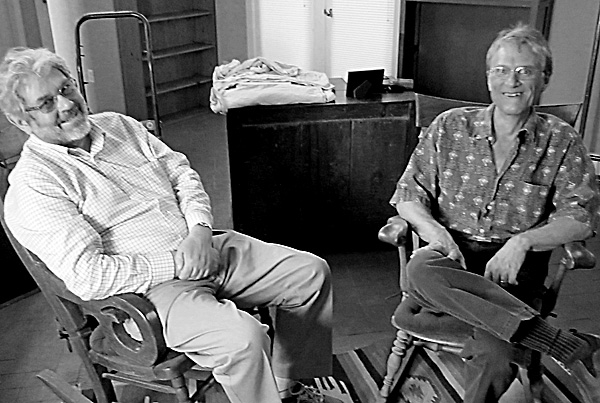
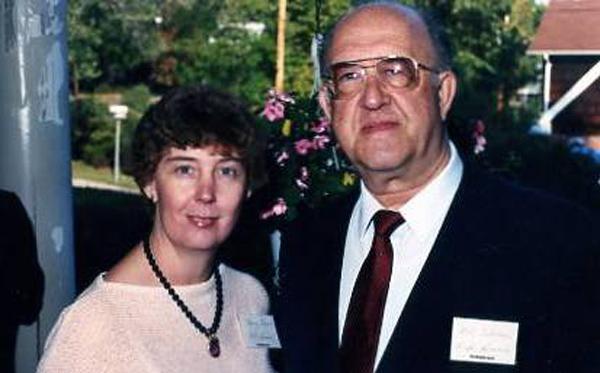
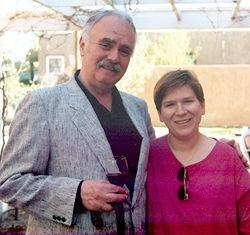
We were saddened to hear of the passing, on December 10,of Audio Research founder William "Bill" Zane Johnson. Bill, who founded Audio Research in 1970 and became its Chairman Emeritus in 2008, is survived by his wife Nancy (left in photo) and family. We are preparing a tribute to Bill, to be published in the March 2012 issue of Stereophile, but meanwhile, we are reprinting here an interview Paul Messenger and I conducted with Bill that was originally published in the June 1983 issue of Hi-Fi News. (My thanks to HFN editor Paul Miller for permission. Stereophile's 1994 interview with Bill can be found here.)John Atkinson
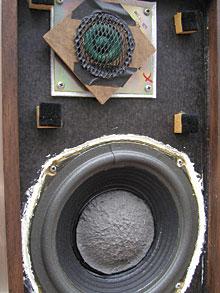
Nineteen days after J. Gordon Holt died, my daughter and I drove west on NY Route 20, passing lawn sale after lawn sale on our way to the supermarket in Richfield Springs. Each sale promised a pleasant waste of time on that hot afternoon, but only one caught my eye: There, among the Avon bottles and the 8-track tape cartridges, were two large bookshelf loudspeakers, dressed in walnut veneer and light-colored fabric grilles. AR 3s, I thought. Or maybe Large Advents. "They'll still be there when we come back this way," I said, stupidly.
Editor's Note: John Crabbe was Editor of Hi-Fi News & Record Review when I joined that magazine as a lowly editorial assistant in September 1976. At the end of 2007, I had asked Steve Harris to interview John for Stereophile, as part of an ongoing project to create an oral history of high-end audio (footnote 1). Sadly, John passed away in December 2008see "As We See It" and "Industry Update," in our March issue. We are publishing Steve's interview as a tribute to a man from whom I learned my craft as an audio magazine editor.John Atkinson
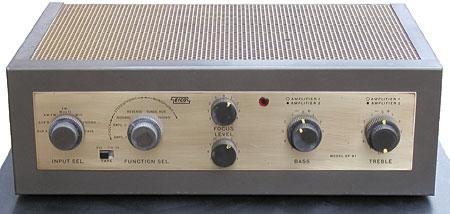
If you spotted an EICO HF-81 at the local Goodwill, you'd think nothing of this plain-Jane integrated amplifier in its nondescript gray case. But if you kept on walking, you would have passed up one of the best-kept audio secrets of all time. The HF-81 hails from hi-fi's pioneer days, before chromed chassis and slick Mac transformers. It isn't ultracool-looking, like early Marantz or McIntosh gear. It doesn't have the nostalgia factor of a Fisher. It's not a supercheap eBay steal like a Stromberg-Carlson or a Heathkit. So what's the deal?
One day last year, my friend Larry and I were talking about our college-fraternity days and loudspeakers. Those were four of the best years of my life. Strong friendships were formed, and ever since, we've kept in touch with most of our fraternity's brothers-in-heart. Ours was not a jock house, nor was it the last bastion of rampant male sexuality—it was, after all, an MIT frat house. But it was full of music lovers who fell neatly into three camps: the California School owned JBL Decades, the New England School had Smaller Advents, and the Renegades boasted bootlegged Bose 901s (footnote 1).
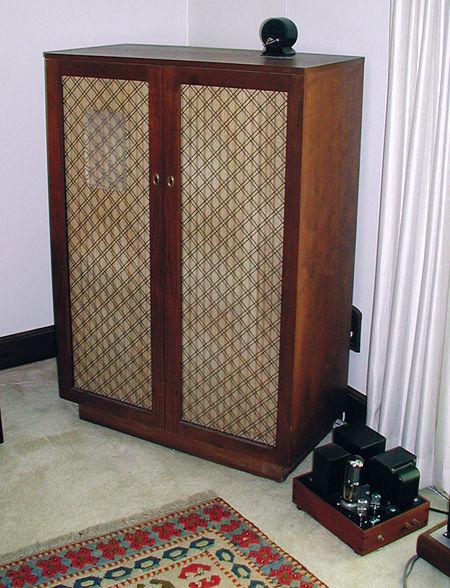
The Bozak Concert Grand is a loudspeaker dreams are made of. I was just a boy, but I remember to this day the impressive pictures of them in Audio magazine. I thought they must be the best loudspeakers ever made because they were so big—they would let more of the music come out. I suspect the Bozaks beckoned to me in some primal way, just as those giant construction trucks do—the ones that have tires bigger than a man.
Back in 1964, Avery Fisher, founder and president of the Fisher Radio Corporation, wrote a short note for the 500-C Stereophonic FM Multiplex Receiver owner's manual. In that note he said, "a door has opened for you, and your family, on virtually unlimited years of musical enjoyment."
On Friday morning, March 25, 2005, my friend Maura Rieland, Stereophile's show coordinator through the second half of the 1990s, e-mailed me to say that she had just learned of the passing of Ken Nelson.
Quad: The Closest Approach
by Ken Kessler. Cambridge, England, UK: International Audio Group Ltd., 2003. Hardcover, 12" square, 215 pp. ISBN 0 954 57420 6.
Available from: Quad dealers or IAG America, 15 Walpole Park South, Walpole, MA 02801. Tel: (508) 850-3950.
And I used to think our annual "Records To Die For" issue was difficult. Whew! When it came down to choosing the 40 most influential rock/pop, jazz, and classical records of the past 40 years, during which this magazine has been the most honest and enjoyable source of high-end audio journalism, my initial list contained more than 200 choices. A painful paring-down process ensued, with input from every member of the Stereophile staff.
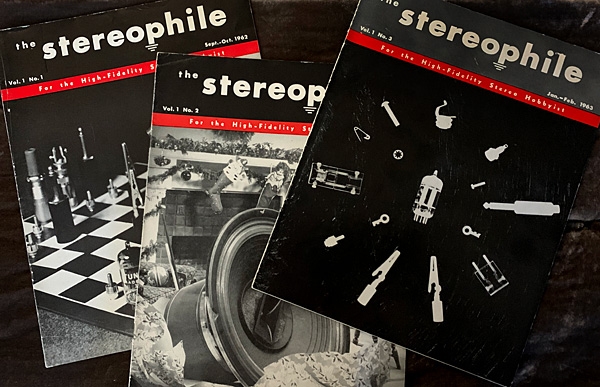
"The monthly miracle," it's called in publishing: that magical moment when the new issue of your magazine arrives in the mailbox hot from the printer. And with this issue of Stereophile—No.274, or Vol.25 No.11—we celebrate the 40th anniversary of the start of our "miracle." With the 20 pages of Issue No.1, Vol.1 No.1, cover-dated September-October 1962, "Ye Editor & Publisher" J. Gordon Holt introduced both a new audio magazine and the philosophy that an audio product is best reviewed by doing exactly what its purchasers will do: listen to it. On that small rock of an idea was founded not only Stereophile but the entire high-end audio industry. Here, reprinted from a 1974 anthology of the first 12 issues, is J. Gordon Holt's description of the events that led up to the founding of Stereophile:
"Most important." That was the phrase I used when I e-mailed the members of Stereophile's extended family of reviewers and writers to ask for suggestions when I began to compile this list. I didn't want to be more specific because I wanted to cast the net as wide as possible. But there are many factors that make an audio component "important": design innovation, sound quality, sales figures, influence on other designers, influence on the evolving market, influence on system synergy.